






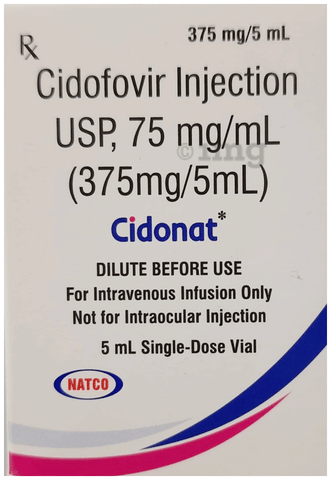

सिडोनैट इंजेक्शन
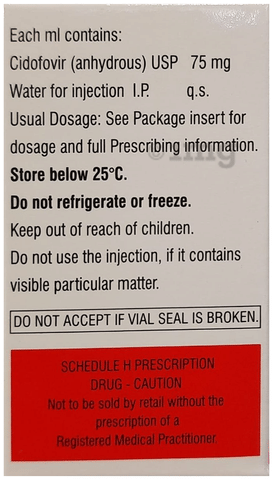
Cidofovir (75mg/ml)
 असली
असलीप्रामाणिकता सुनिश्चित
 डॉक्टर की पर्ची
ज़रूरी है
सिडोनैट इंजेक्शन एक एंटीवायरल दवा है जिसका इस्तेमाल इम्यूनोडेफिशिएंसी सिंड्रोम (एड्स) प्राप्त करने वाले वयस्क रोगियों में साइटोमेगालोवायरस (सीएमवी) के कारण होने वाले वायरल संक्रमण के इलाज के लिए किया जाता है. यह वायरस के गुणन को रोकने में मदद करता है और इन्फेक्शन के कारण होने वाली जटिलताओं के रिस्क को कम करता है.
लेखक डॉ. सायेडा आफिया, एमबीए, बीडीएस,
समीक्षक डॉ. मेखला चंद्रा, एमडी, एमबीबीएस,
लास्ट अपडेटेड on 05 अक्टूबर 2026 | 01:03 एएम (Ist)
लेखक डॉ. सायेडा आफिया, एमबीए, बीडीएस,
समीक्षक डॉ. मेखला चंद्रा, एमडी, एमबीबीएस,
लास्ट अपडेटेड on 05 अक्टूबर 2026 | 01:03 एएम (Ist)
अतिरिक्त ऑफ़र के साथ अधिक बचत करें

Mobikwik UPI (@ikwik) के साथ न्यूनतम ₹.599/- के ट्रांज़ैक्शन पर ₹.150 तक का कैशबैक पाएं.
Mobikwik UPI (@ikwik) के साथ न्यूनतम ₹.599/- के ट्रांज़ैक्शन पर ₹.150 तक का कैशबैक पाएं.


₹499 और उससे अधिक की न्यूनतम ऑर्डर वैल्यू (MOV) पर ₹75 तक का कैशबैक पाएं, प्रति कस्टमर एक बार मान्य.
₹499 और उससे अधिक की न्यूनतम ऑर्डर वैल्यू (MOV) पर ₹75 तक का कैशबैक पाएं, प्रति कस्टमर एक बार मान्य.
₹499 और उससे अधिक की न्यूनतम ऑर्डर वैल्यू (MOV) पर ₹75 तक का कैशबैक पाएं, प्रति कस्टमर एक बार मान्य.
₹499 और उससे अधिक की न्यूनतम ऑर्डर वैल्यू (MOV) पर ₹75 तक का कैशबैक पाएं, प्रति कस्टमर एक बार मान्य.
Mobikwik UPI (@ikwik) के साथ न्यूनतम ₹.599/- के ट्रांज़ैक्शन पर ₹.150 तक का कैशबैक पाएं.
Mobikwik UPI (@ikwik) के साथ न्यूनतम ₹.599/- के ट्रांज़ैक्शन पर ₹.150 तक का कैशबैक पाएं.
₹499 और उससे अधिक की न्यूनतम ऑर्डर वैल्यू (MOV) पर ₹75 तक का कैशबैक पाएं, प्रति कस्टमर एक बार मान्य.
₹499 और उससे अधिक की न्यूनतम ऑर्डर वैल्यू (MOV) पर ₹75 तक का कैशबैक पाएं, प्रति कस्टमर एक बार मान्य.
₹499 और उससे अधिक की न्यूनतम ऑर्डर वैल्यू (MOV) पर ₹75 तक का कैशबैक पाएं, प्रति कस्टमर एक बार मान्य.
₹499 और उससे अधिक की न्यूनतम ऑर्डर वैल्यू (MOV) पर ₹75 तक का कैशबैक पाएं, प्रति कस्टमर एक बार मान्य.
न्यूनतम ₹1000 के ट्रांज़ैक्शन पर ₹150 का सीधा ट्रांज़ैक्शन.
न्यूनतम ₹1000 के ट्रांज़ैक्शन पर ₹150 का सीधा ट्रांज़ैक्शन.

₹300 तक का सुनिश्चित कैशबैक. शर्तें लागू*
₹300 तक का सुनिश्चित कैशबैक. शर्तें लागू*
सामान्य जानकारी
शामिल है
Cidofovir (75mg/ml)
साल्ट के अन्य नाम
Cidofovirum
मार्केटर
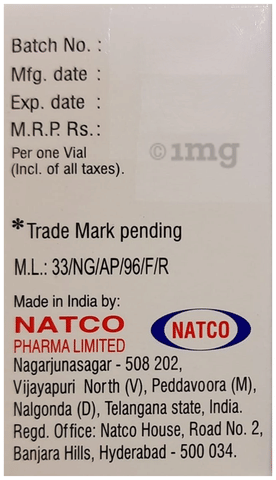
Natco Pharma Ltd
स्टोरेज के निर्देश
25°c से कम तापमान पर स्टोर करें
अपनी भाषा चुनें हिंदी



सुरक्षा संबंधी सलाह

अल्कोहल
डॉक्टर की सलाह लें
इसकी जानकारी नहीं है कि सिडोनैट इंजेक्शन के साथ एल्कोहल का सेवन करना सुरक्षित है या नहीं. कृपया अपने डॉक्टर से सलाह लें.

गर्भावस्था
डॉक्टर की सलाह लें
गर्भावस्था के दौरान सिडोनैट इंजेक्शन लेने की सलाह नहीं दी जाती , क्योंकि जानवरों पर किए गए अध्ययनों में यह गर्भ में पल रहे बच्चे के लिए नुकसानदायक पाया गया है. हालांकि, कुछ गंभीर स्थितियों में डॉक्टर इसे तब दे सकते हैं जब इसके फायदे संभावित जोखिमों से ज्यादा हों.

स्तनपान
डॉक्टर की सलाह लें
स्तनपान के दौरान सिडोनैट इंजेक्शन का इस्तेमाल करना असुरक्षित हो सकता है. मानवो पर किए गए अध्ययनों से पता चलता है कि इस दवा का असर मां के दूध में आ सकता है, जिससे बच्चे को नुकसान पहुंच सकता है. इसे तभी इस्तेमाल करना चाहिए जब इसका फायदा संभावित जोखिम से ज्यादा हो. कृपया अपने डॉक्टर से सलाह लें.

ड्राइविंग
असुरक्षित
सिडोनैट इंजेक्शन के कारण सतर्कता या एकाग्रता में कमी आ सकती है, नजर धुंधली हो सकती है और आपको नींद या चक्कर आ सकते हैं. इन लक्षणों के महसूस होने पर वाहन न चलाएं.

किडनी
सावधानी बरतें
किडनी की बीमारियों से पीड़ित मरीजों में सिडोनैट इंजेक्शन का इस्तेमाल सावधानी के साथ किया जाना चाहिए. खुराक बदलने की ज़रूरत पड़ सकती है.

लिवर
डॉक्टर की सलाह पर सुरक्षित
लिवर की बीमारी वाले मरीजों के लिए सिडोनैट इंजेक्शन का इस्तेमाल संभवतः सुरक्षित है. अभी जो जानकारी उपलब्ध है उसके अनुसार दवा की खुराक बदलने की जरूरत नहीं लगती.



100% असली प्रोडक्ट

सुरक्षित भुगतान

संपर्क रहित डिलीवरी
पूरी तरह से सैनिटाइज्ड सुविधाएं

और अधिक जानना चाहते हैं
हम आपको प्रमाणिक, भरोसेमंद और प्रासंगिक जानकारी प्रदान करते हैं
क्या आपको यहां दी गई जानकारी से कोई समस्या है?
हमें डॉक्टर के पर्चे की आवश्यकता क्यों है?

