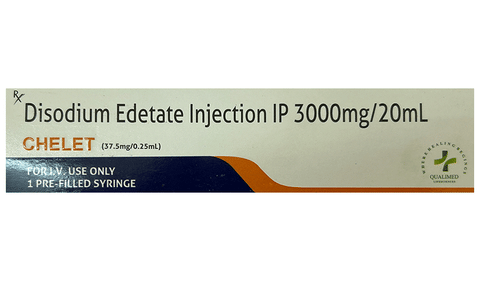
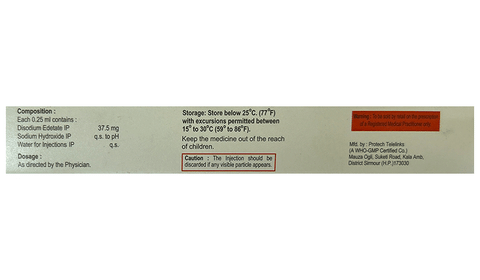

Chelet Injection is a medicine used to treat lead poisoning and other heavy metal toxicity. It binds to metals in the bloodstream, forming a stable compound that is safely removed from the body through urine. Removing these toxins helps reduce their harmful effects on organs and tissues.
Chelet Injection is given by a doctor or a nurse, usually through a slow intravenous infusion or intramuscular injection. The dose and duration of treatment depend on the type and severity of metal poisoning, as well as the patient’s age and kidney function. Follow all instructions and complete the full course of treatment to ensure that the toxic metals are fully cleared from the body. Your doctor may advise increasing fluid intake and prescribe regular blood and urine tests to monitor metal levels and kidney function.
Some common side effects of Chelet Injection include pain or swelling at the injection site, fever, headache, nausea, or mild fatigue. In some cases, low calcium levels may occur, leading to symptoms such as muscle cramps or tingling. These side effects are usually manageable and temporary.
Chelet Injection should not be used in patients with severe kidney disease or known allergy to any of the ingredients in the product. It should be used with caution in people with heart conditions, liver problems, or low calcium levels. Pregnant or breastfeeding women should use this medicine only if clearly prescribed by a doctor.
Uses of Chelet Injection
Treatment of Poisoning
Benefits of Chelet Injection
In Treatment of Poisoning
Poisoning with certain heavy metals, such as lead, can cause serious damage to organs and overall health. Chelet Injection helps by binding tightly to these harmful metals in the blood, allowing them to be safely removed from the body. This reduces their toxic effects and protects vital organs from further harm.
Side effects of Chelet Injection
Most side effects do not require any medical attention and disappear as your body adjusts to the medicine. Consult your doctor if they persist or if you’re worried about them
Common side effects of Chelet
Nausea
Vomiting
Diarrhea
How to use Chelet Injection
Your doctor or nurse will give you this medicine. Kindly do not self administer.
How Chelet Injection works
Chelet Injection is a chelating agent that works by binding to heavy metals like lead or calcium in the bloodstream. Once bound, these toxic metals form a stable complex that can be safely excreted from the body through urine. This helps reduce metal toxicity and prevents further damage to organs, making it useful in treating poisoning caused by heavy metal exposure.
Safety advice
Alcohol
CONSULT YOUR DOCTOR
It is not known whether it is safe to consume alcohol with Chelet Injection. Please consult your doctor.

Pregnancy
CONSULT YOUR DOCTOR
The safety of Chelet Injection during pregnancy has not been established. There are no adequate and well-controlled studies in pregnant women, and animal data on reproductive toxicity are insufficient. Your doctor will weigh the benefits and any potential risks before prescribing.
Breast feeding
CONSULT YOUR DOCTOR
Information regarding the use of Chelet Injection during breastfeeding is not available. Please consult your doctor.
Driving
CONSULT YOUR DOCTOR
It is not known whether Chelet Injection alters the ability to drive. Do not drive if you experience any symptoms that affect your ability to concentrate and react. Please consult your doctor.
Kidney
There is no data available. Please consult doctor before consuming the drug.

Liver
There is no data available. Please consult doctor before consuming the drug.
What if you forget to take Chelet Injection?
If you miss a dose of Chelet Injection, please consult your doctor.
All substitutes
For informational purposes only. Consult a doctor before taking any medicines.
Watch out for symptoms of Digoxin side effects such as impaired vision, skin rash, nausea, vomiting, diarrhea or dizziness and consult your doctor if you experience them. They may ... More
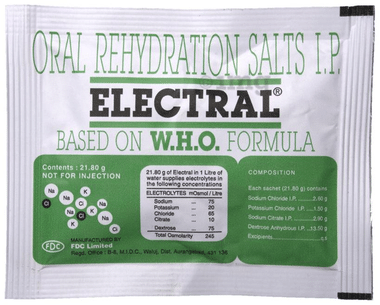
If you are having diarrhoea and vomiting , please take ORS and visit to your doctor to assess the hydration status and decide the medications after that
There are many underlying causes of your symptoms. Different cause needs different treatment. Specific treatment cannot be given unless we establish exact underlying cause. Diagnosis can not be done without clinical examination. Please visit me or any other Paediatrician. will take detail history and will examine your child in detail. At time may ask you relevant investigations if necessary. All information will be used to determine exact underlying cause of problem. Depending upon cause will prescribe you treatment. Your child may need antibiotics. It is mandatory for the customer to have a prescription for the medicines he/she is procuring. Valid prescription cannot be given without diagnosis.
Chelet Injection is mainly used to treat high calcium levels in the blood (hypercalcemia) and certain disturbances in the heart rhythm caused by digitalis toxicity. It works by binding to excess calcium and helping the body remove it through urine.
What are the serious side effects of Chelet Injection?
Some serious side effects of Chelet Injection include kidney damage, low blood calcium (which can be life-threatening), low blood pressure, heart problems, allergic reactions, etc. These risks increase with high doses or fast infusion rates.
Who should not take Chelet Injection?
Individuals should not use Chelet Injection if they have no urine output (anuric patients), are allergic to any ingredient present in Chelet Injection, or are being treated for age-related hardening of the arteries (as this is not an approved use).
What precautions should I take before using Chelet Injection?
Before receiving Chelet Injection, tell your doctor if you have heart problems, kidney issues, low potassium or magnesium levels, diabetes, a history of seizures, etc. Your blood tests and heart function will be monitored during treatment.
Can Chelet Injection cause low calcium levels?
Yes, Chelet Injection can rapidly lower calcium levels in the blood, which can be dangerous. This is why it is given slowly over a few hours, and doctors keep calcium replacements ready if needed.
Tata 1mg's sole intention is to ensure that its consumers get information that is expert-reviewed, accurate and trustworthy. However, the information contained herein should NOT be used as a substitute for the advice of a qualified physician. The information provided here is for informational purposes only. This may not cover everything about particular health conditions, lab tests, medicines, all possible side effects, drug interactions, warnings, alerts, etc. Please consult your doctor and discuss all your queries related to any disease or medicine. We intend to support, not replace, the doctor-patient relationship.
Marketer details
Name: Qualimed Life Sciences
Address: Sr.No 149/A/3,Office No 6,Vijay Sainik Colony,Manjari Bk,Pune -412307