







231 people
viewed recently
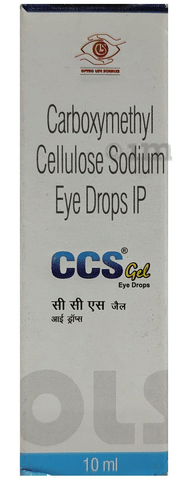
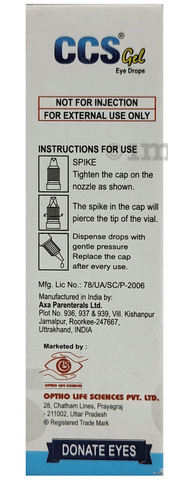
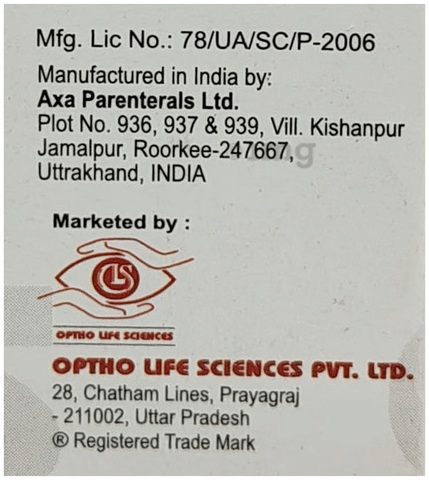


CCS Gel is an eye lubricant used to relieve dryness and discomfort in the eyes. Dryness may occur when your eyes do not produce enough natural tears to keep them moist. This medicine helps soothe irritation, burning, and a gritty sensation by maintaining proper lubrication of the eye surface.
Written By Dr. Anuj Saini, MMST, MBBS,
Reviewed By Dr. Sachin Gupta, MD Pharmacology, MBBS,
Last updated on 22 Sep 2026 | 01:01 AM (IST)
Written By Dr. Anuj Saini, MMST, MBBS,
Reviewed By Dr. Sachin Gupta, MD Pharmacology, MBBS,
Last updated on 22 Sep 2026 | 01:01 AM (IST)
Save 56% more with alternative

₹168
MRP ₹177.1
5% off
(Inclusive of applicable taxes)
Get for
₹143

on orders above ₹1200
Use Code 1MGNEWPLUS
Get for
₹155

on orders above ₹300
Use Code 1MGNEW
1/2
Welcome Gift | For First Order
15% EXTRA OFF


Get Extra 4% off + Free Delivery
at ₹165 (3 months)


Are you sure you want to remove Care Plan?

10 ml Eye Drop


Payment, Returns & Expiry

Cash on delivery available
Get your product first, then pay us once you're sure about your order

7 day free return
Easily return the product if you don't need it anymore

Product expires after Jun, 2027
Expiry date may vary by batch. All batches have a 3-month shelf life from the date of dispatch.

Price Info
MRP may vary by batch. Any additional charges, including packaging, handling, shipping or delivery charges, will be clearly disclosed before purchase.


Pay 56% less with a generic alternative with same composition
 Contains same composition
Currently viewing
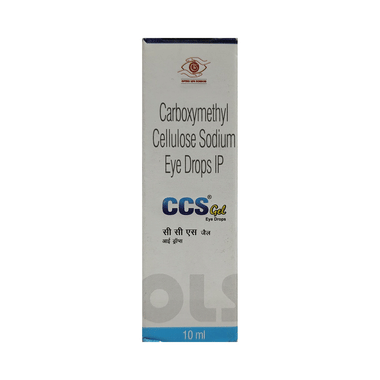
CCS Gel
bottle of 10 ml Eye Drop
₹14.3 per ml
₹168
₹143
order for
₹1200
Get by Tomorrow
by Optho Life Sciences Pvt Ltd
56% lower price



Save more with additional offers
10% cashback up to 200 on Min Transaction of Rs.1000, for first time users of Airtel Payments Bank.
10% cashback up to 200 on Min Transaction of Rs.1000, for first time users of Airtel Payments Bank.


Get up to ₹75 cashback on a minimum order value (MOV) of ₹499 and above, valid once per customer.
Get up to ₹75 cashback on a minimum order value (MOV) of ₹499 and above, valid once per customer.
Get up to ₹75 cashback on a minimum order value (MOV) of ₹499 and above, valid once per customer.
Get up to ₹75 cashback on a minimum order value (MOV) of ₹499 and above, valid once per customer.
10% cashback up to 200 on Min Transaction of Rs.1000, for first time users of Airtel Payments Bank.
10% cashback up to 200 on Min Transaction of Rs.1000, for first time users of Airtel Payments Bank.
Get up to ₹75 cashback on a minimum order value (MOV) of ₹499 and above, valid once per customer.
Get up to ₹75 cashback on a minimum order value (MOV) of ₹499 and above, valid once per customer.
Get up to ₹75 cashback on a minimum order value (MOV) of ₹499 and above, valid once per customer.
Get up to ₹75 cashback on a minimum order value (MOV) of ₹499 and above, valid once per customer.

Assured cashback up to ₹300*. T&C Apply*
Assured cashback up to ₹300*. T&C Apply*
General Information
Contains
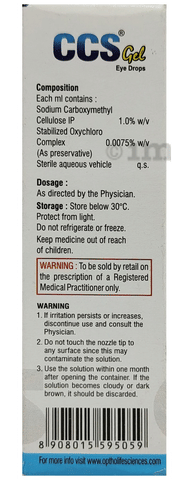
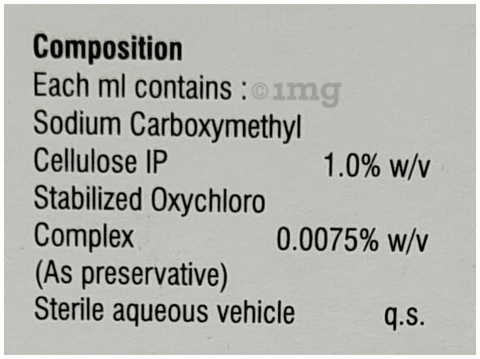
Carboxymethylcellulose (1% w/v)
Marketer
Optho Life Sciences Pvt Ltd
Storage
Store below 30°C
Preservative
Oxychloro Complex
The content is shown in English



All substitutes for CCS Gel
For information purposes only. Consult a doctor before taking any medicine.
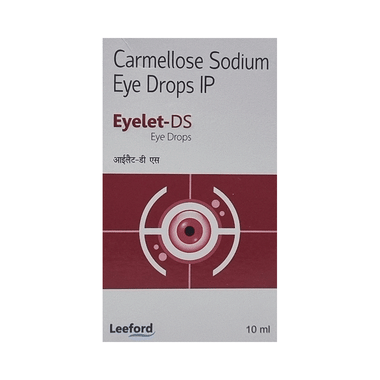
Eyelet DS Eye Drop
by Leeford Healthcare Ltd
₹112/eye drop
37% cheaper
Refresh Liquigel Eye Drop
by Allergan India Pvt Ltd
₹178.26/eye drop
1% costlier
Flogel Eye Drop
by Cipla Ltd
₹178.28/eye drop
1% costlier
Veldrop Gel
by Alembic Pharmaceuticals Ltd
₹178.26/eye drop
1% costlier
Softdrops Liquigel
by Ajanta Pharma Limited
₹269/eye drop
52% costlier
Safety advice

Alcohol
No interaction found/established

Pregnancy
SAFE IF PRESCRIBED
CCS Gel is safe to use during pregnancy. Most studies have shown low or no risk to the developing baby.

Breast feeding
SAFE IF PRESCRIBED
Available human data suggest that the drug does not pass into breast milk in clinically significant amounts and is unlikely to harm the infant.

Driving
UNSAFE
CCS Gel may cause temporary visual disturbances. Do not drive until your vision is clear.
Kidney
No interaction found/established

Liver
No interaction found/established
References
- Carboxymethylcellulose [Summary of Product Characteristics]. Rajasthan, India Ahlcon Parenterals (India) Ltd.; 2020. [Accessed 30 Oct. 2025] (online) Available from:

- Carmellose Sodium [EMC SmPC]. Maidenhead, UK: AbbVie Ltd.; 2025. [Accessed 30 Oct. 2025] (online) Available from:
- Sodium carboxymethylcellulose. Thines, Belgium: Exphar s.a.; 2021. [Accessed 19 Jan. 2026] (online) Available from:
Related products
Products related to CCS Gel



100% genuine products

Safe & secure payments

No contact delivery
Fully sanitized facilities

Want to know more
We provide you with authentic, trustworthy and relevant information
Have issue with the content
Why we need a prescription?

