






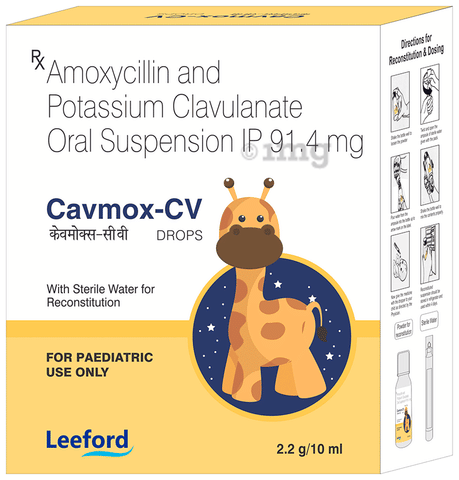

Cavmox-CV Drop
Amoxycillin (80mg)+ Clavulanic Acid (11.4mg)
 Genuine
Authenticity Assured
 Prescription
required
Cavmox-CV Drop is an antibiotic medicine that helps treat bacterial infections of the ear, nose, throat, chest, lungs, teeth, skin, and urinary tract. It is prescribed by doctors based on the type and severity of the infection.
Written By Dr. Subita Alagh, BDS,
Reviewed By Dr. Rajeev Sharma, MBA, MBBS,
Last updated on 07 Jan 2026 | 03:58 PM (IST)
Written By Dr. Subita Alagh, BDS,
Reviewed By Dr. Rajeev Sharma, MBA, MBBS,
Last updated on 07 Jan 2026 | 03:58 PM (IST)
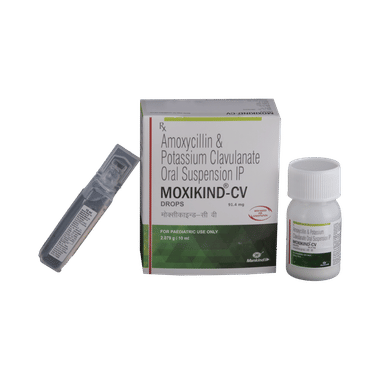
Available alternative from Mankind
Sold out
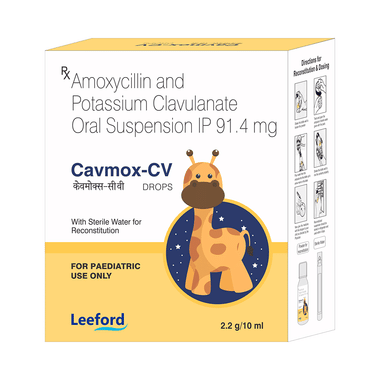
Cavmox-CV Drop
bottle of 10 ml Oral Suspension
₹61.9

Same composition
Moxikind-CV Drops
packet of 10 ml Oral Suspension
by Mankind Pharma Ltd
₹88.6
₹7.53 per ml
₹75.3
order for
₹1200
Save more with additional offers

Pay with Amazon Pay Balance and get cashback up to Rs. 75 with minimum cashback of Rs. 15
Pay with Amazon Pay Balance and get cashback up to Rs. 75 with minimum cashback of Rs. 15

Earn cashback up to Rs.75 with Amazon Pay Later
Earn cashback up to Rs.75 with Amazon Pay Later

Get upto Rs.500 Cashback on minimum transaction of Rs.999/- with Mobikwik Wallet.
Get upto Rs.500 Cashback on minimum transaction of Rs.999/- with Mobikwik Wallet.
Pay with Amazon Pay Balance and get cashback up to Rs. 75 with minimum cashback of Rs. 15
Pay with Amazon Pay Balance and get cashback up to Rs. 75 with minimum cashback of Rs. 15
Earn cashback up to Rs.75 with Amazon Pay Later
Earn cashback up to Rs.75 with Amazon Pay Later
Get upto Rs.500 Cashback on minimum transaction of Rs.999/- with Mobikwik Wallet.
Get upto Rs.500 Cashback on minimum transaction of Rs.999/- with Mobikwik Wallet.
Get upto Rs.150 Cashback on minimum transaction of Rs.599/- with Mobikwik UPI.
Get upto Rs.150 Cashback on minimum transaction of Rs.599/- with Mobikwik UPI.

Assured cashback up to ₹300 on minimum payment of ₹300 using Paytm UPI*
Assured cashback up to ₹300 on minimum payment of ₹300 using Paytm UPI*
General Information
Contains
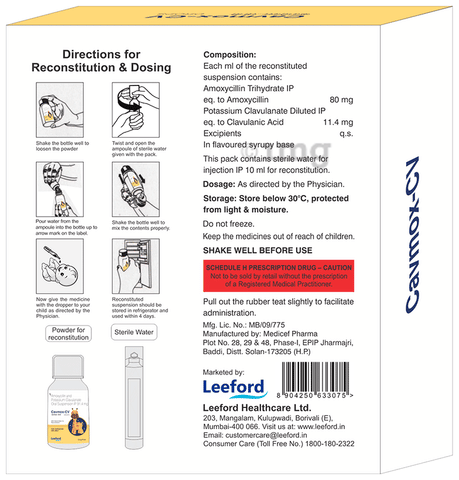
Amoxycillin (80mg)+ Clavulanic Acid (11.4mg)
Marketer
Leeford Healthcare Ltd
Storage
Store below 30°C
The content is shown in English



All substitutes for Cavmox-CV Drop
For information purposes only. Consult a doctor before taking any medicine.
Clavam Paediatric Oral Suspension
by Alkem Laboratories Ltd
₹124.69/oral suspension
77% costlier
Moxclav Paediatric Drops
by Sun Pharmaceutical Industries Ltd
₹101.25/oral suspension
44% costlier
Mega-CV Drops
by Aristo Pharmaceuticals Pvt Ltd
₹83.44/oral suspension
19% costlier
Moxikind-CV Drops
by Mankind Pharma Ltd
₹97.96/oral suspension
39% costlier
Bactoclav Drops
by Micro Labs Ltd
₹100.31/oral suspension
43% costlier
Safety advice
Alcohol
CONSULT YOUR DOCTOR
It is not known whether it is safe to consume alcohol with Cavmox-CV Drop. Please consult your doctor.

Pregnancy
SAFE IF PRESCRIBED
Cavmox-CV Drop is generally considered safe to use during pregnancy. Animal studies do not indicate harmful effects. However, there are limited human studies.

Breast feeding
SAFE IF PRESCRIBED
Available human data suggest that the drug does not pass into breast milk in clinically significant amounts and is unlikely to harm the infant.

Driving
CONSULT YOUR DOCTOR
It is not known whether Cavmox-CV Drop alters the ability to drive. Do not drive if you experience any symptoms that affect your ability to concentrate and react. Please consult your doctor.
Kidney
CAUTION
Cavmox-CV Drop should be used with caution in patients with kidney disease. Dose adjustment may be needed.
Liver
CAUTION
Cavmox-CV Drop should be used with caution in patients with liver disease. Dose adjustment may be needed.
Consult with your child’s doctor before giving Cavmox-CV Drop to your child in case of a severe form of liver disease.
Consult with your child’s doctor before giving Cavmox-CV Drop to your child in case of a severe form of liver disease.
Related lab tests
References

Related products
Products related to Cavmox-CV Drop


100% genuine products
Safe & secure payments
No contact delivery
Fully sanitized facilities

Want to know more
We provide you with authentic, trustworthy and relevant information
Have issue with the content
Why we need a prescription?

