
Winter changes the way your skin behaves. It forces your skin into a state of survival. As the temperature drops, humidity falls, indoor heaters run for hours, and cold wind becomes harsher – your skin loses moisture faster. The result? Dryness. Are you also someone experiencing dry, chapped lips and searching for the answer to ‘how to cure chapped lips fast?’
Before looking for a cure, it’s important to know the cause. Winter dryness is not just a cosmetic issue – it can weaken your skin barrier and make skin conditions worse.
Common Winter Skin Problems:
– Chapped or cracked lips
– Itchy scalp
– Dry, flaky, tight skin
– Rough elbows and knees
– Increased sensitivity
– Irritated or red patches
– Dry feet and hands
– Dull or uneven skin tone
With simple, smart changes and extra care in winter, you can protect your skin and keep it healthy all season. Let’s break down why winter causes dry skin, what routine to follow and how to cure chapped lips.
Why Winter Might Be Damaging Your Skin Barrier

- Low Humidity Outside
Winter air has less moisture. When humidity drops, the air pulls water away from your skin faster – this can lead to noticeable dryness.
- Indoor Heating Systems
Blowers and room heaters can strip away moisture from indoor air. This dehydrates the skin.
- Hot Showers
Although hot showers are quite relaxing and calming for you and your body in winter. Long, hot baths can break down natural oils (sebum) and disrupt the lipid barrier.
If you are distracted and want to dive deep into how hot water exactly damages hair and skin? Read here!
- Cold Wind & Temperature Fluctuations
Warm indoor heating and cold wind can create rapid temperature shifts that make the skin barrier more vulnerable.
- Reduced Oil Production
In winter, the skin produces less sebum, naturally making it drier and more prone to micro-cracks.
Understanding the root cause can help you choose the right routine – because winter skin needs nourishment, not complicated products.
Winter Skincare Routine For Healthy Skin
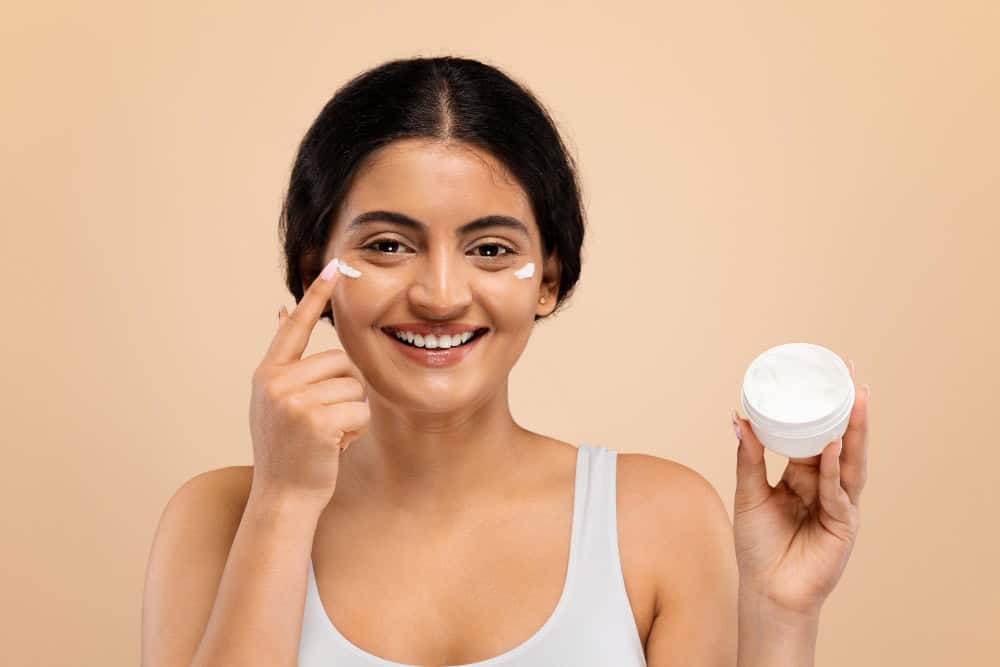
Below are simple yet effective skincare routine steps that can help you heal in cold weather.
1. Switch to a Gentle, Hydrating Cleanser
Harsh or foaming cleansers can strip your skin of its natural oils – something that skin desperately needs in winter. Choose sulphate-free, fragrance-free, gel-to-cream, or milk-based cleansers. Make sure they are either rich in glycerin, ceramides, or hyaluronic acid. You can also use aloe vera or rosewater as a gentle cleanser to avoid stripping the skin’s natural protective layer.
2. Moisturise Just After Having a Bath (Golden Minute Rule)
When you step out of a shower, your skin begins to lose moisture instantly. Apply moisturizers as soon as you can, as moisturizers increase the skin’s water content and restore the protective barrier. Choose moisturisers rich in humectants, like glycerin and hyaluronic acid, etc., that draw moisture to the skin and aid in enhancing its water content [1].
3. Add a Humidifier to Your Bedroom
Winter air lacks moisture, and heaters worsen dryness. A humidifier can restore moisture levels and can:
– Prevent dry skin and lips
– Reduce nasal dryness
– Improve sleep
– Make your moisturizer feel more effective
4. Protect Your Skin Outdoors
Cold wind can strip moisture from your skin within minutes. Wear gloves, a scarf or mask, use sunscreen, and apply moisturiser before stepping outside to protect your skin.
5. Stay Hydrated
Winters can make you feel less thirsty, but your body and skin still need hydration. So try to drink water more often, even if you don’t feel thirsty. Opt for coconut water, warm water, herbal teas, soups, and broths. Hydration of the skin starts from the inside.
6. Don’t Over-Exfoliate
Winter skin can already be sensitive. Exfoliating too often can damage your barrier, worsen dryness, or increase redness. Limit exfoliation or use gentle Alpha Hydroxy Acids (AHAs) (like minimum lactic acid) and enzyme exfoliators.
How to Cure Chapped Lips Fast: Tips to Combat Winter Dryness
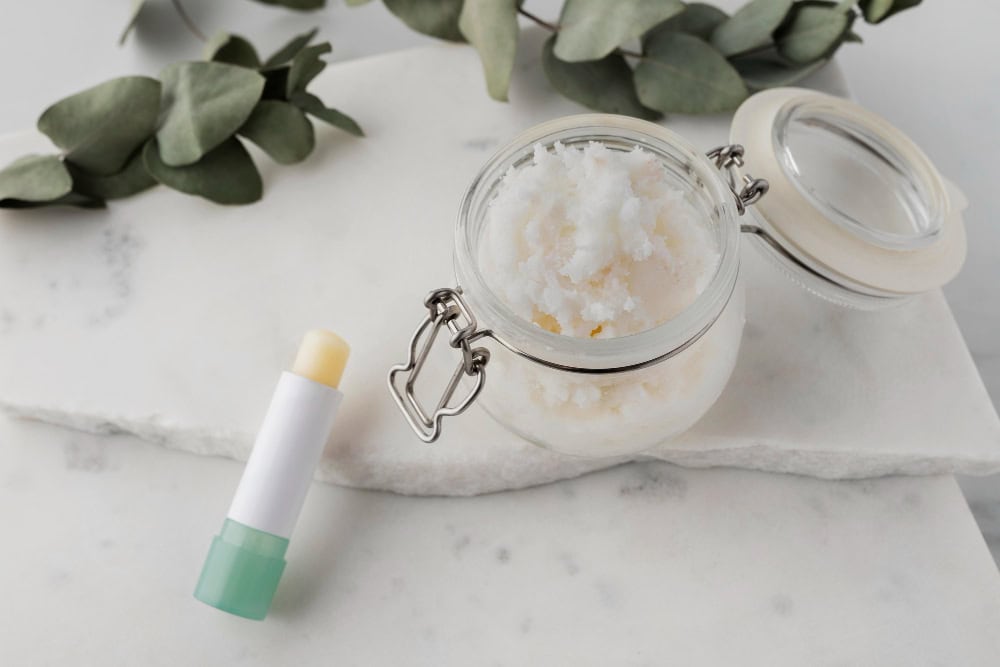
Lips lack oil glands, which makes them more prone to dryness. That’s why they crack fast and easily. Here’s how to care for them properly.
- Choose a lip balm with occlusives: Look for shea butter, beeswax, petroleum jelly, or squalane. These can lock in moisture and protect against wind.
- Avoid licking your lips: This can be your biggest mistake. Saliva can evaporate and make your lips even drier.
- Exfoliate lightly: Use a soft cloth or a mild sugar scrub once a week.
- Use a humidifier at night: This can help prevent your lips from losing moisture while you sleep.
- Avoid irritants: Mint, fragrance, and menthol can irritate your lips during winter.
- Overnight slugging for lips: Apply a thick layer of petroleum jelly at night. This can seal in moisture and repair cracks.
Ingredients Recommended In Winter
While choosing, make sure your lip balm or cream has these ingredients.
– Barrier Repair Ingredients: Such as fatty acids or ceramides.
– Hydrating Ingredients: Like glycerin or hyaluronic acid.
Avoid These Ingredients in Winter (if your skin is dry)
– Strong foaming cleansers
– Retinol every day
– Very hot showers
When to See A Dermatologist
Seek medical advice if you ever experience extreme dryness, painful or bleeding lips, hand and heel cracks. Eczematous patches, persistent itching, and oozing or infected skin should also be considered for immediate evaluation. Professional treatment may include prescription creams or barrier repair ointments.
Talk to One of the Best In-house Experts!
Key Takeaway
- Winter air pulls moisture from your skin and lips, making them dry and chapped.
- Use thick, occlusive lip balms containing petrolatum, shea butter, or lanolin for fast healing.
- Do not lick your lips, use harsh scrubs, or fragranced lip products. Drink enough water and stay well hydrated. Also consider a humidifier that can add moisture to indoor air.
- Skin and lips heal best when the moisture barrier is protected using gentle, hydrating products. Never skip applying moisturiser or lip balm multiple times a day, especially before bed. Maximum healing can happen while you sleep.
- Seek medical advice if your lips are cracked, painful, or not healing—this could indicate cheilitis or allergies.
FAQs
Q. How to cure chapped lips fast in winter?
Apply a thick occlusive lip balm (shea butter, etc.), avoid licking lips, stay hydrated, and use a humidifier at night.
Q. Why won’t my dry, chapped lips heal?
The possible reasons may include constant licking, dehydration, excessive exfoliation, or allergic lip balms. Cold weather exposure can also contribute to the cause and reduce the chances of fast healing.
Q. Is it better to moisturise in the morning or at night?
Both types of moisturizers are beneficial. Morning care can protect skin through the day, and night care can repair while you sleep.
Q. Can retinol cause dry lips?
Yes, retinol can migrate to the lip area and cause irritation or dryness. Protect your lips with a thick layer of lip balm.
Q. What skincare step should you never skip?
You should never skip moisturising. It can support the skin barrier and prevent dryness, irritation, and premature ageing.
Q. How do I hydrate my dry skin in winter?
To hydrate your dry skin in winter:
– Use a gentle cleanser
– Apply moisturiser
– Choose barrier repair lip balm
– Add a humidifier to your bedroom
All of these can prevent dryness, irritation, and premature ageing.
Q. What is the disease that starts with chapped lips?
Severely chapped lips can sometimes be an early sign of angular cheilitis, eczema, or a vitamin deficiency, but usually it’s environmental.
Q. How do I know if I’m over-moisturising?
Signs include clogged pores, greasy skin, small bumps, or your skin feeling coated rather than hydrated.
Q. Can ghee make lips pink?
Ghee moisturises well but cannot naturally change lip colour; it can only soften and heal the dryness of your lips.
Reference
1. Harwood A, Nassereddin A, Krishnamurthy K. Moisturizers. StatPearls – NCBI Bookshelf. https://www.ncbi.nlm.nih.gov/books/NBK545171/. Published February 12, 2024.
(The article is written by Sneha Jajoo, Intern, Clinical Health & Content, and is reviewed by Dr.Subita Alagh, Assistant Team Lead, Disease Content.)