
Joint stiffness can creep up on you without much warning. One day, you are bending, stretching, or climbing stairs, and suddenly you notice your joints do not move as smoothly as they once did. Long hours of sitting, limited physical activity, natural ageing, or even old injuries can gradually reduce joint mobility. When joints become stiff, it is not just flexibility that suffers. Posture, balance, and overall physical function can also be affected. The good news is that stiffness is not an unavoidable part of ageing. Gentle joint mobility exercises can help keep joints moving freely, reduce discomfort, and lower the risk of injury. Whether you are physically active, returning to exercise after a break, or simply aiming to move more comfortably in daily life, improving joint mobility can make a noticeable difference in how your body feels and functions.
Joint Discomfort and Mobility
Although joint pain is commonly addressed as a standalone issue, it is often linked to reduced mobility. When one joint fails to function properly, other muscles and joints must compensate. Certain regions may become more strained as a result of the unequal load, resulting in pain, discomfort, or inflammation. Furthermore, because stiff joints cannot easily respond to movement, they are more prone to sudden strain. Decreased mobility may also have an influence on alignment and posture. This domino effect can lead to chronic pain patterns that interfere with daily activities and physical performance.
The Role of Exercise in Joint Mobility Pain Management
When joints hurt, resting may seem like the safest option. However, too much inactivity can worsen stiffness and weaken the muscles that support the joints. Exercise improves blood flow, supports tissue repair, and strengthens surrounding muscles that help absorb impact during movement. It also enhances flexibility, allowing joints to move more smoothly and with less discomfort. The key is choosing the right type of exercise. Gentle, low-impact movements that build strength without placing excessive stress on sensitive joints are ideal. With regular practice, exercise can play a powerful role in managing joint pain and restoring comfortable movement.
Exercises For Joint Mobility
1- Heel Lifts

Improved ankle mobility can lead to greater balance, fewer falls, and improved performance in activities like squats and deadlifts. Heel raises are easy to perform. This stretch does not require any special equipment. However, other people may prefer to stand next to a wall or a chair to assist them in balancing. To begin this exercise, stand tall close to a wall, hands on your hips. If necessary, you can lay one hand on the wall to maintain balance. Then slowly rock forward onto your toes, assuming a tip-toe stance. Hold for a few seconds before releasing and placing your feet level on the ground again. Repeat this approximately ten times.
2-Neck Circles

Neck pain is among the most common and easiest to come across types of musculoskeletal pain. In addition to causing pain, decreased neck mobility might make it more difficult for you to carry out your everyday activities. This is when neck half-circles come in useful. It is simple to carry out and requires no equipment. Begin by sitting or standing comfortably, hands on your lap or by your sides. Then, gradually tilt your head to one side until you feel a stretch. Slowly roll your head forward, bringing your chin to your chest as far as possible without causing pain. Continue rolling your head to the other side until you feel a stretch on the other side of your neck. Make three half-circles calmly and smoothly.
3- Thoracic Spine Windmills
When you think about joint mobility, you might not think of your thoracic spine, yet it is this area that gives you the ability to fully raise your arms aloft and rotate your body sideways. Without sufficient mobility in this area, you may experience shoulder discomfort, poor posture, and upper back pain. This practice is crucial for anyone who works with computers!

Lie on the floor and roll to the side. Keep a foam roller or rolled-up towel nearby. Bend your knees and hips to 90 degrees, then rest your knees on the floor. Straighten your bottom leg, insert the foam roller or towel between the legs, and lay your top leg on top (still bent).
Extend your arms out in front of you on the floor, palms together. Slowly raise the upper arm and spin it away from you. You should feel your chest opening up towards the ceiling. Rotate your head and trunk till your hand can reach the other side of your body (or as near as possible). Hold for 3–5 seconds. Slowly return your head, body, and arm to the beginning position. Repeat 5–10 times on each side.
4- Shoulder Rotation
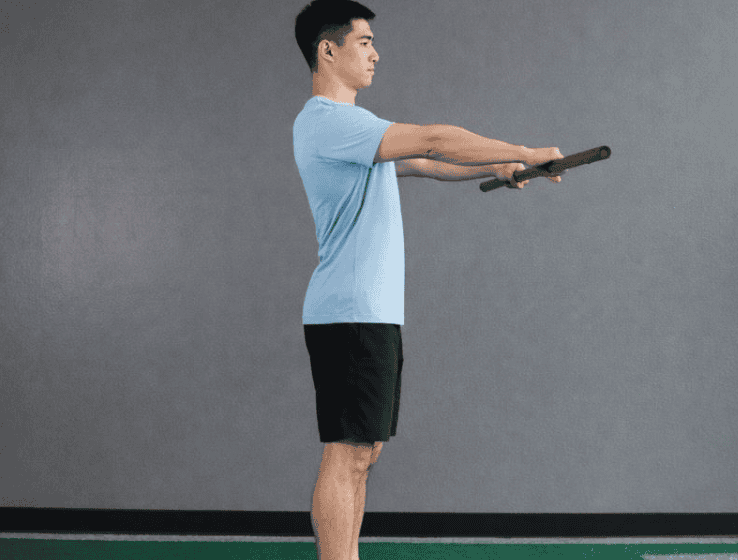
Shoulder rotations can enhance shoulder mobility and flexibility. To do this, all you need is a PVC pipe or a broomstick. Once you’ve got a stick, stand with your feet shoulder-width apart and hold it parallel to the ground. Use an overhand grip, keeping your hands as broad as possible. Keep your arms straight and gently elevate the broomstick above your head. Keep your core firm to maintain proper posture and balance. Then, bring the broomstick as far behind your head as you can. Hold for 2 seconds, then return to the starting position. To enhance mobility, repeat this exercise a few times, twice a day.
5- Knee Circles
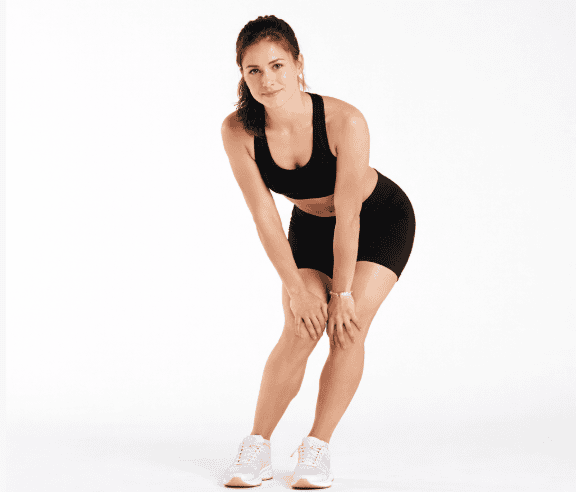
Moving down to the knee, this exercise stretches the leg muscles and opens up the knee and hip joints. While standing, elevate one knee and bend it such that your thigh is parallel to the floor. Extend one leg straight out in front of you. Make circles with your knee by moving the heel to the outside of your hip and then back to the initial position. Then, loop it inwards towards the other inner thigh and return to the stretched position. Repeat 10 rounds in each direction before switching to the opposing leg.
FAQs
What causes joint stiffness?
From bad postures, an inactive lifestyle, to injuries and age-related decline, there are various factors that can cause stiffness in joints.
How often do I need to do these exercises?
For best results, aim for 10-15 minutes of these muscle movement exercises every day.
Are joint mobility exercises safe for arthritis patients?
While most of these gentle movements are safe, it is best to consult your doctor or physical therapist before starting if you have arthritis.
Do I need any special equipment for these exercises?
The majority of these exercises just require stretching and body movement, and you do not need any expensive equipment to begin.
(The article is written by Ehsan Siddiqui, Team Lead and reviewed by Monalisa Deka, Deputy Manager, Clinical Health & Content, Medical Affairs)
Recommended Read:
Waking Up Early Can Help You Rise and Shine—Here’s How!
It’s Not Just You, It’s The Weather: Winter Blues Are Real And Here’s How To Fight It