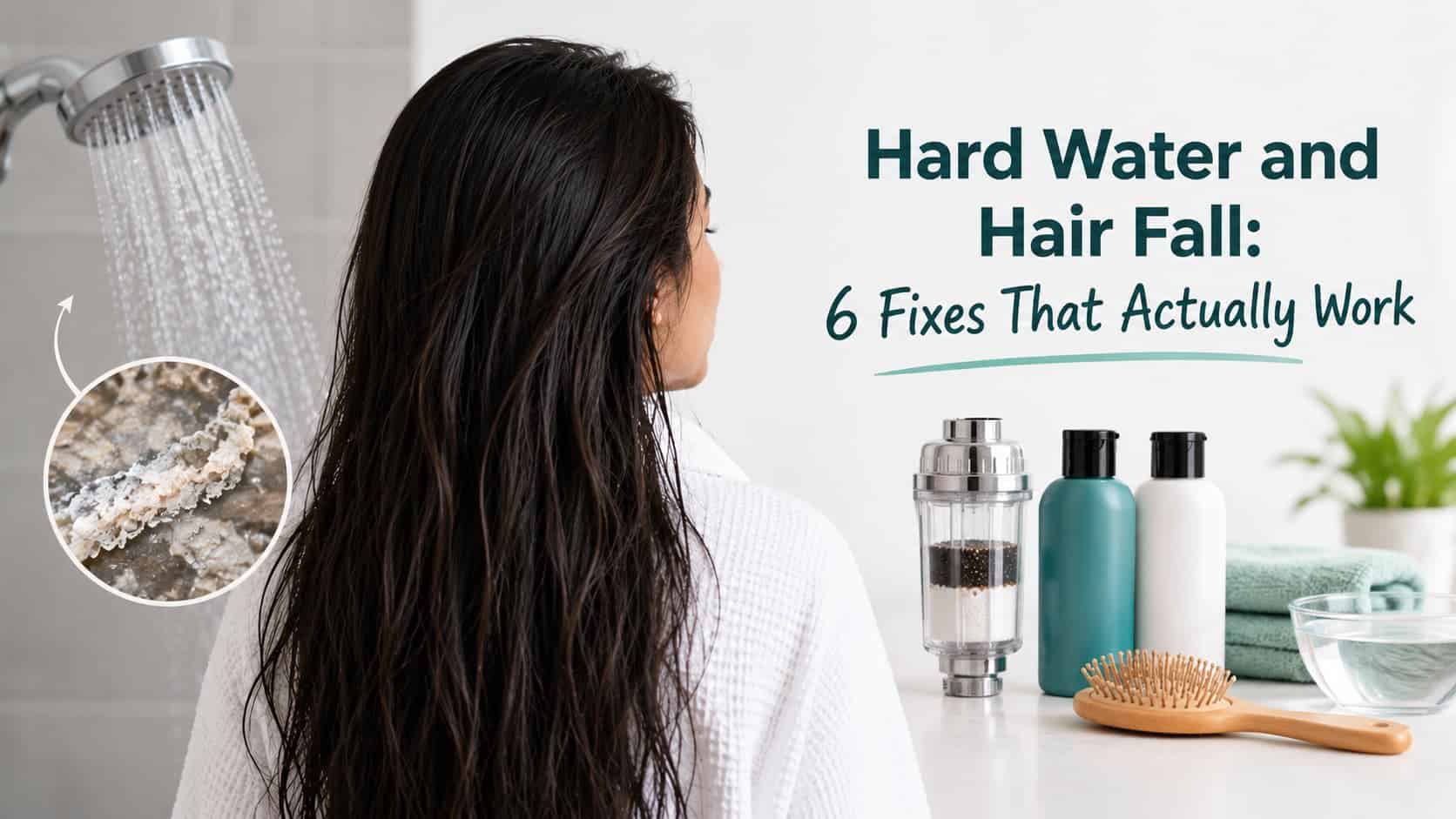
If your hair has suddenly started feeling rough, dry, tangled, or harder to manage, your shampoo may not be the only thing to blame. The water coming from your shower could be playing a role too.
Hard water contains minerals such as calcium and magnesium. When you wash your hair with it again and again, some of these minerals can build up on the hair shaft. Research has found that hard water can increase mineral deposits on hair, and some studies suggest it may reduce hair strength and increase breakage.
But here’s the part that often gets confusing: hard water doesn’t automatically cause hair loss from the roots.
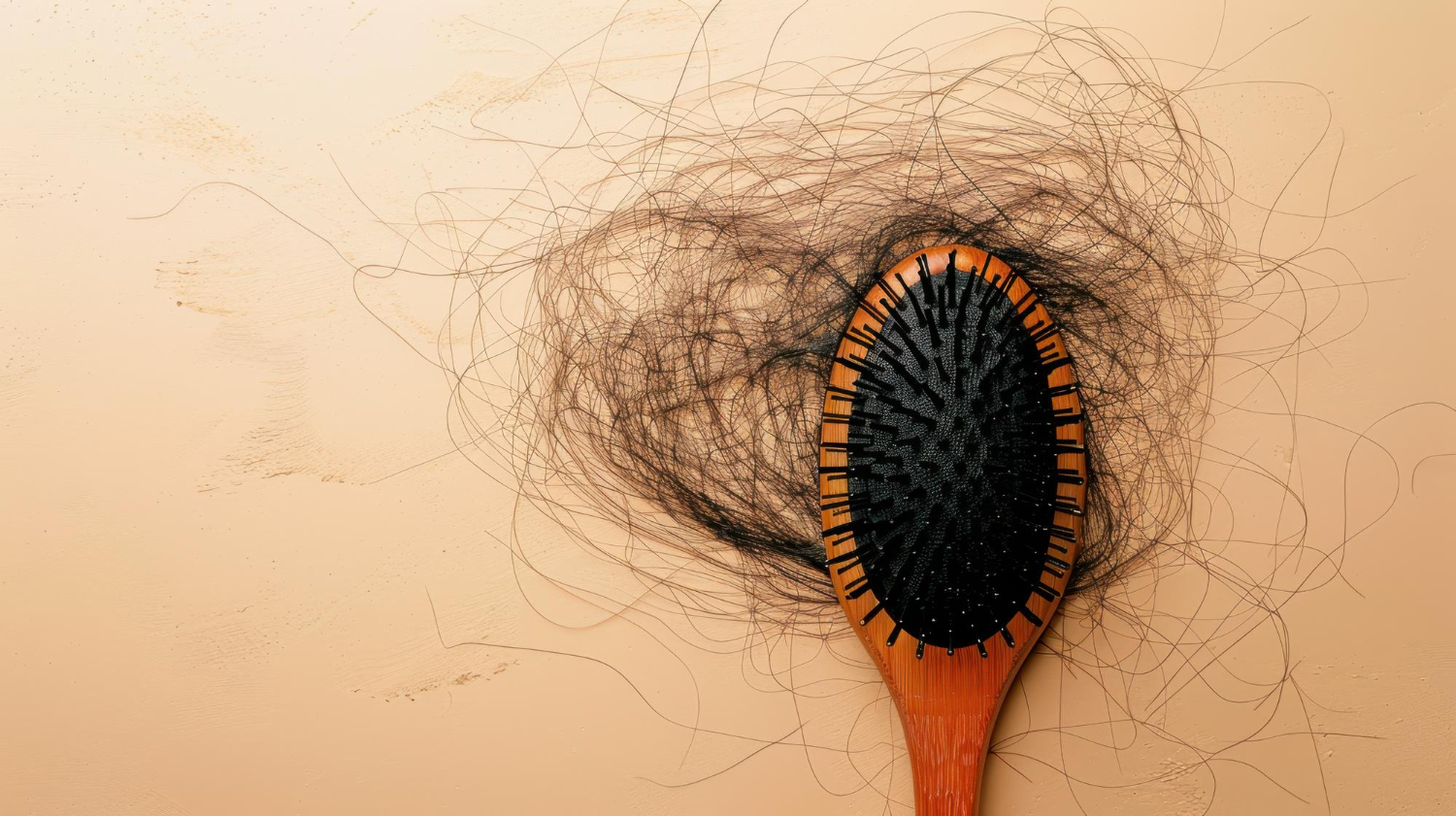
What you may notice instead is more hair breaking while brushing, washing, or styling. Over time, that can make your hair look thinner and leave you wondering where all that hair is going.
The good news? You don’t necessarily need to move houses or stop washing your hair. A few simple changes can help.
How Does Hard Water Affect Your Hair?
Think of your hair like a delicate piece of fabric. The more mineral residue that sits on it, the harder it can become to keep it smooth and moisturized.
Calcium and magnesium in hard water can stick to the surface of your hair. Studies have found higher mineral deposits on hair exposed to hard water, although the evidence isn’t completely consistent on how much this changes the hair’s structure.
Some research has also found that hair exposed to hard water had lower tensile strength, meaning it could break more easily when pulled or handled [1].
This may show up as:
- More hair breakage
- Rough or dry-feeling hair
- Increased tangling
- Dull-looking hair
- Difficulty getting shampoo to lather
- A heavy or coated feeling after washing
So, if you notice a lot of short broken strands rather than full-length hairs coming out from the root, hard-water-related breakage could be one factor.
However, sudden or significant hair shedding can have many other causes, including stress, nutritional deficiencies, hormonal changes, thyroid problems, illness, or certain medicines. Don’t blame your shower water for everything.
6 Fixes for Hard Water Hair
1. Use a Shower Filter
A shower filter is one of the easiest things you can try if you suspect hard water is affecting your hair.
It can help reduce certain impurities in shower water, depending on the type of filter you use. But there’s an important catch: not every shower filter actually softens hard water.
If your main problem is calcium and magnesium, look for a system specifically designed to reduce water hardness. A basic filter may not remove enough of these minerals.
If you’re unsure whether your water is hard, you can also check your local water quality report or use a home water hardness test.
Don’t expect a miracle after one shower, though. Hair that’s already damaged won’t instantly become healthy. The goal is to reduce further mineral exposure.
2. Add a Clarifying or Chelating Shampoo
Regular shampoo may not always remove mineral buildup effectively.
A clarifying shampoo can help remove product residue and buildup. For mineral deposits from hard water, a chelating shampoo may be more useful because it contains ingredients designed to bind with certain minerals and help wash them away.
Don’t use a strong clarifying or chelating shampoo every day. It can leave your hair dry, especially if your hair is already damaged.
Instead, use it occasionally according to the product instructions, then follow with a good conditioner.
If your hair feels rough, coated, or unusually heavy despite regular washing, this step may make a noticeable difference.
3. Condition Your Hair Every Time You Wash It
Hard water can leave your hair feeling dry and difficult to manage. That’s where conditioner becomes your best friend.
Apply conditioner mainly to the lengths and ends of your hair. Leave it on for the recommended time before rinsing.
If your hair is very dry, you can also use a hair mask once a week.
The aim isn’t to make your hair look greasy. It’s to reduce friction and make the strands easier to comb and handle.
This matters because rough, tangled hair is easier to break. And sometimes what looks like “hair fall” is actually a lot of breakage happening during detangling.
4. Don’t Scrub Your Hair Too Hard
When your scalp feels dirty or your hair feels coated, you may be tempted to scrub harder.
Don’t.
Use your fingertips to gently massage your scalp while shampooing. You don’t need to scratch or aggressively rub your hair lengths.
Also, avoid rubbing your hair with a towel after washing. Gently squeeze out excess water and pat or wrap your hair instead.
Wet hair is more fragile, so rough handling can add to breakage.
Your hair doesn’t need a wrestling match every time you shower.
5. Try a Final Rinse With Filtered Water
If installing a water-softening system isn’t practical right now, a simpler option is to use filtered or suitable bottled water for your final hair rinse.
This won’t remove the minerals your hair has already accumulated, but it can reduce exposure during that final rinse.
You don’t have to pour litres of water over your head. A small amount used for the final rinse may be more practical.
This can be especially useful if you’ve noticed that your hair feels significantly different after washing with tap water.
Still, don’t treat this as a permanent cure for hair loss. If you’re losing hair from the roots, you need to look beyond water quality.
6. Protect Your Hair From Other Causes of Breakage
Hard water may be only one piece of the puzzle.
Frequent heat styling, bleaching, colouring, tight hairstyles, excessive brushing, and chemical treatments can all make hair more fragile.
Try to give your hair a break where you can.
Use lower heat settings, avoid pulling your hair tightly, detangle gently, and don’t repeatedly straighten or curl already damaged strands.
You should also eat a balanced diet with enough protein, iron, zinc, vitamins, and other nutrients. But don’t start taking hair supplements blindly. Taking more of a nutrient doesn’t necessarily mean you’ll grow more hair, and some supplements can cause problems when taken unnecessarily.
Does Hard Water Actually Cause Hair Loss?

This is where you should separate hair loss from hair breakage.
Hair loss happens when hairs shed from the scalp. Hair breakage happens when the hair shaft snaps somewhere along its length.
Hard water has been linked in some studies to reduced hair strength and mineral deposition, which may contribute to breakage.
But research isn’t perfectly consistent. One study found no significant difference in hair tensile strength or elasticity after hard-water exposure.
So, it’s too strong to say, “Hard water causes hair loss.”
A better way to put it is that hard water may contribute to hair dryness, mineral buildup, and breakage in some people.
If you’re noticing actual thinning at the scalp, widening of your hair part, bald patches, or a sudden increase in shedding, don’t assume your water is responsible.
How Can You Tell If Hard Water Is Affecting Your Hair?
Look for a pattern.
If your hair feels rough immediately after washing, becomes difficult to detangle, looks dull, or seems coated despite using your usual products, hard water could be contributing.
You might also notice white mineral deposits around your taps or shower fixtures. That’s a clue that your water contains a high level of minerals.
But symptoms alone can’t prove that hard water is causing your hair problems.
If changing your water source or using a suitable mineral-removing shampoo improves the texture and breakage over several weeks, that gives you a more useful clue.
When Should You See a Dermatologist?
Don’t spend months changing shampoos if your hair is clearly thinning.
See a dermatologist if you have:
- Sudden or heavy hair shedding
- Noticeable thinning at the scalp
- A widening hair part
- Bald patches
- Scalp itching, scaling, pain, or redness
- Hair loss that continues despite improving your hair-care routine
A dermatologist can check whether the problem is breakage or true hair shedding and look for other causes.
Your shower water may be part of the story, but it doesn’t have to be the whole story.
FAQs
Can hard water cause hair fall?
Hard water may contribute to hair dryness, mineral buildup, and breakage. However, evidence that it directly causes hair loss from the scalp is limited and mixed. If you’re experiencing significant shedding, other causes should also be considered.
Is hard water bad for your hair?
It can be for some people. Repeated exposure may leave mineral deposits on the hair and may make strands feel rough or contribute to breakage. Research has found mineral deposition with hard-water exposure, although studies don’t all show the same effect on hair structure.
Does boiling hard water make it safe for hair?
Boiling can reduce some types of temporary water hardness, but it doesn’t remove all minerals responsible for permanent hardness. So, simply boiling your shower water isn’t a practical solution for most people.
Which shampoo is best for hard water hair?
Look for a clarifying or chelating shampoo designed to remove mineral buildup. Use it according to the instructions rather than replacing your regular shampoo with it for every wash.
Can a shower filter stop hair fall?
A shower filter may reduce some impurities, but it isn’t a guaranteed treatment for hair loss. Also, not every shower filter removes calcium and magnesium. If hard water is your concern, check whether the system is designed to address water hardness.
How often should I use a clarifying shampoo?
It depends on your hair type and the product. Using a strong clarifying or chelating shampoo too often can leave your hair dry. Follow the product instructions and use a moisturising conditioner afterward.
Is hard water worse for coloured or chemically treated hair?
It may be. Chemically treated hair is often more fragile, so anything that increases dryness or breakage can make the problem more noticeable. Gentle washing, conditioning, and reducing heat can help protect it.
Can changing water stop hair loss?
If hard water is contributing to breakage, reducing exposure may help your hair feel healthier and break less. But if you’re losing hair from the roots, changing your water alone probably won’t address the underlying cause.
What is the simplest fix for hard water hair?
Start with two things: use a suitable mineral-removing shampoo occasionally and condition your hair after washing. If the problem continues, consider testing your water and looking into a water-softening solution.
If you’re curious about other everyday health questions, you can also check out Tata 1mg’s practical guides on topics such as [understanding blood pressure readings and what the numbers mean] and [comparing everyday foods for heart health]. These kinds of simple health explainers can make confusing topics much easier to understand.
Disclaimer: This article is for general health awareness and should not replace advice from a dermatologist or other qualified healthcare professional. If you’re experiencing persistent or sudden hair loss, consult a doctor to identify the cause.
References
1.Srinivasan, G., Srinivas, C. R., Mathew, A. C., & Duraiswami, D. (2013). Effects of hard water on hair. International journal of trichology, 5(3), 137–139. https://doi.org/10.4103/0974-7753.125609
The article is written by Mantasha, Sr. Executive, Clinical Health & Content, and reviewed by Monalisa Deka, Deputy Manager, Clinical Health & Content, Medical Affairs.)
Recommended Reads:
Simple Habits to Boost Vitamin D and Lower Cortisol Levels Naturally
Clinically Explained Vitamin D Supplements: Benefits, Dosage & Timing