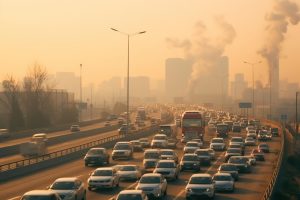
Polluted roads impact daily commuting in ways that extend beyond mere inconvenience. Vehicle exhaust, road dust, and emissions from other sources contribute to traffic-related air pollution. Commuters may be exposed to fine particulate matter (PM2.5), nitrogen dioxide, and other pollutants. Exposure can irritate the respiratory system and increase the risk of cardiovascular and respiratory diseases, particularly with prolonged or repeated exposure [1].
What kind of transport to take, which road to choose, time spent on the way, and whether to open windows in your vehicle lead to your being exposed to polluted air. So even though avoiding breathing polluted air entirely may be impossible, there are some steps you may follow to minimize its impact on your health.
1. Check The Air Quality Before Leaving
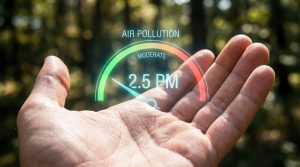
To be ready for commuting during high levels of air pollution, always check the Air Quality Index before leaving home.
If the air quality is rated poorly:
– If possible, avoid outdoor travel that isn’t crucial.
-Avoid congested roads and construction sites.
– When pollution levels are high, consider postponing strenuous outdoor exercise or moving it to a cleaner location or indoor setting. People with asthma or other heart and lung conditions should follow their healthcare professional’s advice [2].
-Always remember that AQI differs from neighborhood to neighborhood and during the day; you should check the local data.
2. If You Commute By Bicycle Or Scooter

If you ride a two-wheeled vehicle, you directly inhale the contaminated air outside, since you do not have a closed cabin. In this case, road congestion, car exhaust, and dust on the road might increase personal dust inhalation for a two-wheeled traveler who rides behind a big vehicle.
So take these precautions:
– Wear a properly fitted, certified N95 respirator: It can help filter airborne particles, including PM2.5, when it fits closely over the nose and mouth with minimal leakage around the edges. Check that the product meets a recognised certification standard. An N95 respirator does not protect against gaseous pollutants such as nitrogen dioxide or carbon monoxide [2].
– Keep a safe distance from diesel vehicles: No matter what form of pollution is in the air due to buses, trucks, etc., stay far away from such vehicles.
– Use less busy roads: Whenever possible, use less busy roads and try to avoid places with road construction.
– Clean your helmet visor: A clean visor will improve your visibility, even in fog or dust.
– Don’t linger unnecessarily at the roadside: Avoid unnecessary stops near busy roads. Always obey traffic signals and road-safety rules; never compromise safe riding to reduce pollution exposure.
– Avoid masks that restrict your breathing or your ability to sit properly in the helmet. If you experience dizziness, stop somewhere safe. Seek urgent medical attention if you develop chest pain, severe breathlessness, fainting or symptoms that do not improve.
3. If You Travel By Bus
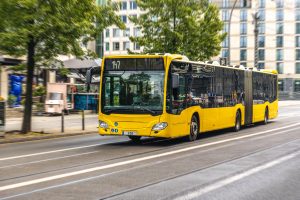
Although buses help reduce traffic on the road, the pollution is still evident.
A few simple measures can be taken to minimize exposure:
– Stand back from the road: Stand safely away from the curb; do not wait immediately behind idling buses.
– Choose less busy stops: Use, when possible, stops not adjacent to busy intersections or heavy construction activity.
– Get on board promptly and safely: Avoid remaining intentionally next to running engines or exhaust outlets.
– Close the windows if appropriate: If a bus has working air conditioning and a filtered ventilation system, this reduces some of the pollution that might get into the bus through open windows. This, however, depends on the type of filtration and ventilation on the bus.
– Don’t sit next to exhaust sources: If possible, try to sit away from any engines or exhaust vents that come into the bus.
If the bus has poor ventilation or if strong fumes are noticed, consider moving to a different seat or choosing another travel mode, whenever possible.
4. If You Drive to Work
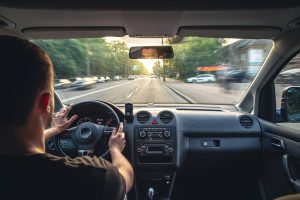
While a car’s cabin can provide some shelter from roadside pollution, it cannot offer full protection: polluted air can enter through ventilation systems, open windows, and gaps in the vehicle.
Ways to reduce your exposure include:
– Keep windows shut in heavy traffic: This can help avoid the ingress of polluted air from outside.
– Use the recirculation setting selectively: It can temporarily reduce the entry of outdoor pollutants into the cabin. However, avoid relying on recirculation continuously during long journeys. Switch to fresh-air ventilation periodically when outdoor conditions allow, and follow the vehicle manufacturer’s guidance.
– Provide right maintenance to the cabin filter: Follow vehicle manufacturer instructions to have proper control of the cabin filter maintenance. An appropriate and well-functioning cabin filter will contribute to the removal of incoming air pollutants.
-Avoid idling: If your car is parked and you are waiting for someone or sitting for a while, switch off the engine instead of keeping it running. A running engine continues to release exhaust pollutants.
– Maintain cleanliness of the cabin: Clean the floors and seats regularly so that settled pollutants do not circulate again. If you have air conditioning, ensure that your ventilation is well maintained. Cabin air is not pollution-free even with regular cabin filters.
5. Choose Your Route & Timing Carefully

Do keep in mind that the shortest route may not necessarily be free of all pollution exposure. Traffic jams, heavy vehicles, and road construction will add up to higher pollution levels encountered during your trips.
When you have the chance:
– Choose quieter alternative routes instead of congested highways.
– Do not follow buses and heavy trucks directly.
– Avoid traveling during peak hours if you have the option.
– Refrain from walking or cycling on busy roads.
– Switch errands to minimize the total number of trips.
A slight change in either itinerary or timetable can save many hours of being near pollution sources. Still, it should be mentioned that air pollution levels can fluctuate, so no route is 100% safe.
6. Take extra precautions if you have a heart or lung condition

People with asthma, chronic obstructive pulmonary disease (COPD), heart disease, or any other condition are also more susceptible to worsening air conditions. Children, seniors, and pregnant people should also be extra cautious [3].
If you have a breathing problem:
– Stick to your medical regimen and have any emergency medication close by.
– Check the AQI before going out and limit exposure to the outdoors when pollution levels are high.
– Avoid vigorous outdoor activity close to high-traffic areas.
– Discuss a suitable transportation plan and mask use with your doctor.
-Do not stop taking medication or use the mask instead of medical treatment.
7. Limit Exposure After Arriving at Your Location

Safety measures should not stop once you arrive at your destination. These dusts and pollutants are likely to stick to your clothing, shoes, and your personal items.
Upon your arrival at your home or office:
– Wash hands and face after the dust has settled.
– Change clothes if they have acquired a lot of dust.
– Place outdoor shoes at the entrance.
– Make sure to keep dirty things out of bedrooms.
– If indoor air quality is poor, consider using a portable air cleaner with a HEPA filter that is appropriately sized for the room. Keep windows and doors closed during periods of high outdoor pollution, and ventilate when outdoor air quality improves. An air purifier does not remove every type of indoor pollutant [2].
Conclusion

Even if some might be unable to avoid travelling through smog, there is still a way to reduce exposure through smart decisions. Check the AQI, choose routes that are less travelled, use a good N95 mask if needed, and ventilate the vehicle properly. People with pre-existing health conditions should follow the advice of their doctor. There is no solution to prevent exposure 100%, but gradual changes are helpful to make the process safer.
FAQs
Q. Will wearing a cloth mask protect me from smog?
No, cloth masks are ineffective in filtering out particulate matter. However, properly fitted and certified N95 respirators are much better at filtering out the particles.
Q. Is it safer to travel by car than ride a bicycle during smog?
If your car has its windows shut and the ventilation system is working, it is possible to reduce exposure to outdoor particles. However, it greatly depends on the cabin filtration system.
Q. Should I use the AC recirculation mode in my car?
It reduces the intake of outside particles. However, it is better not to use the recirculation mode constantly, especially for long periods of time.
Q. Will an N95 mask give protection against all pollutants in the air?
It will not completely protect you against air pollution, although it can filter particles in the air. Airborne chemicals can still pass through the mask.
Q. What should I do if the pollution level is high and I want to go jogging outside?
It is advisable to reduce or hold off on exercising outdoors if the atmosphere is very polluted, especially in areas close to heavily trafficked roads.
Q. Is there still some protection against smog while you are seated inside a bus?
It does not provide complete protection, as the air pollutants may still enter the bus depending on its construction and filtering mechanism.
Q. Can air pollutants affect a person who has no previously reported health problems?
Yes. The negative influence of pollution is not limited to people suffering from a health issue.
Q. When is it critical to visit a doctor after being exposed to smog?
You should consult a health specialist if you start to cough, breathe heavily, or have any other issues after being exposed to smog.
References
1. World Health Organization. Ambient (outdoor) air pollution [Internet]. Geneva: WHO; 2024 Oct 24 [cited 2026 Nov 9]. Available from: https://www.who.int/news-room/fact-sheets/detail/ambient-%28outdoor%29-air-quality-and-health
2. World Health Organization. Air pollution: Personal interventions and risk communication [Internet]. Geneva: WHO; 2024 Oct 4 [cited 2026 Nov 9]. Available from: https://www.who.int/news-room/questions-and-answers/item/air-pollution-personal-interventions-and-risk-communication
3. Jiang XQ, Mei XD, Feng D. Air pollution and chronic airway diseases: what should people know and do? J Thorac Dis [Internet]. 2016;8(1):E31-40. Available from: http://dx.doi.org/10.3978/j.issn.2072-1439.2015.11.50
(The article is written by Deepa Sarkar, Senior Medical Writer, and reviewed by Monalisa Deka, Deputy Manager, Clinical Health & Content, Medical Affairs)