Germline HRR Gene Panel

For men & women
Earliest reports in

480 hours

Contains

1 test

Know more about this test

The Germline HRR Gene Panel is a genetic test that examines specific genes involved in DNA repair, particularly the Homologous Recombination Repair (HRR) pathway. It helps doctors assess inherited risk for cancers, including breast, ovarian, pancreatic, and prostate cancers, and supports personalized treatment planning and preventive care.


Samples required
Blood

Find out
Why is this test booked?

Preparation for this test

Sample Collection
Who will collect your samples?
Test conducted by
.png)
MedGenome Labs Limited
ISO, CAP, NABL certified
Know More

Know more about lab

ISO, CAP, NABL certified
Test Information is reviewed by: Dr. Swati Gupta (Anand), MBBS, MD Lab Medicine and written by Dr. Lipika Khurana, BDS, PGDHHM . The test details are for information purpose only. Consult a doctor before taking any test. Last updated on: 16th May 2026
Did you find information useful ?
 YES (1)
 NO
NO 
Book a Germline HRR Gene Panel test at home near me

Easy online booking
Search for tests and packages, book your preferred time slot and enter your address for seamless at-home lab tests.

Live tracking of phlebotomist
Track our trained phlebotomist's real time location for seamless sample collection.
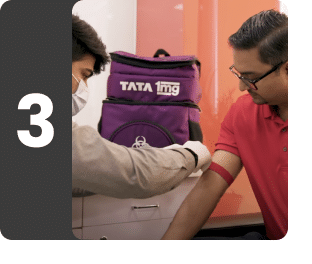
Safe Sample Collection
Our phlebotomists follow strict safety protocols to collect samples safely at home and on time.
Sample received at lab
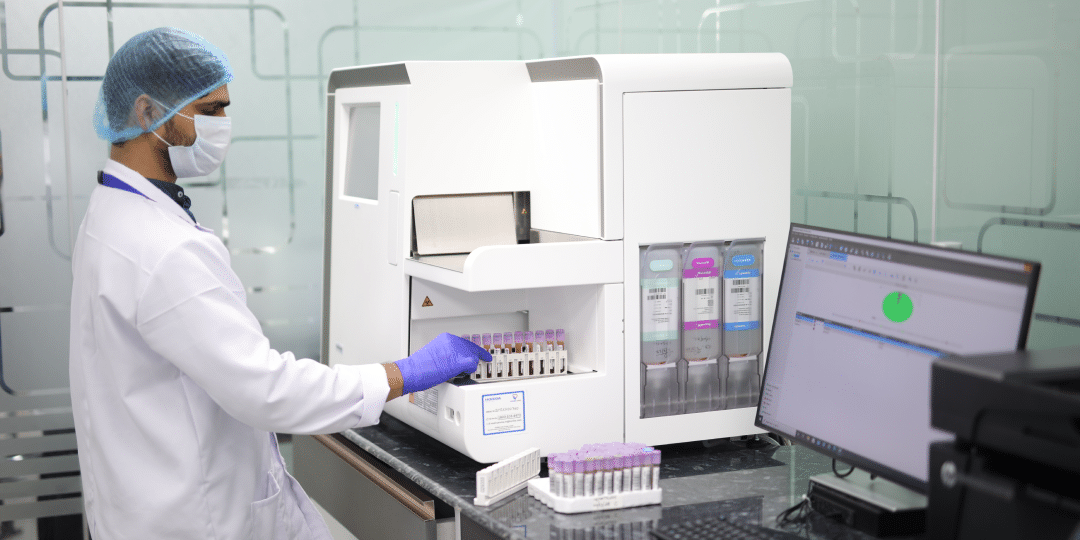
Samples are transported securely to our accredited labs with world-class machines for testing by qualified experts.
Quick, Doctor-Verified Reports
Get doctor-approved reports via email and WhatsApp, with options for doctor follow-ups and AI insights.



References
- Cortesi L, Piombino C, Toss A. Germline Mutations in Other Homologous Recombination Repair-Related Genes Than BRCA1/2: Predictive or Prognostic Factors? J Pers Med. 2021 Mar 28;11(4):245. [Accessed 14 Oct. 2025]. Available from:

- Scott RJ, Mehta A, Macedo GS, Borisov PS, Kanesvaran R, El Metnawy W. Genetic testing for homologous recombination repair (HRR) in metastatic castration-resistant prostate cancer (mCRPC): challenges and solutions. Oncotarget. 2021 Aug 3;12(16):1600-1614. [Accessed 14 Oct. 2025]. Available from:
- Next-generation sequencing-based analysis of homologous recombination repair gene variant in ovarian cancer [Internet]. ScienceDirect; [Accessed 14 Oct. 2025]. Available from:

Recommended for everyone
This package is designed with everyone’s overall health considerations in mind, offering assessments to address a wide range of wellness needs.
Contains 1 test
Report delivery
Standard time
480 hrs
For slots after 11 AM, report will be delivered in 480 hours.
Samples required

Blood
Our phlebotomist will draw a blood sample, typically from a vein in your inner elbow.
Preparations
1
Provide your clinical history, previous test reports, and a valid prescription. Tata 1mg consolidated TRF to be filled.
Why is this test booked?
1
If you have a personal or family history of hereditary cancers, especially breast, ovarian, pancreatic, or prostate cancers.
2
If your cancer diagnosis occurred at a young age, or you have bilateral cancers.
3
To guide personalized treatment decisions, such as targeted therapies or preventive interventions.
4
To support genetic counseling and family planning for at-risk individuals.
5
To assess inherited risk for developing certain types of cancers and guide regular surveillance.
Who's behind your sample collection?




MEET YOUR PHLEBO

Certified & experienced professionals
Tata 1mg phlebotomists are DMLT / B.Sc MLT certified and have 1+ years of experience

Best in-class collections
Tata 1mg phlebotomists are trained for painless, single-prick hygienic sample collection

Comprehensive expertise
Other than sample collection, our phlebos are also skilled in first aid, ECG & BP monitoring
WHAT OUR CUSTOMERS ARE SAYING
PERFECT SERVICE....
~ AMIT ANAND 7330002602

Excellent service by the techician
~ Rahul.R
Very nice 👍
~ PANKAJ SHARMA 7310002964
The technician's behaviour and conduct was kind and professional. He ensured safety procedures were explained and followed. The collection of sample was done well in time as requested.
~ Richa
Good service
~ PANKAJ BET
Good service
~ YASH PANKAJ BET
Good experience
~ Rony Dominic Thomas
Good/ but test report not received
~ NARINDER SINGH 7330220122
Good information
~ Kalpak Kadam
Overall good
~ Anjali Anand