Fragile X Syndrome

For men & women
Earliest reports in

672 hours

Contains

1 test

Know more about this test

Fragile X syndrome is a genetic disorder caused by a repeat expansion in the FMR1 gene, leading to intellectual and developmental disabilities. The disorder is the most common inherited cause of intellectual disability and autism spectrum disorder. This genetic test analyzes the FMR1 gene to detect mutations that disrupt the production of the fragile X mental retardation protein (FMRP), which is essential for normal brain development. Without adequate FMRP, the brain does not function properly, leading to the characteristic features of fragile X syndrome. Genetic testing typically involves analyzing DNA samples to identify specific mutations, offering precise and personalized information about an individual's genetic health.


Samples required
Blood

Find out
Why is this test booked?

Preparation for this test

Sample Collection
Who will collect your samples?
Test conducted by
.png)
Mapmygenome India Limited
NABL, ISO certified
Know More

Know more about lab
.png)

NABL, ISO certified
Test Information is reviewed by: Dr. Swati Gupta (Anand), MBBS, MD Lab Medicine and written by Dr. Lipika Khurana, PGDHHM, BDS . The test details are for information purpose only. Consult a doctor before taking any test. Last updated on: 15th Aug 2026
Did you find information useful ?
 YES
YES  NO
NO 
Book a Fragile X Syndrome test at home near me
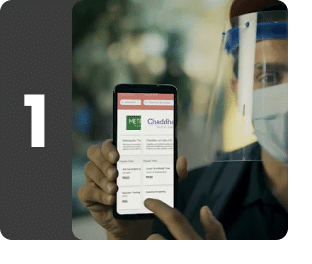
Easy online booking
Search for tests and packages, book your preferred time slot and enter your address for seamless at-home lab tests.
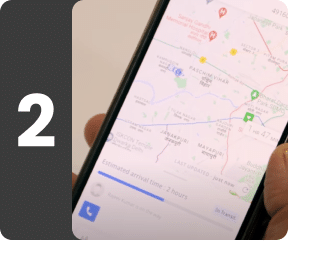
Live tracking of phlebotomist
Track our trained phlebotomist's real time location for seamless sample collection.
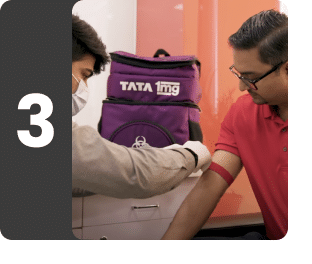
Safe Sample Collection
Our phlebotomists follow strict safety protocols to collect samples safely at home and on time.
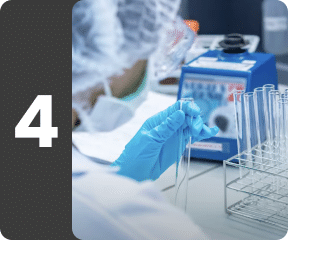
Sample received at lab
Samples are transported securely to our accredited labs with world-class machines for testing by qualified experts.
Quick, Doctor-Verified Reports
Get doctor-approved reports via email and WhatsApp, with options for doctor follow-ups and AI insights.




Recommended for everyone
This package is designed with everyone’s overall health considerations in mind, offering assessments to address a wide range of wellness needs.
Contains 1 test
Report delivery
Standard time
672 hrs
For slots after 11 AM, report will be delivered in 672 hours.
Samples required

Blood
1 vial required
Our phlebotomist will draw a blood sample, typically from a vein in your inner elbow.
Preparations
1
Clinical history and Tata 1mg consolidated TRF are required.
Why is this test booked?
1
Individuals and couples experiencing unexplained infertility or with a family history of Fragile X syndrome.
2
Couples undergoing IVF procedures to identify carrier status and inform assisted reproductive techniques.
3
Couples experiencing recurrent pregnancy loss (RPL).
4
Women with fertility issues related to elevated FSH concentrations.
5
Young women with low ovarian reserve or early menopause.
Who's behind your sample collection?




MEET YOUR PHLEBO

Certified & experienced professionals
Tata 1mg phlebotomists are DMLT / B.Sc MLT certified and have 1+ years of experience

Best in-class collections
Tata 1mg phlebotomists are trained for painless, single-prick hygienic sample collection

Comprehensive expertise
Other than sample collection, our phlebos are also skilled in first aid, ECG & BP monitoring
WHAT OUR CUSTOMERS ARE SAYING
Lokesh was very professional and one of the best … I didn’t even feel a prick. Thank you Lokes!!!!
~ Amelia

Very proactive and smooth experiance
~ Dhaval Moliya
Professional services
~ V GANESH KUMAR
Very nice person and very good suggestions also
~ Reva Rahul Dalvi
Every thing is ok
~ Ravindra Pal
I didn't receive report by mail from your side till now
~ PAZUL RAHUMAN K
Reports are pending
~ Ketan Porwal
Till date 17.07.2026 reports not received from your side or bank side .. what for it was conducted reply suitabily ... [email protected].. reply me
~ Narayan naik
After 24 hrs also have not got my basic reports like LFT, KFT SERUM THYRO OR LIPID RESULTS
~ Sankalpa Sen