Sign in to your account
or
By signing in you agree to our
Terms & conditions
 and 
Privacy policy

Karyotyping by G-Banding-blood

Also referred as
Chromosome analysis
+2
Karyotyping for Non-Hematological Malignancies
Constitutional Karyotyping
For men & women
Earliest reports in
348 hours
Contains
1 test
Test price:
₹2879
₹3200
10% off
Get it at ₹2591 with coupon
Apply coupon 1MGNEWG during checkout
arrow
discount_stamp
More offers available
Know more about this test
<font color='#864291'>Know more about this test</font>

The Karyotyping by G-Banding-blood is an advanced cytogenetic test used to examine the number, size, shape, and structure of chromosomes to detect genetic abnormalities. It uses a specialized G-banding staining technique, which produces characteristic light and dark banding patterns that help specialists identify missing, extra, or rearranged chromosomes. This test plays an important role in diagnosing inherited genetic disorders, chromosomal abnormalities, congenital anomalies (birth defects), infertility-related genetic conditions, recurrent pregnancy loss, and chromosomal abnormalities associated with certain non-hematological malignancies.

Note: This test is not meant for the diagnosis of hematological malignancies (or Leukemia).

Samples required
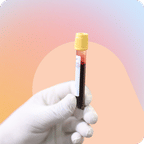
Blood
Find out
Why is this test booked?
Preparation for this test
Sample Collection
Who will collect your samples?
Conducted by
NABL accredited partner lab
chevron
Accredited labs
Highly skilled Phlebos
Verified reports
Who will collect your samples?
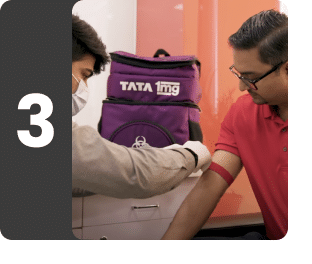
Tata 1mg certified phlebotomists
View phlebo details
Know more about lab
NABL accredited partner lab
This is an outsourced test. The sample for this test is collected by Tata 1mg and processed at a NABL-accredited partner lab.
See more

Understanding Karyotyping by G-Banding-blood

The Karyotyping by G-Banding-blood, also known as chromosomal analysis or karyotyping, is a cytogenetic test that evaluates the number and structure of chromosomes to identify genetic or chromosomal abnormalities. Chromosomes are tiny thread-like structures present inside the cells of the body that carry genetic material (DNA), which determines an individual's inherited traits and supports normal growth and development. A healthy individual typically has 46 chromosomes arranged in 23 pairs. Changes in chromosome number or structure can result in genetic disorders, developmental abnormalities, infertility, recurrent miscarriages, etc.

The Karyotyping by G-Banding-blood analyzes chromosomes obtained from a blood sample. The cells are cultured, and chromosomes are stained using the G-banding technique, which creates a unique pattern of alternating dark and light bands. This process allows for the detection of chromosomal abnormalities such as aneuploidy (abnormal numbers of chromosomes) and structural alterations like translocations, inversions, deletions, and duplications, which may contribute to genetic disorders. These chromosomal abnormalities may be responsible for various inherited disorders and developmental conditions, including Down syndrome, Turner syndrome, Klinefelter syndrome, and several other genetic diseases.

The Karyotyping by G-Banding-blood is commonly recommended when there is suspicion of a chromosomal or genetic disorder. It is useful for individuals with unexplained developmental delay, intellectual disability, congenital anomalies (birth defects), or abnormal physical features. In addition, individuals with a family history of inherited chromosomal disorders may undergo this test to assess the likelihood of passing these abnormalities to future generations. The test is also recommended for couples with recurrent pregnancy loss, infertility, poor obstetric history, or a previous pregnancy or child with a chromosomal abnormality to identify parental chromosomal rearrangements that may increase reproductive risk. 

For the Karyotyping by G-Banding-blood, a duly completed Chromosome Analysis, Karyotyping/FISH Analysis Requisition Form (PAC/FR/04) is mandatory before sample collection. In addition, all clinical details and other indications/ doctor’s prescription needs to be provided for accurate and timely reporting of results. 

Laboratory findings should always be interpreted by a qualified healthcare professional in conjunction with the patient's clinical history and other diagnostic findings. Results may vary between laboratories due to differences in testing methodologies and reporting standards. Do not attempt to self-diagnose or self-medicate based solely on the test results. Always consult your doctor for appropriate interpretation and further management.

Disclaimer: This test is for one individual only. Partner testing, if required, must be done separately.

Note:

  •  A normal karyotyping result does not completely exclude the possibility of a genetic disorder. Some genetic abnormalities are too small to be detected by conventional karyotyping and may require additional molecular tests, such as FISH, chromosomal microarray, or genetic sequencing.
  • Successful chromosome analysis depends on adequate cell growth. Cell growth may be impacted, in some circumstances, when there is a problem with sample integrity; in such cases, repeat sample collection may be required and requested by the lab.
  • This is an outsourced test. The sample for this test is collected by TATA 1MG and processed at a NABL accredited partnered lab.
See more

What does Karyotyping by G-Banding-blood measure?

The Karyotyping by G-Banding-blood examines the complete set of chromosomes in a blood sample to evaluate their number, size, shape, and structure. It detects numerical chromosomal abnormalities, such as extra or missing chromosomes (aneuploidy), as well as structural abnormalities, including deletions, duplications, inversions, translocations, and other chromosomal rearrangements.

This test helps identify constitutional (inherited or congenital) chromosomal abnormalities associated with genetic disorders, developmental delay, intellectual disability, congenital anomalies, infertility, recurrent pregnancy loss, and certain reproductive disorders. The results also provide valuable information for genetic counseling, reproductive planning, and determining whether additional genetic tests, such as FISH, chromosomal microarray, or genetic sequencing, may be required.

Did you find information useful ?
yesYES (5)
noNO (1)

Karyotyping by G-Banding-blood test price for other cities

Price inBangaloreRs. 3469
Price inNew DelhiRs. 2879
Price inHyderabadRs. 3039
Price inMumbaiRs. 3869
Price inPuneRs. 3599
Book a Karyotyping by G-Banding-blood test at home near me
Easy online booking
Easy online booking
Search for tests and packages, book your preferred time slot and enter your address for seamless at-home lab tests.
Live tracking of phlebotomist
Track our trained phlebotomist's real time location for seamless sample collection.
Safe Sample Collection
Our phlebotomists follow strict safety protocols to collect samples safely at home and on time.
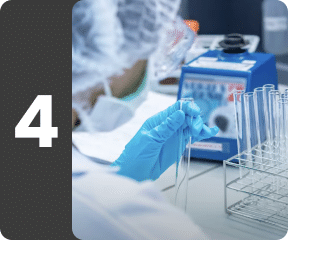
Sample received at lab
Samples are transported securely to our accredited labs with world-class machines for testing by qualified experts.
Quick, Doctor-Verified Reports
Get doctor-approved reports via email and WhatsApp, with options for doctor follow-ups and AI insights.

FAQs related to Karyotyping by G-Banding-blood

This test can detect chromosomal abnormalities associated with congenital anomalies, developmental disorders, infertility, recurrent pregnancy loss, and inherited genetic conditions. It also helps guide genetic counseling and reproductive planning.
A trained phlebotomist collects a blood sample from a vein in your arm. In the laboratory, white blood cells are cultured to allow cell division. The chromosomes are then stained using the G-banding technique and examined under a microscope by specialists to evaluate their number and structure.
No, fasting is not required for this test. However, it is advised to follow your doctor's instructions thoroughly before getting this test done.
The Karyotyping by G-Banding-blood is recommended if you have unexplained developmental delay, intellectual disability, congenital anomalies, infertility, recurrent pregnancy loss, poor obstetric history, or a family history of chromosomal disorders. Your doctor may also recommend this test when a chromosomal abnormality is suspected based on clinical findings or to evaluate reproductive risk.
The frequency of this test depends on your individual circumstances. Your doctor will recommend the appropriate testing schedule based on your health, medical history, and any potential symptoms.
No. The Karyotyping by G-Banding-blood performed on peripheral blood evaluates the chromosomes of the individual whose blood sample is tested. Diagnosis of fetal chromosomal abnormalities during pregnancy requires fetal samples obtained through procedures such as chorionic villus sampling (CVS) or amniocentesis, as recommended by your doctor.
Not all chromosomal abnormalities are inherited. Some occur spontaneously during the formation of reproductive cells or early fetal development, while others may be inherited from a parent carrying a balanced chromosomal rearrangement. The Karyotyping by G-Banding-blood helps identify these abnormalities and supports genetic counseling.
Aneuploidy is one of the most common chromosomal abnormalities. It occurs when there is an extra or missing chromosome. Common examples include trisomy 21 (Down syndrome), trisomy 18 (Edwards syndrome), trisomy 13 (Patau syndrome), Turner syndrome, and Klinefelter syndrome.
G-banding is a technique used to stain chromosomes to make their structure visible under a microscope. The "G" in G-banding stands for Giemsa, a type of stain that creates light and dark bands on the chromosomes. These bands help scientists distinguish between different chromosomes and identify any abnormalities. G-banding is commonly used in karyotyping to analyze the number and structure of chromosomes, aiding in the diagnosis of genetic disorders.
Tata 1mg ensures accurate lab test results through certified laboratories that use advanced technology and adhere to stringent quality control measures. This commitment to high standards guarantees reliable results.
Recommended for everyone
This package is designed with everyone’s overall health considerations in mind, offering assessments to address a wide range of wellness needs.
Package can be booked by :
Men
Women
Contains 1 test
Karyotyping by G-Banding-blood
Report delivery
Standard time
348 hrs
For slots after 11 AM, report will be delivered in 348 hours.
Samples required
Blood
1 vial required
Our phlebotomist will draw a blood sample, typically from a vein in your inner elbow.
Preparations
1
A duly completed Chromosome Analysis, Karyotyping/ FISH Analysis Requisition Form (TRF - PAC/FR/04) is mandatory before sample collection.
2
Physician/doctor prescription, clinical indications, and clinical history are mandatory. Clinical details should be provided in the form of ultrasound findings, phenotypic features, family history, etc.
3
Please note: The reporting for the test may be delayed in case the TRF and Doctor prescription is not provided to the lab.
Why is this test booked?
1
To detect numerical chromosomal abnormalities, including the presence of extra or missing chromosomes.
2
To Identify structural chromosomal abnormalities such as deletions, duplications, translocations, inversions, and other rearrangements.
3
To diagnose constitutional chromosomal abnormalities in individuals with suspected genetic disorders, developmental delay, intellectual disability, or congenital anomalies.
4
To evaluate individuals with a family history of chromosomal disorders or help identify specific chromosomal abnormalities present in family members.
5
To assist in the investigation of infertility (in both males and females), recurrent pregnancy loss, recurrent miscarriages, stillbirth, poor obstetric history, delayed or abnormal puberty, and suspected balanced chromosomal rearrangements.
6
To aid in confirming chromosomal abnormalities in newborns with congenital anomalies or suspected genetic syndromes.
7
To detect acquired chromosomal abnormalities associated with selected non-hematological malignancies. This test is not meant for leukemia and other blood malignancies.
8
To support genetic counseling by providing chromosomal information that helps assess recurrence risk, reproductive planning, and the need for further genetic testing.
Coupon details
Get it at ₹2591 with coupon
Get upto 15% off on your lab tests
Maximum discount: ₹1500
1MGNEWG
copy
10% off
₹999
separator
13% off
₹3000
separator
15% off
₹5000
Available Offers
Get additional 15% off
Get 15% off on your first order of lab tests
Maximum discount: ₹300
1MGNEW
copy
Get additional upto 15% off
Get upto 15% off on your lab tests
Maximum discount: ₹1500
1MGNEWG
copy
Upto ₹650 off on all lab tests
Get upto ₹650 off on all lab tests
Maximum discount: ₹650
1MGSUPER
copy
Upto Rs 1500 off on all lab tests
Get upto ₹1500 off on all lab tests
Maximum discount: ₹1500
1MGSUPERMAX
copy
Flat 20% off on all lab tests
Get flat 20% off on all lab tests
Maximum discount: ₹2500
1MGMAX20
copy
Who's behind your sample collection?
About Phlebotomist
Play
Tata 1mg Phlebotomist
icon
MEET YOUR PHLEBO
icon
Certified Professionals
Certified & experienced professionals
Tata 1mg phlebotomists are DMLT / B.Sc MLT certified and have 1+ years of experience
Best collections
Best in-class collections
Tata 1mg phlebotomists are trained for painless, single-prick hygienic sample collection
Expertise
Comprehensive expertise
Other than sample collection, our phlebos are also skilled in first aid, ECG & BP monitoring
frame icon
WHAT OUR CUSTOMERS ARE SAYING
frame icon
Better service
~ Manisha Kobnak
double quote icon
Very good
~ SANDIP CHHAGAN PATIL 7030019951
double quote icon
Good
~ Dhandapani Kavitha
double quote icon
Footer