Sign in to your account
or
By signing in you agree to our
Terms & conditions
 and 
Privacy policy

Lipid Profile, Non Fasting

Also referred as
Lipid panel test
+4
Serum lipid profile test
Complete lipid profile test
Cholesterol lipid profile
Fasting lipid profile test
xyz people viewed recently
3,396+ booked recently
For men & women
Fastest Reports in
7 hrs
Contains
8 tests
Test price:
₹399
₹699
43% off
Upto 15% extra discount with coupon
Min. order value: ₹5000 | Coupon: 1MGNEWG
arrow
Know more about this test
<font color='#864291'>Know more about this test</font>

The Lipid Profile, Non Fasting helps measure and monitor the amount of different types of lipids, like cholesterol and triglyceride, in the blood. Your doctor may advise this test to determine your overall cardiovascular health if you have risk factors, such as obesity, diabetes, and high blood pressure. It is usually done as a part of routine health checkups. 

Samples required
Blood

Find out
Why is this test booked?

Preparations
No special preparation is required.

Sample Collection
Who will collect your samples?
Conducted by

know_more_icon
Tata 1mg Labs
chevron
most_trusted_lab
Accredited labs
Highly skilled Phlebos
Verified reports
Who will collect your samples?
Tata 1mg certified phlebotomists
View phlebo details
Know more about lab
Tata 1mg Labs
About this lab
TATA 1mg Labs is a cutting-edge facility delivering top-quality diagnostic services right to your doorstep. We take pride in three core values: Assured Quality, Best Prices and Timely Reports. Transparency is at the heart of our operations, ensuring our customers always have clear and reliable information. Our dedicated team is committed to offering an exceptional customer experience and continually innovates to meet and exceed customer expectations.
See more

Understanding Lipid Profile, Non Fasting

Lipids are the types of fats that are used by the body as a source of energy. They are essential for the proper functioning of the body, but their high levels can lead to cardiovascular and heart complications. The Lipid Profile, Non Fasting is a common blood test used to assess the health of your cardiovascular system and aid in the diagnosis and management of lipid disorders. This test measures different types of lipids in your blood, including low-density lipoprotein (LDL), high-density lipoprotein (HDL), triglycerides, total cholesterol, etc.

The Lipid Profile, Non Fasting helps detect conditions like high cholesterol (hyperlipidemia) or low cholesterol (hypolipidemia). Hyperlipidemia is a condition in which your blood contains excessive amounts of lipids. It can lead to plaque buildup (fats and cholesterol) in your arteries and increase the risk of heart disease and stroke. The signs and symptoms may not be evident until a significant blockage or a heart event occurs. Hypolipidemia, while less common, is a condition where your blood does not contain enough lipids, potentially leading to issues with nerve function and an increased risk of infections.

This profile test is suggested for individuals who have a family history of heart conditions, suffer from diabetes, or have high blood pressure to monitor their lipid levels closely. Usually, overnight fasting is not required for this test. You may eat and drink as per your daily routine. 

Test result ranges are approximate and may differ slightly between different labs depending on the methodology and laboratory guidelines. Talk to your doctor about your specific test results. Narrate your complete medical history to help the doctor correlate your clinical and laboratory findings. The results will help them evaluate your medical condition; make recommendations for diet, exercise, or medication; and formulate an overall treatment plan.

NOTE: The Lipid Association of India (LAI) recommends both fasting and non-fasting lipid profiles for managing abnormally elevated cholesterol or fats (lipids) in the blood. However, a non-fasting lipid profile is required to determine the levels of triglyceride fats in the blood post meals.

See more

What does Lipid Profile, Non Fasting measure?

Contains 8 tests

The Lipid Profile, Non Fasting assesses the level of specific fat molecules called lipids in the blood and helps determine the risk of heart ailments. This test determines the amount of different types of lipids, including total cholesterol, low-density lipoprotein (LDL) cholesterol, very-low-density lipoprotein (VLDL) cholesterol, high-density lipoprotein (HDL) cholesterol, and triglycerides. Lipids play a pivotal role in the functioning of the body. They are crucial components of the cell membranes and hormones, provide cushioning, and are a storehouse of energy. Any alterations in the lipid levels may lead to potential heart ailments, and this makes their monitoring crucial.

The Cholesterol - Total test measures the total amount of cholesterol (fats) in your blood. Cholesterol is mainly synthesized in the liver and partially in the intestines. It acts as a building block for cell membranes, is a precursor to vital hormones, and helps produce bile acids that help digest fats. Cholesterol is transported through the blood as lipoproteins: low-density lipoprotein (LDL) and high-density lipoprotein (HDL). An optimal amount of these proteins is necessary for proper body functioning.

Know more about Cholesterol - Total

The Triglycerides test measures the amount of triglycerides in the blood and helps evaluate your risk of developing cardiovascular diseases. Triglycerides are a type of fat (lipid) that your body uses as a source of energy. When you consume more calories than your body needs, the excess calories are converted into triglycerides and stored in fat cells for later use. High triglyceride levels can contribute to the hardening and narrowing of arteries, increasing the risk of heart attack, stroke, and other related conditions. 

Know more about Triglycerides

The Cholesterol - HDL test measures the concentration of high-density lipoprotein (HDL) cholesterol in the blood. HDL cholesterol plays a crucial role in maintaining cardiovascular health, as it helps transport excess low-density lipoprotein (LDL) cholesterol from the bloodstream back to the liver for excretion. This process prevents plaque buildup on the blood vessel walls, which can cause them to become narrow and less flexible. Higher HDL cholesterol levels are generally associated with a lower risk of heart problems, such as heart attacks and strokes. By measuring HDL cholesterol levels, your doctor can assess your risk of developing cardiovascular diseases and recommend appropriate preventive or treatment strategies, including lifestyle modifications and medications.

Know more about Cholesterol - HDL

The Cholesterol - LDL test measures the concentration of low-density lipoprotein (LDL) cholesterol in the blood. LDL cholesterol plays an important role in your body. It carries cholesterol from your liver to other parts of the body where it's needed for things like building cell walls and making hormones. However, it is often referred to as "bad" cholesterol because when present in excess in your blood, it can stick to your blood vessel walls leading to the formation of plaque, making them narrow and less flexible. When this happens, it's harder for the blood to flow, which can lead to heart problems, like heart attacks and strokes. By measuring LDL cholesterol levels, your doctor can assess your risk of developing cardiovascular diseases and can recommend appropriate preventive or treatment strategies.

Know more about Cholesterol - LDL

The Very Low Density Lipoprotein test measures the concentration of very-low-density lipoprotein (VLDL) cholesterol in the blood. VLDL cholesterol plays a vital role in the body's metabolic processes. It is produced by the liver and is used to transport triglycerides, a type of fat, from the liver to various tissues throughout the body, where they are either utilized for energy or stored for later use. Though VLDL cholesterol is essential for the body's normal functioning, it is harmful if present in excess amounts. By measuring VLDL cholesterol levels, your doctor can assess your risk of developing cardiovascular diseases and recommend appropriate preventive or treatment strategies.

Know more about Very Low Density Lipoprotein

The Total Cholesterol/HDL Cholesterol Ratio test measures the ratio of total cholesterol and high-density lipoprotein (HDL)/good cholesterol in your blood which is a significant indicator of cardiovascular health. This ratio is calculated by dividing the total cholesterol by the HDL number. A high ratio indicates a higher amount of 'bad' cholesterol relative to 'good' cholesterol, implying a higher risk of developing heart disease. Conversely, a lower ratio implies a higher amount of 'good' cholesterol relative to 'bad' cholesterol, indicating a lower risk.

Know more about Total Cholesterol/HDL Cholesterol Ratio

An LDL/HDL Ratio test measures the ratio of low-density lipoproteins (LDL) to high-density lipoproteins (HDL) in your blood. These two types of lipoproteins carry cholesterol throughout the body. LDL, often referred to as the 'bad' cholesterol, carries cholesterol to the cells that need it. However, if there is too much LDL cholesterol in the blood, it can combine with other substances and form plaque in the arteries, leading to cardiovascular diseases. On the other hand, HDL, often referred to as the 'good' cholesterol, helps remove other forms of cholesterol, including LDL, from the bloodstream. It transports cholesterol back to the liver, where it is broken down and eliminated from the body, thus reducing the risk of cholesterol buildup and heart disease. The LDL/HDL ratio is a significant indicator of cardiovascular health. A high ratio indicates a higher amount of 'bad' cholesterol relative to 'good' cholesterol, implying a higher risk of developing heart disease. Conversely, a lower ratio implies a higher amount of 'good' cholesterol relative to 'bad' cholesterol, indicating a lower risk.

Know more about LDL/HDL Ratio

The Non HDL Cholesterol test looks for the “bad” cholesterol particles that are likely to contribute to heart problems. These bad particles include LDL (low-density lipoprotein) cholesterol, VLDL (very-low-density lipoprotein) cholesterol, and remnants of other cholesterol-carrying molecules. Cholesterol is a waxy substance that circulates in your bloodstream and is essential for various bodily functions. However, too much of “bad” types of cholesterol can build up in your arteries and increase the risk of heart conditions. LDL and VLDL cholesterol particles are often referred to as the "bad" cholesterol because they can stick to the walls of your arteries and form plaque, narrowing the arteries and restricting blood flow to your heart. By measuring non-HDL cholesterol, your doctor can assess your risk of heart disease and determine if any interventions or lifestyle changes are needed to protect your heart.

Know more about Non HDL Cholesterol

Frequently booked together
Did you find information useful ?
yesYES (3)
noNO (2)

Lipid Profile, Non Fasting test price for other cities

Price inBangaloreRs. 399
Price inHyderabadRs. 319
Price inKolkataRs. 359
Price inPuneRs. 399
Price inLucknowRs. 320
How does home sample collection work?
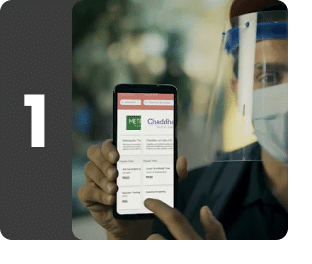
Easy online booking
Easy online booking
Search for tests and packages, book your preferred time slot and enter your address for seamless at-home lab tests.
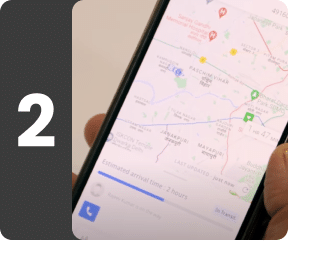
Live tracking of phlebotomist
Track our trained phlebotomist's real time location for seamless sample collection.
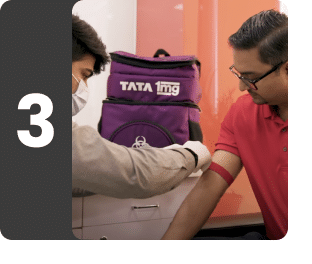
Safe Sample Collection
Our phlebotomists follow strict safety protocols to collect samples safely at home and on time.
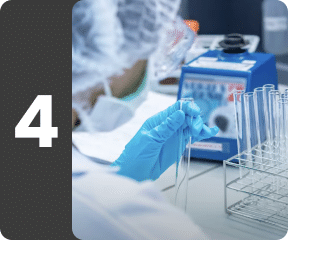
Sample received at lab
Samples are transported securely to our accredited labs with world-class machines for testing by qualified experts.
Quick, Doctor-Verified Reports
Get doctor-approved reports via email and WhatsApp, with options for doctor follow-ups and AI insights.

FAQs related to Lipid Profile, Non Fasting

The Lipid Profile, Non Fasting is a set of blood tests that tells about the levels of lipids in your blood and helps in the early detection of heart/cardiovascular diseases.
The Lipid Profile, Non Fasting includes tests that measure the levels of total cholesterol, LDL cholesterol, HDL cholesterol, and triglycerides in your blood.
The Lipid Profile, Non Fasting is important because high levels of LDL cholesterol or triglycerides or low levels of HDL cholesterol can increase the risk of developing atherosclerosis and other heart-related diseases. Often, high cholesterol is a silent condition without any symptoms. Most people do not even realize they have high cholesterol until they develop serious complications, such as a heart attack or stroke.
No, you do not need to fast before this profile. It can be done at any time of the day irrespective of food intake.
“Bad cholesterol” carries cholesterol that can stick to the arterial walls and form plaque, whereas “good cholesterol” takes the cholesterol away from the blood and returns it to the liver.
Atherosclerosis is a disease of the arteries that is characterized by plaque formation in the arteries of the walls, leading to heart attack or stroke.
You must consult your doctor if your reports show elevated lipid levels. However, you can maintain healthy lipid levels by making a few changes in your lifestyle, such as eating heart-healthy food, managing your body weight by exercising regularly, and avoiding alcohol and smoking.
Deep-fried foods, full-fat dairy products, sugary items, cakes and pastries, processed foods, food cooked using unhealthy oils, etc. can increase your cholesterol levels.
The most common risk factors for high lipids are being over the age of 45 years (men) or over 50 years (women), smoking, obesity, lack of physical activity, high blood pressure, diabetes, family history, or heart disease at an early age (under 55 in men and under 65 in women).
References
  1. Gofman JW, Lindgren F. The role of lipids and lipoproteins in atherosclerosis. Science. 1950 Feb 17;111(2877):166-71. [Accessed 28 Jun. 2023]. Available from:
  2. Law MR, Wald NJ, Rudnicka AR. Quantifying effect of statins on low density lipoprotein cholesterol, ischaemic heart disease, and stroke: systematic review and meta-analysis. BMJ. 2003 Jun 28;326(7404):1423. [Accessed 28 Jun. 2023]. Available from:
  3. Wolska A, Remaley AT. Measuring LDL-cholesterol: what is the best way to do it? Curr Opin Cardiol. 2020 Jul.; 35(4):405-411. [Accessed 28 Jun. 2023]. Available from:
  4. Nauck M, Russell Warnick G, Rifai N. Methods for Measurement of LDL-Cholesterol: A Critical Assessment of Direct Measurement by Homogeneous Assays versus Calculation, Clinical Chemistry. 2002 Feb. 01; 48(2):236-254. [Accessed 28 Jun. 2023]. Available from:
  5. M Ridker P. Fasting versus Nonfasting Triglycerides and the Prediction of Cardiovascular Risk: Do We Need to Revisit the Oral Triglyceride Tolerance Test?. Clinical Chemistry. 2008 Jan. 01; 54(1):11-13. [Accessed 28 Jun. 2023]. Available from:
  6. Guerrero-Romero F, Villalobos-Molina R, Jiménez-Flores JR, et al. Fasting Triglycerides and Glucose Index as a Diagnostic Test for Insulin Resistance in Young Adults. Archives of Medical Research. 2016 Jul.; 47(5):382-387. [Accessed 28 Jun. 2023]. Available from:
  7. P Neri B, S Frings C. Improved Method for Determination of Triglycerides in Serum. Clinical Chemistry, 1973 Oct. 01; 19(10):1201-1202. [Accessed 28 Jun. 2023]. Available from:
  8. HDL (Good), LDL (Bad) Cholesterol and Triglycerides [Internet]. Dallas, Texas: American Heart Association; 06 Nov. 2020 [Accessed 28 Jun. 2023]. Available from:
  9. Gordon DJ, Probstfield JL, Garrison RJ, et al. High-density lipoprotein cholesterol and cardiovascular disease. Circulation Research. 1989 Jan. 01; 79(1):8-15. [Accessed 28 Jun. 2023]. Available from:
  10. Wilson PWF, Zech LA, Gregg RE, et al. Estimation of VLDL cholesterol in hyperlipidemia. Clinica Chimica Acta. 1985 Oct. 15; 151(3):285-291. [Accessed 28 Jun. 2023]. Available from:
  11. Gordon T, Fisher M, Ernst N, et al. Relation of diet to LDL cholesterol, VLDL cholesterol, and plasma total cholesterol and triglycerides in white adults. The Lipid Research Clinics Prevalence Study. ATVB. 1982 Nov. 01; 2(6):502-512. [Accessed 28 Jun. 2023]. Available from:
Recommended for everyone
This package is designed with everyone’s overall health considerations in mind, offering assessments to address a wide range of wellness needs.
Package can be booked by :
Men
Women
Contains 8 tests
Cholesterol - Total
Triglycerides
Cholesterol - HDL
Cholesterol - LDL
Very Low Density Lipoprotein
Total Cholesterol/HDL Cholesterol Ratio
LDL/HDL Ratio
Non HDL Cholesterol
Report delivery
Faster Report
₹49 per patient
7 hrs
faster report icon
Limited slots only, you can choose faster report option when you add the test
Standard time
No extra charges
15 hrs
For slots after 11 AM, report will be delivered in 27 hours.
Samples required
Blood
Our phlebotomist will draw a blood sample, typically from a vein in your inner elbow.
Preparations
1
No special preparation is required.
Why is this test booked?
1
As part of routine health checkups to measure the levels of lipids and cholesterol in the blood.
2
To determine an individual's risk of developing heart conditions, stroke, and peripheral artery disease.
3
To monitor the lipids and cholesterol levels in individuals already diagnosed with high cholesterol or cardiovascular disease to ensure that their treatment plans are effective in maintaining healthy cholesterol levels.
4
To detect early deviations in lipids and cholesterol levels in individuals with a family history of high cholesterol levels or premature heart disease, enabling timely interventions and lifestyle modifications to reduce their risk of cardiovascular complications.
5
To help diagnose other medical conditions, such as liver disease.
Coupon details
Upto 15% extra discount with coupon
Get upto 15% off on your lab tests
Maximum discount: ₹1500
1MGNEWG
copy
10% off
₹999
separator
13% off
₹3000
separator
15% off
₹5000
Who's behind your sample collection?
About Phlebotomist
Play
Tata 1mg Phlebotomist
icon
MEET YOUR PHLEBO
icon
Certified Professionals
Certified & experienced professionals
Tata 1mg phlebotomists are DMLT / B.Sc MLT certified and have 1+ years of experience
Best collections
Best in-class collections
Tata 1mg phlebotomists are trained for painless, single-prick hygienic sample collection
Expertise
Comprehensive expertise
Other than sample collection, our phlebos are also skilled in first aid, ECG & BP monitoring
frame icon
WHAT OUR CUSTOMERS ARE SAYING
frame icon
Pain free collection
~ Sandugade Subhash Tukaram
double quote icon
In one prick, he got the sample. Great work.
~ Abhishek
double quote icon
Pain free blood collection
~ Vaghela Sagar Shashikantbhai
double quote icon
Excellent service
~ JITENDER KUMAR
double quote icon
Pain free collection Conduct & Behaviour good On time collection
~ Kajal Ramakant Pal 0239889984
double quote icon
On Time, pain free collection, Hygiene & safety
~ RAJEEV KUMAR SINGH 7330190217
double quote icon
Technician was great..
~ Saurav Choudhury
double quote icon
Very professional and humble
~ Sheela
double quote icon
Very gentle
~ Divya Chawla
double quote icon
Very polite
~ Sadhana Kumari
double quote icon
Footer