









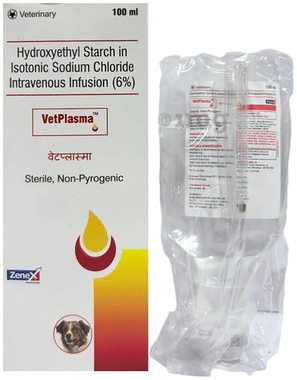
Vetplasma Pet Infusion
Hydroxyethyl Starch(HES) (6gm)+ Sodium Chloride (0.9gm)
 Genuine
Authenticity Assured
 Animal use
not for humans
 Prescription
required
Vetplasma Pet Infusion is a medicine used in animals for the treatment and management of hypovolemia, a condition in which the body loses a significant amount of circulating fluid or blood volume. It helps restore circulating fluid volume and supports blood pressure and organ perfusion during critical situations.
Written By Dr. Lipika Khurana, PGDHHM, BDS,
Reviewed By Dr. Rajeev Sharma, MBA, MBBS,
Last updated on 05 Oct 2026 | 01:01 AM (IST)
Written By Dr. Lipika Khurana, PGDHHM, BDS,
Reviewed By Dr. Rajeev Sharma, MBA, MBBS,
Last updated on 05 Oct 2026 | 01:01 AM (IST)
Available pack size
Save more with additional offers

Get upto Rs.150 Cashback on minimum transaction of Rs.599/- with Mobikwik UPI (@ikwik).
Get upto Rs.150 Cashback on minimum transaction of Rs.599/- with Mobikwik UPI (@ikwik).


Get up to ₹75 cashback on a minimum order value (MOV) of ₹499 and above, valid once per customer.
Get up to ₹75 cashback on a minimum order value (MOV) of ₹499 and above, valid once per customer.
Get up to ₹75 cashback on a minimum order value (MOV) of ₹499 and above, valid once per customer.
Get up to ₹75 cashback on a minimum order value (MOV) of ₹499 and above, valid once per customer.
Get upto Rs.150 Cashback on minimum transaction of Rs.599/- with Mobikwik UPI (@ikwik).
Get upto Rs.150 Cashback on minimum transaction of Rs.599/- with Mobikwik UPI (@ikwik).
Get up to ₹75 cashback on a minimum order value (MOV) of ₹499 and above, valid once per customer.
Get up to ₹75 cashback on a minimum order value (MOV) of ₹499 and above, valid once per customer.
Get up to ₹75 cashback on a minimum order value (MOV) of ₹499 and above, valid once per customer.
Get up to ₹75 cashback on a minimum order value (MOV) of ₹499 and above, valid once per customer.

Assured cashback up to ₹300*. T&C Apply*
Assured cashback up to ₹300*. T&C Apply*
General Information
Contains
Hydroxyethyl Starch(HES) (6gm)+ Sodium Chloride (0.9gm)
Marketer
Zenex Animal Health India Pvt. Ltd.
Storage
Store below 25°C
The content is shown in English




Safety advice

Pregnancy
There is limited data regarding the safety of Vetplasma Pet Infusion in pregnant animals. The veterinarian will weigh the benefits and potential risks and prescribe accordingly.

Breast feeding
There is limited information regarding the use of Vetplasma Pet Infusion in lactating animals. It should be administered to nursing animals only under veterinary supervision after evaluating the animal’s clinical condition and treatment necessity.

Kidney
Caution is required in animals with kidney problems, as it may affect fluid balance and renal function. This medicine should not be used in animals with severe kidney failure associated with reduced or absent urine production.

Liver
Vetplasma Pet Infusion should be used with caution in animals with liver disease, as fluid therapy may influence circulation and coagulation balance. Consult your veterinarian to assess tolerance and adjust treatment if needed.

References


100% genuine products

Safe & secure payments

No contact delivery

Fully sanitized facilities

Want to know more
We provide you with authentic, trustworthy and relevant information
Have issue with the content
Why we need a prescription?

