






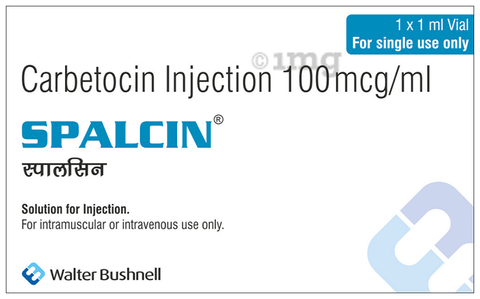
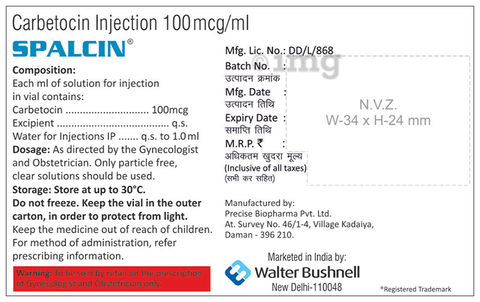
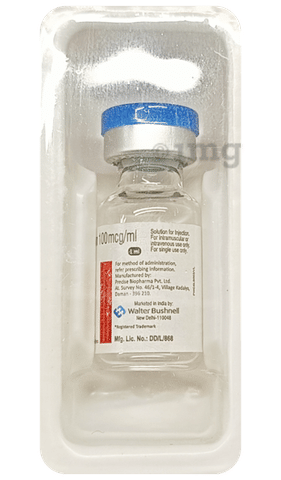

Spalcin Injection
Carbetocin (100mcg/ml)
 Genuine
Authenticity Assured
 Prescription
required
Spalcin Injection is used to prevent excessive bleeding in women after childbirth. In some women, the womb (uterus) does not contract enough after delivery, which increases the risk of excessive bleeding. It helps the womb contract firmly, reducing blood loss and the risk of excessive bleeding after childbirth.
Written By Dr. Nikita Saini, MBA, MDS,
Reviewed By Dr. Dheeraj Kumar Sharma, PhD, M.Pharm,
Last updated on 26 Nov 2026 | 01:03 AM (IST)
Written By Dr. Nikita Saini, MBA, MDS,
Reviewed By Dr. Dheeraj Kumar Sharma, PhD, M.Pharm,
Last updated on 26 Nov 2026 | 01:03 AM (IST)
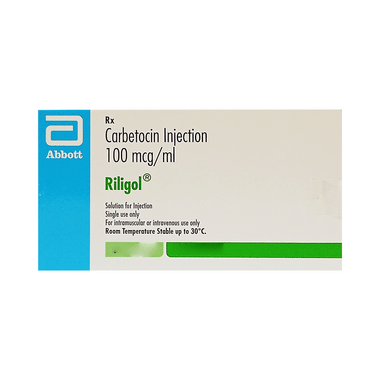
Available alternative from Abbott
Sold out
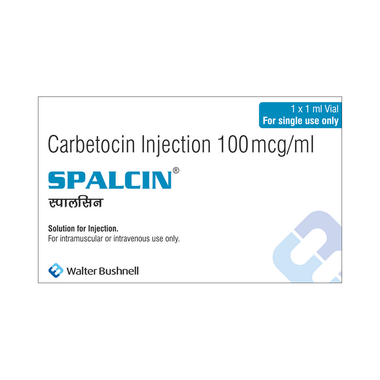
Spalcin Injection
vial of 1 ml Injection
₹420

Same composition

Riligol Injection
vial of 1 ml Injection
by Abbott
Get by Tomorrow
₹2377
₹2020.0 per ml
₹2020
order for
₹1200
Save more with additional offers

Assured Up to 5% back on all orders above ₹299.


Flat ₹50 cashback. T&C Apply*
Flat ₹50 cashback. T&C Apply*

Get upto Rs.150 Cashback on minimum transaction of Rs.599/- with Mobikwik UPI (@ikwik).
Get upto Rs.150 Cashback on minimum transaction of Rs.599/- with Mobikwik UPI (@ikwik).
Assured Up to 5% back on all orders above ₹299.
Flat ₹50 cashback. T&C Apply*
Flat ₹50 cashback. T&C Apply*
Get upto Rs.150 Cashback on minimum transaction of Rs.599/- with Mobikwik UPI (@ikwik).
Get upto Rs.150 Cashback on minimum transaction of Rs.599/- with Mobikwik UPI (@ikwik).

Get up to ₹150 cashback on a minimum order value (MOV) of ₹499 and above, valid once per customer.
Get up to ₹150 cashback on a minimum order value (MOV) of ₹499 and above, valid once per customer.
Get up to ₹75 cashback on a minimum order value (MOV) of ₹499 and above, valid once per customer.
Get up to ₹75 cashback on a minimum order value (MOV) of ₹499 and above, valid once per customer.
General Information

The content is shown in English



All substitutes for Spalcin Injection
For information purposes only. Consult a doctor before taking any medicine.
Safety advice
Alcohol
CONSULT YOUR DOCTOR
It is not known whether it is safe to consume alcohol with Spalcin Injection. Please consult your doctor.

Pregnancy
UNSAFE
Spalcin Injection is highly unsafe during pregnancy. It can cause serious harm to the unborn baby, including birth defects and pregnancy loss. Do not use this medicine if you are pregnant or planning to become pregnant.

Breast feeding
SAFE IF PRESCRIBED
Available human data suggest that the drug does not pass into breast milk in clinically significant amounts and is unlikely to harm the infant.

Driving
NOT RELEVANT
Not relevant, as Spalcin Injection is intended for use in hospitalized patients.
Kidney
UNSAFE
Spalcin Injection is unsafe to use in patients with kidney disease and should be avoided.
Liver
UNSAFE
Spalcin Injection is unsafe to use in patients with liver disease and should be avoided.
References
- Carbetocin [EMC SmPC]. West Drayton, UK: Ferring Pharmaceuticals Ltd.; 2019. [Accessed 05 Oct. 2021] (online) Available from:

- Carbetocin [Product Monograph: Including Patient Medication information]. North York, ON: Ferring Inc.; 2020. [Accessed 05 Oct. 2021] (online) Available from:
- Carbetocin [Product Information]. Pymble, Australia: Ferring Pharmaceuticals Pty Ltd.; 2018. [Accessed 05 Oct. 2021] (online) Available from:
Related products
Products related to Spalcin Injection




100% genuine products

Safe & secure payments

No contact delivery

Fully sanitized facilities

Want to know more
We provide you with authentic, trustworthy and relevant information
Have issue with the content
Why we need a prescription?

