




 GenuinePrescription34 people
Product introduction
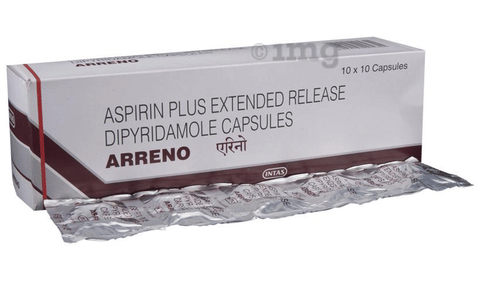
Arreno Capsule ER is a combination of two medicines that help prevent clot formation in the blood vessels. It may also assist in reducing the risk of further strokes in patients with a history of previous stroke or mini-stroke (transient ischaemic attack).
Arreno Capsule ER should be taken with food. Take it regularly and at a fixed time each day. Taking it at the same time every day will help you remember to take it. The dose and duration of treatment will depend on what you are being treated for. Continue taking it for as long as the doctor has prescribed, even when you feel better.
There is limited data about the common side effects of Arreno Capsule ER. It is important to use it exactly as prescribed. Seek advice from a doctor if you encounter any odd symptoms or allergies while using Arreno Capsule ER. Adhering to the recommended dosage improves the Arreno Capsule ER efficacy and reduces possible hazards.
Before taking this medicine, tell your doctor if you have any liver or kidney disease. You must tell your doctor if you are pregnant, planning pregnancy, or breastfeeding. You should also let your doctor know about all other medicines you are taking, as they may affect or be affected by this medicine.
Uses of Arreno Capsule ER
- Blood clots
Benefits of Arreno Capsule ER
Arreno Capsule ER prevents blood from clotting inside the veins and arteries. This helps the blood flow freely around your body thereby preventing a heart attack or stroke (or deep vein thrombosis or pulmonary embolism). It helps prevent the formation of blood clots and also prevents the existing ones from growing bigger in size. Take it regularly and make appropriate lifestyle changes (such as eating healthy and staying active) to maximize the effectiveness of this medicine. Keep taking it even if you feel well.
Side effects of Arreno Capsule ER
- Headache
- Indigestion
- Abdominal pain
- Nausea
- Diarrhea
How to use Arreno Capsule ER
How Arreno Capsule ER works
Quick tips
- Arreno Capsule ER increases your risk of bleeding. Be careful while shaving, cutting fingernails or toenails, using sharp objects, or engaging in contact sports (e.g., football, wrestling).
- Notify your doctor if you experience stomach pain, nausea, or vomiting that doesn't go away.
- Inform your doctor if you see blood in your vomit, urine, or stool (black, tarry stools or bright red blood).

Save more with additional offers
