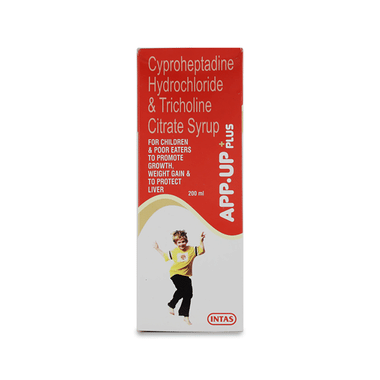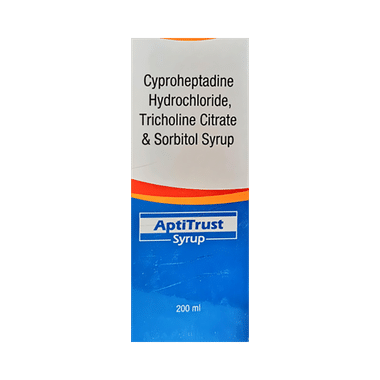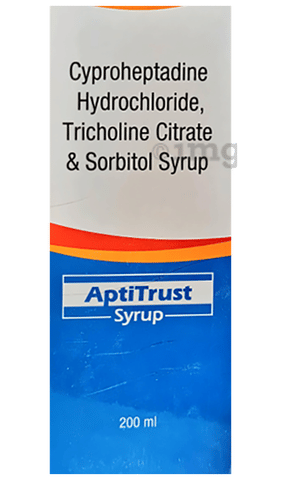

Aptitrust Syrup is a combination medicine used to treat loss of appetite. It is an effective appetite stimulant. It works by reducing the effect of a chemical messenger that regulates appetite.
Aptitrust Syrup can be taken with or without food. Take it in the dose and duration advised by the doctor. You should keep taking this medicine for as long as your doctor recommends. Let your doctor know about all other medications you are taking, as some may affect, or be affected by, this medicine.
There is limited information about the common side effects of Aptitrust Syrup. However, if you experience any symptoms while taking the medicine, let your doctor know. They may be able to suggest ways to manage or treat the side effects.
Before taking Aptitrust Syrup, inform your doctor if you have any kidney or liver diseases so that your doctor can prescribe a suitable dose for you. Pregnant or breastfeeding women should also consult their doctor before taking this medicine. Avoid drinking alcohol while taking this medicine, as it can worsen your sleepiness.
Loss of appetite can lead to inadequate nutrition and weight loss. Aptitrust Syrup helps improve appetite by increasing the desire to eat and supporting better food intake. This helps improve nutritional status and promotes healthy weight gain in individuals with reduced appetite. Use it regularly as advised to support recovery from undernutrition and improve overall well-being.
Side effects of Aptitrust Syrup
Most side effects do not require any medical attention and disappear as your body adjusts to the medicine. Consult your doctor if they persist or if you’re worried about them
Common side effects of Aptitrust
Limited data available
How to use Aptitrust Syrup
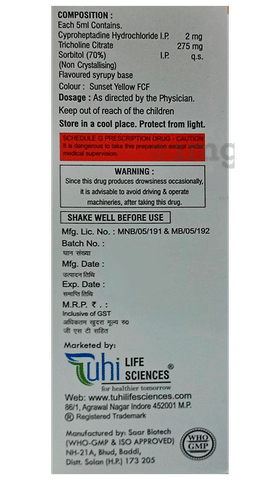
Take this medicine in the dose and duration as advised by your doctor. Check the label for directions before use. Measure it with a measuring cup and take it by mouth. Shake well before use. Aptitrust Syrup may be taken with or without food.
How Aptitrust Syrup works
Aptitrust Syrup is a combination of three medicines: cyproheptadine, tricholine citrate, and sorbitol. It is used to improve appetite. Cyproheptadine is an appetite stimulant that works by reducing the effect of serotonin, a chemical messenger in the hypothalamus that regulates appetite. Tricholine citrate is a lipotropic agent that helps remove fat from the liver and supports healthy liver function, which can improve digestion and appetite. Sorbitol acts as a syrup base and also works as an osmotic laxative to relieve constipation.
Safety advice
Alcohol
UNSAFE
Do not drink alcohol while you are taking this medicine. Aptitrust Syrup may cause excessive drowsiness when taken with alcohol.

Pregnancy
CONSULT YOUR DOCTOR
The safety of Aptitrust Syrup during pregnancy has not been established. There are no adequate and well-controlled studies in pregnant women, and animal data on reproductive toxicity are insufficient. Your doctor will weigh the benefits and any potential risks before prescribing.
Breast feeding
UNSAFE
Aptitrust Syrup is unsafe to use during breastfeeding. Data suggests that the drug may cause toxicity to the baby.

Driving
UNSAFE
Aptitrust Syrup may decrease alertness, affect your vision, or make you feel sleepy and dizzy. Do not drive if these symptoms occur.

Kidney
CAUTION
Aptitrust Syrup should be used with caution in patients with kidney disease. Dose adjustment may be needed.

Liver
CAUTION
Aptitrust Syrup should be used with caution in patients with severe liver disease. Dose adjustment may be needed.
What if you forget to take Aptitrust Syrup?
If you miss a dose of Aptitrust Syrup, take it as soon as possible. However, if it is almost time for your next dose, skip the missed dose and go back to your regular schedule. Do not double the dose.
All substitutes
For informational purposes only. Consult a doctor before taking any medicines.
Aptitrust Syrup may cause dizziness or drowsiness, so avoid driving or operating machinery until you know how it affects you.
Avoid alcohol or other sedating medicines while taking Aptitrust Syrup, as they may increase drowsiness.
Dry mouth may occur while using Aptitrust Syrup; frequent sips of water, good oral hygiene, or sugar-free gum/candy may help.
Increased appetite may occur, so focus on balanced, nutrient-rich foods rather than overeating.
If stomach upset occurs, taking Aptitrust Syrup with food may help.
Inform your doctor if you have glaucoma, urinary retention, or prostate enlargement before taking Aptitrust Syrup.
In children, monitor for unusual sleepiness or excitability and report concerns to your doctor.
Avoid taking Aptitrust Syrup with other antihistamines unless advised by your doctor.
Do not use Aptitrust Syrup long-term without medical review, especially if poor appetite persists.
Seek urgent medical attention if you develop a rash, swelling of the face, or difficulty breathing after taking Aptitrust Syrup.
Fact Box
Habit Forming
No
Therapeutic Class
VITAMINS MINERALS NUTRIENTS
FAQs
My child has a long-term illness and a poor appetite. Can I give Aptitrust Syrup?
Loss of appetite can sometimes occur as a side effect of medicines used for chronic illnesses. Aptitrust Syrup may help improve appetite and hunger, which can support better nutritional intake and weight gain. However, you should consult your child’s doctor before giving this medicine because the correct dose and duration depend on the child’s age, weight, and medical condition. Improvement in appetite may take a few days to weeks. Always inform the doctor if your child is taking other medicines.
My child is restless and unable to sleep at night. Can I give Aptitrust Syrup?
No, Aptitrust Syrup should not be given to children for the purpose of inducing sleep. Although the medicine may cause drowsiness as a side effect, it is not meant to treat sleep problems. If your child has difficulty sleeping, consult your doctor to determine the underlying cause and appropriate treatment.
How much Aptitrust Syrup should I give to my child?
Always give Aptitrust Syrup exactly in the dose prescribed by your child’s doctor. The correct dose is calculated based on your child’s age and body weight. Do not increase or decrease the dose on your own because it may cause unwanted side effects or worsen your child’s condition.
How should Aptitrust Syrup be stored?
Aptitrust Syrup should be stored at room temperature in a dry place away from direct heat and light. Keep the bottle tightly closed and out of reach and sight of children to prevent accidental ingestion.
When should I contact my child’s doctor immediately while using Aptitrust Syrup?
Contact your child’s doctor immediately if your child develops serious side effects such as allergic reactions (facial swelling or breathing difficulty), signs of liver problems (yellowing of the eyes or skin, dark urine), excessive sleepiness, rapid heartbeat, hallucinations, confusion, unusual hyperactivity, difficulty passing urine, irritability, or vision changes. Always consult the doctor if you are unsure about dosage, duration, or side effects.
What is Aptitrust Syrup and what is it used for?
Aptitrust Syrup is commonly used as an appetite stimulant to help improve poor appetite and support weight gain in children or adults who are not eating well. It may also help improve overall nutritional intake by increasing hunger. However, it should only be used as advised by a doctor because persistent loss of appetite may be caused by an underlying medical condition that needs evaluation.
When should I take Aptitrust Syrup?
Aptitrust Syrup should be taken in the dose and timing recommended by your doctor. It is often taken once or twice daily, usually before meals, to help improve appetite. Try to take it at the same time each day for consistent results. Do not change the dose or schedule without consulting your doctor. If you miss a dose, take the next scheduled dose at the usual time.
Is Aptitrust Syrup safe for everyone to use?
Aptitrust Syrup is generally safe when used as prescribed by a doctor, but it may not be suitable for everyone. Some people may experience sleepiness, dizziness, stomach upset, or dry mouth. Extra caution is required in people with liver disease, kidney problems, or certain heart conditions. If severe symptoms such as rash, breathing difficulty, swelling of the face, fainting, or severe weakness occur, stop using the medicine and seek medical help immediately.
Can Aptitrust Syrup be taken with food or after meals?
Aptitrust Syrup should be taken exactly as directed by your doctor because food timing can affect comfort and how the medicine works. In some people, taking it with food may help reduce stomach discomfort. Avoid very oily or spicy foods if they worsen stomach symptoms, and maintain good hydration. If you are unsure about the best time to take the medicine with meals, consult your doctor.
What are the common side effects of Aptitrust Syrup?
Aptitrust Syrup may cause side effects such as sleepiness, dizziness, stomach upset, or dry mouth in some people, although not everyone experiences them. These effects are usually mild and improve as the body adjusts to the medicine. Stop using the medicine and consult your doctor if you notice a severe rash, breathing difficulty, fainting, swelling of the face, or persistent vomiting.
Tata 1mg's sole intention is to ensure that its consumers get information that is expert-reviewed, accurate and trustworthy. However, the information contained herein should NOT be used as a substitute for the advice of a qualified physician. The information provided here is for informational purposes only. This may not cover everything about particular health conditions, lab tests, medicines, all possible side effects, drug interactions, warnings, alerts, etc. Please consult your doctor and discuss all your queries related to any disease or medicine. We intend to support, not replace, the doctor-patient relationship.