






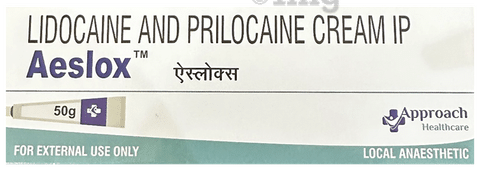
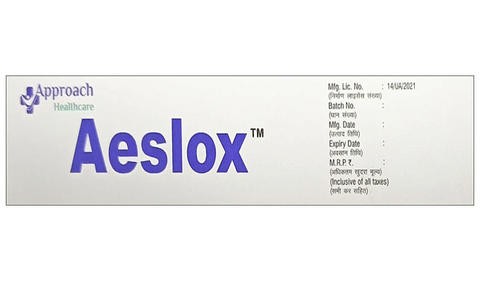
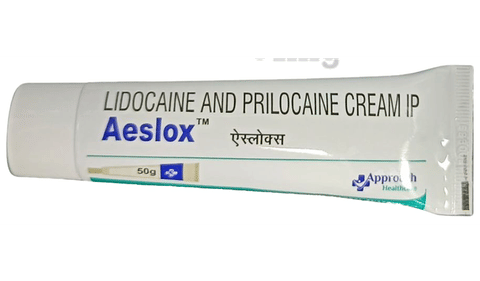

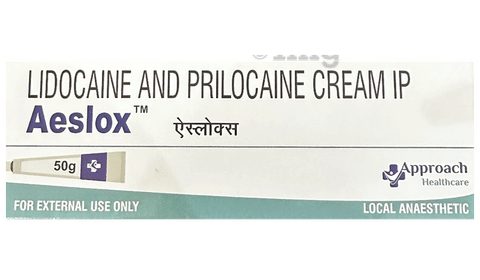
Aeslox Cream
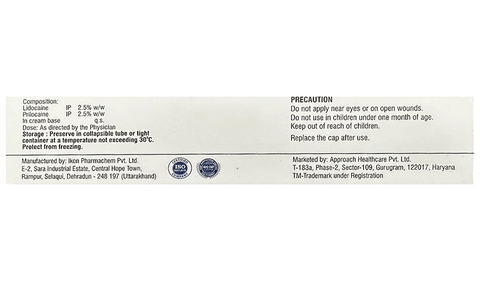
Lidocaine (2.5% w/w)+ Prilocaine (2.5% w/w)
 Genuine
Authenticity Assured
 Prescription
required
Aeslox Cream is a combination of two local anesthetic medicines, that helps to numb the area where it is applied. It is used on normal or unbroken skin to prevent pain before certain procedures like inserting a needle, suturing of a wound etc.
Written By Dr. Subita Alagh, BDS,
Reviewed By Dr. Rajeev Sharma, MBA, MBBS,
Last updated on 27 Sep 2026 | 01:02 AM (IST)
Written By Dr. Subita Alagh, BDS,
Reviewed By Dr. Rajeev Sharma, MBA, MBBS,
Last updated on 27 Sep 2026 | 01:02 AM (IST)
Save more with additional offers

10% cashback up to 200 on Min Transaction of Rs.1000, for first time users of Airtel Payments Bank.
10% cashback up to 200 on Min Transaction of Rs.1000, for first time users of Airtel Payments Bank.


Get up to ₹75 cashback on a minimum order value (MOV) of ₹499 and above, valid once per customer.
Get up to ₹75 cashback on a minimum order value (MOV) of ₹499 and above, valid once per customer.
Get up to ₹75 cashback on a minimum order value (MOV) of ₹499 and above, valid once per customer.
Get up to ₹75 cashback on a minimum order value (MOV) of ₹499 and above, valid once per customer.
10% cashback up to 200 on Min Transaction of Rs.1000, for first time users of Airtel Payments Bank.
10% cashback up to 200 on Min Transaction of Rs.1000, for first time users of Airtel Payments Bank.
Get up to ₹75 cashback on a minimum order value (MOV) of ₹499 and above, valid once per customer.
Get up to ₹75 cashback on a minimum order value (MOV) of ₹499 and above, valid once per customer.
Get up to ₹75 cashback on a minimum order value (MOV) of ₹499 and above, valid once per customer.
Get up to ₹75 cashback on a minimum order value (MOV) of ₹499 and above, valid once per customer.

Assured cashback up to ₹300*. T&C Apply*
Assured cashback up to ₹300*. T&C Apply*
General Information
Contains
Lidocaine (2.5% w/w)+ Prilocaine (2.5% w/w)
Marketer
Approach Healthcare Pvt Ltd
Storage
Store below 30°C
The content is shown in English



All substitutes for Aeslox Cream
For information purposes only. Consult a doctor before taking any medicine.
Safety advice

Alcohol
No interaction found/established

Pregnancy
SAFE IF PRESCRIBED
Aeslox Cream is generally considered safe to use during pregnancy. Animal studies do not indicate harmful effects. However, there are limited human studies.

Breast feeding
CONSULT YOUR DOCTOR
Aeslox Cream may be unsafe to use during breastfeeding. Limited human data suggests that the drug may pass into the breastmilk and harm the baby. It should be used only if the expected benefit outweighs the potential risk. Please consult your doctor.

Driving
No interaction found/established

Kidney
No interaction found/established

Liver
No interaction found/established
References
- Lidocaine and Prilocaine [FDA Label]. Buena, NJ: IGI Laboratories Inc.; 2018. [Accessed 09 Dec. 2019] (online) Available from:

- Prilocaine and lidocaine [EMC SmPC]. Aspen Pharma Trading Limited: Dublin 24, Ireland; 1996 [revised 5th Jul. 2002]. [Accessed 09 Dec. 2019] (online) Available from:
- Prilocaine and lidocaine. Parsippany, NJ: Actavis Pharma, Inc.; 2018 [Accessed 06 Nov. 2025] (online). Available from:
Related products
Products related to Aeslox Cream



100% genuine products

Safe & secure payments

No contact delivery

Fully sanitized facilities

Want to know more
We provide you with authentic, trustworthy and relevant information
Have issue with the content
Why we need a prescription?

