Most people know fiber is “good for you.” Very few actually eat enough of it. Even fewer understand what it is really doing inside the body, and why getting it wrong has consequences that go far beyond an upset stomach.
Somewhere along the way, fiber got boring.
It got lumped in with the kind of health advice people nod at and ignore. Drink more water. Sleep eight hours. Eat your vegetables. True, yes. But not exactly the sort of thing that makes you rethink your grocery run.
Fiber might be the most underrated nutrient in modern nutrition. Not because it is exotic or newly discovered. But because what it does inside the body is genuinely remarkable, most of us are not getting nearly enough of it. Some estimates suggest only about 5% of adults hit the recommended daily intake. Five percent. That is not a personal failing; that is a systemic one.
So What Even is Fiber?
Fiber is a carbohydrate your body cannot digest. That sounds like a flaw but it is actually the whole point.
Unlike sugar or starch, fiber does not get broken down and absorbed into the bloodstream. It moves through your digestive system largely intact and as it travels, it does a surprising amount of work. It feeds your gut bacteria. It slows how fast sugar enters your blood. It binds to cholesterol and helps carry it out of the body. It makes you feel full for longer.
There are two main types worth knowing about. Soluble fiber dissolves in water and forms a gel-like substance in the gut. This is the type most closely linked to heart health and blood sugar control. Insoluble fiber does not dissolve. It adds bulk and keeps things moving through the digestive tract. Most plant foods contain both in varying amounts so you do not need to obsess over which is which. Eat more plants. That is really the short answer.
Your Heart Actually Depends on it
This is where fiber earns its reputation.
Study after study has found that people who eat more fiber have meaningfully lower rates of cardiovascular disease. The mechanism is not mysterious. Soluble fiber, specifically a type called beta-glucan found in oats and barley, binds to bile acids in the digestive tract. Bile acids are made from cholesterol. When fiber carries them out of the body before they can be reabsorbed, cholesterol levels drop. LDL, the kind associated with arterial buildup, takes the biggest hit.
Research has also found that consistent fiber intake lowers blood pressure over time. Not dramatically, not overnight, but steadily. For people already managing elevated cardiovascular risk, that is not a small thing. It is the kind of quiet, compounding benefit that does not make headlines but shows up years later in health outcomes.
Blood Sugar, Insulin, and Why Fiber Matters for Diabetics

Here is something a lot of people do not realise. Fiber slows digestion. Not in a bad way, in a protective way.
When you eat a fiber-rich meal, carbohydrates break down more slowly. That means glucose enters the bloodstream gradually instead of all at once. The result is a gentler blood sugar curve and a more measured insulin response. For people with type 2 diabetes, that matters enormously. For people who do not have diabetes but want to keep it that way, it matters just as much.
Studies have shown that soluble fiber specifically improves insulin sensitivity in both diabetic and non-diabetic individuals. The more consistently you eat fiber, the better your body tends to manage blood glucose over time. This is one reason high-fiber diets are repeatedly flagged in diabetes prevention research, not just diabetes management.
Fiber and Weight, and Why it is Not Magic, but it is Real
Fiber does not burn fat. Let us be clear about that.
But it does something almost as useful. It makes you feel full. A bowl of oats, a plate of lentils, an apple with the skin on, these foods are not particularly low in calories but they are very high in satiety. You eat them and you genuinely feel satisfied for hours. That changes how much you eat at the next meal, and the one after that. Over weeks and months, that adds up.
Research on individuals with obesity has found that fiber supplementation significantly improves weight loss outcomes when combined with a calorie-controlled diet. Fiber is not the hero of the story. But it is a reliable supporting character. And in weight management, reliable and consistent beats are dramatic and short-lived every single time.
What Happens in Your Gut When You Eat Enough Fiber
This part tends to surprise people.
A large portion of the fiber you eat does not just pass through silently. It gets fermented by the bacteria living in your gut. Those bacteria feed on it, multiply, and in return produce compounds that reduce inflammation, strengthen the gut lining, and support immune function. Specific types of fiber, particularly long-chain inulin found in foods like chicory root, garlic, and onions, have been linked to the growth of beneficial Bifidobacterium strains.
The gut microbiome is one of the most active areas of nutrition research right now and fiber sits right at the center of it. A well-fed microbiome is increasingly connected in research to better immune responses, lower systemic inflammation, and even improved mood. The gut-brain connection is real, and fiber feeds it.
How Much Do You Actually Need?
General guidelines suggest around 25 grams per day for women and 38 grams for men. Most adults get somewhere between 10 and 15 grams. That gap is bigger than most people realise.
One important thing to know. If you are not currently eating much fiber, do not overhaul your diet overnight. Jumping from 10 grams to 35 grams in a week will cause bloating, cramping, and gas because your gut bacteria need time to adjust. Increase intake gradually over several weeks and drink more water alongside it. The discomfort is not a sign that something is wrong. It is just your gut catching up.
Where to Actually Get it
No supplements required. The best sources are whole foods in their least processed form.
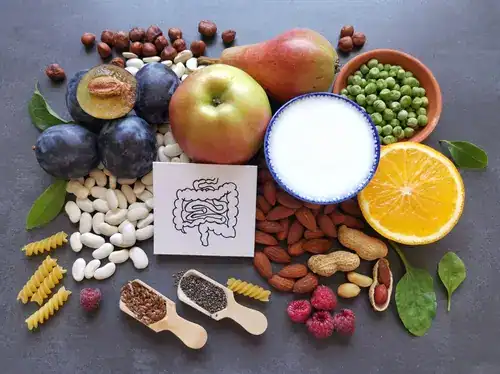
Legumes are the most fiber-dense option that most people overlook. A single cup of cooked lentils has around 15 grams. Chickpeas, kidney beans, and black beans are similarly packed. Oats are exceptional for soluble fiber specifically. Fruits like pears, apples, and raspberries are good daily sources, especially when eaten with the skin. Vegetables like broccoli, sweet potato, and carrots contribute meaningfully. Chia seeds and flaxseeds offer a concentrated hit of fiber alongside healthy fats.
The pattern is simple. The closer a food is to how it grew, the more fiber it contains. Processing strips it out. Refining strips it out. Eating real, whole food puts it back in.
Takeaways
Fiber is not a trend. It is not complicated. It is one of the most consistently beneficial things you can add to your diet, and most people are eating less than half of what they should be.
The benefits stack up quietly but reliably. Better heart health, more stable blood sugar, improved weight management, a stronger gut microbiome, and lower long-term risk of chronic disease. None of those are minor things.
Start with one meal. Swap white rice for brown. Add a handful of lentils to a soup. Eat the apple instead of drinking the juice. Small changes, made consistently, are exactly how fiber does its best work.
(The article is written by Mantasha, Sr. Executive, Clinical Health & Content, and reviewed by Monalisa Deka, Deputy Manager, Clinical Health & Content, Medical Affairs.)