
In the world today, infertility is a major health concern. Did you know that between 8% and 10% of couples worldwide suffer from infertility [1]? With hectic lifestyles, rising stress levels, hormonal imbalances, and underlying health conditions, many couples face challenges when trying to conceive. Fertility challenges can feel overwhelming – especially when medical reports look “normal”, but conception still doesn’t happen. While modern medicine can offer highly effective solutions, we always have Ayurveda – India’s ancient healing system to bank on. And recently, Several traditional Ayurvedic remedies that support fertility have now been studied in laboratories and clinical settings. According to these studies, when used appropriately and under medical supervision, some Ayurvedic treatments may:
– Promote hormonal balance and conception rates
– Improve the quality of sperm
– Enhance overall reproductive health. [2]
Let’s explore 5 Ayurvedic remedies that support fertility and are not just traditional beliefs.
5 Ayurvedic Remedies That Support Fertility Backed By Ayurvedacharya
1. Ashwagandha
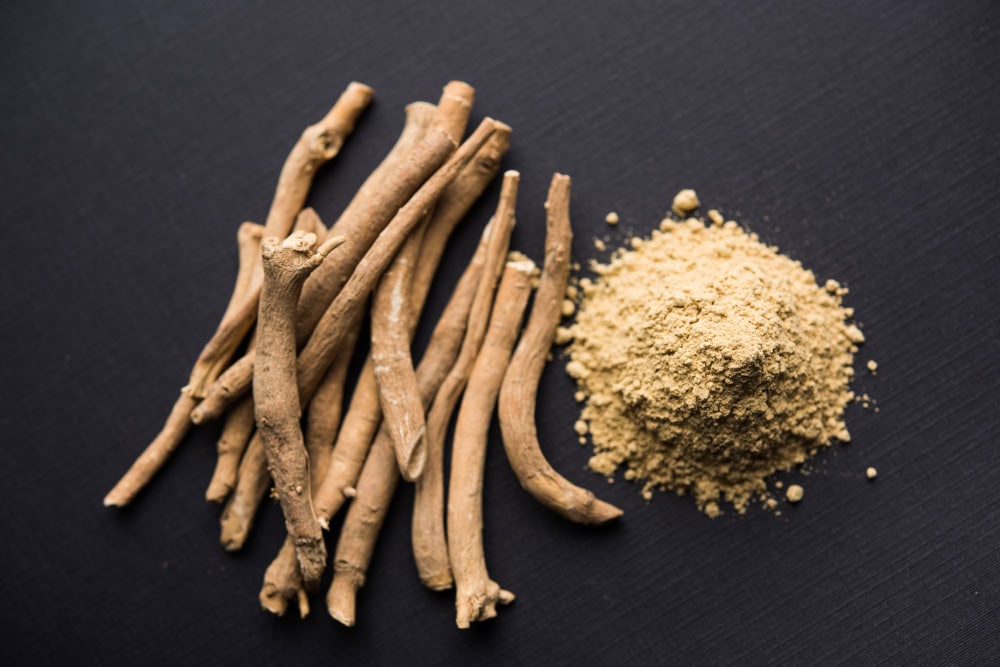
. Stress is one of the underestimated fertility disruptors [3]. Chronic stress can interfere with overall reproductive hormones. As chronic stress increases cortisol, it can suppress reproductive hormones in both men and women. Ashwagandha, commonly known as Indian ginseng in Ayurveda, is known as a powerful rejuvenating adaptogen, meaning it can help the body adapt to stress. It is also believed to support vitality and balance. Approximately 2 to 4 months of Ashwagandha intake can increase the sperm quality and testosterone levels [4]. Although research is still ongoing, Ashwagandha may indirectly support better menstrual cycle regularity by calming the nervous system.
2. Gokshura
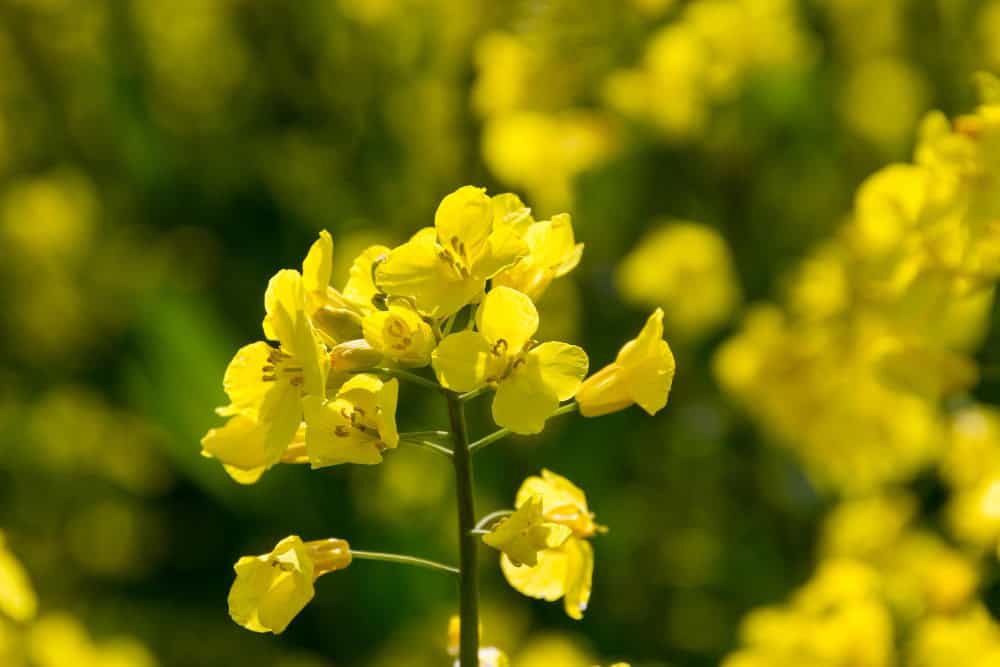
The male counterpart approximately contributes to around 50% of infertility cases [5]. Tribulus terrestris, or Gokshura, is traditionally used in Ayurveda to support urinary, reproductive, and cardiovascular health [6]. Modern research indicates that Tribulus may support androgen balance and improve libido. It also has health benefits for sperm motility and erectile function-related issues [6].
3. Shatavari
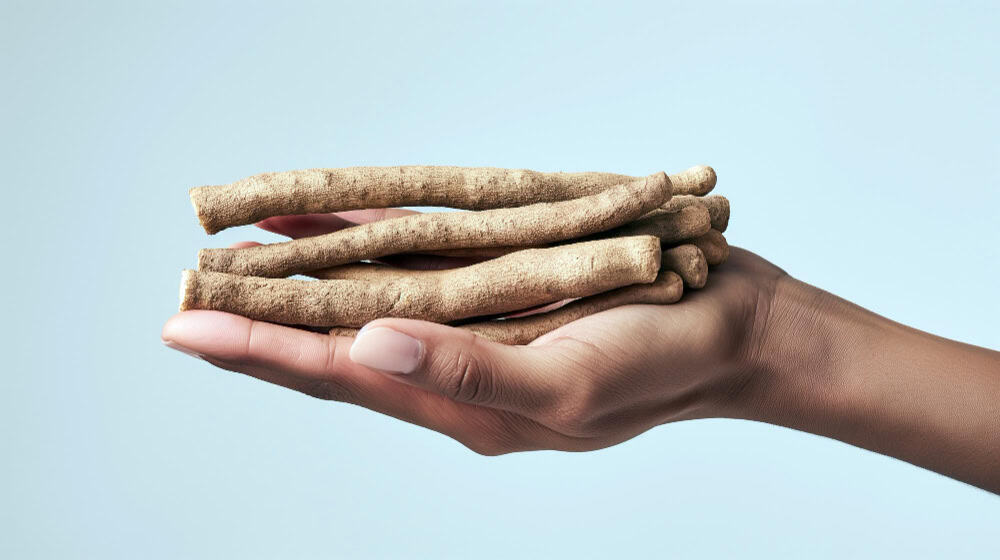
Often referred to as the ‘queen of Ayurvedic herbs for women’, Shatavari, or Asparagus racemosus, has traditionally been used to:
– Support menstrual health
– Enhance ovulation and folliculogenesis
It contains phytoestrogen-like compounds [7], which may help regulate oestrogen levels and support follicular development.
4. Ashoka (Saraca asoca)

Dr. Deepak Soni, an Ayurvedic expert at TATA 1mg, suggests that Ashoka bark has been traditionally used for menstrual disorders and uterine health. Ashoka may help regulate menstrual cycles and reduce excessive bleeding, which can indirectly support fertility by improving uterine health.
5. Kaunch beej
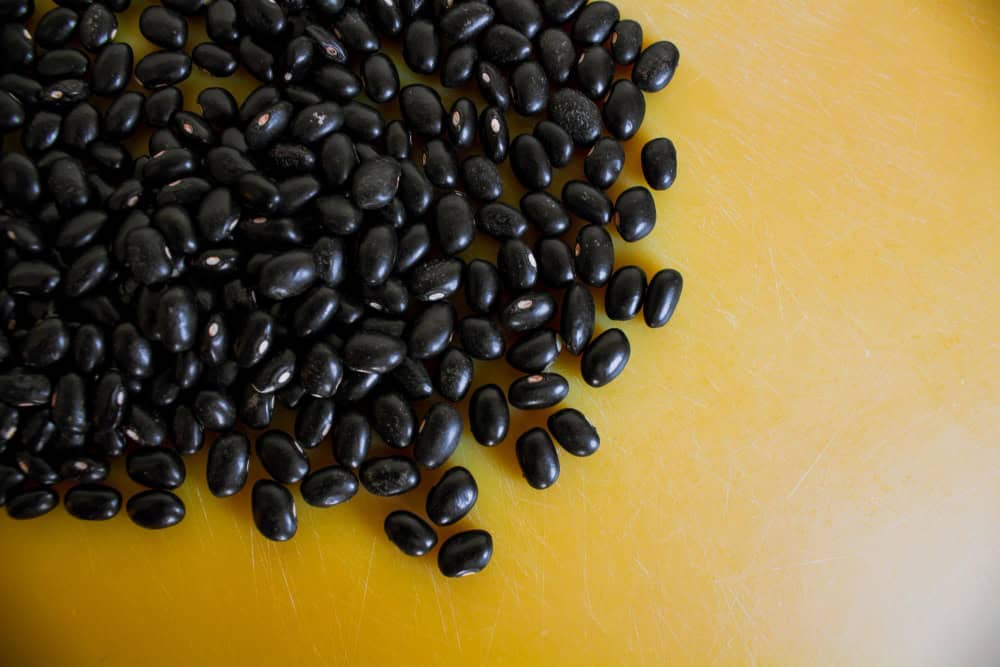
Mucuna pruriens or Kaunch beej, has been traditionally used for nourishment and male reproductive strength. Modern science says it:
- Increases sexual desires by acting as an aphrodisiac (substance)
- Enhances sperm motility and count
- Increases the amount and production of semen
- Improves the quality of semen
- Also enhances the sexual performance by postponing ejaculation [8]
How Ayurveda and Modern Fertility Science Come Together

Modern fertility medicine usually focuses on:
– Ovulation and sperm production
– Uterine receptivity
– Hormone regulation
– Genetic and metabolic health
Ayurveda, on the other hand, focuses on:
– Tissue nourishment
– Digestive strength
– Stress, sleep, and emotional balance
– Hormonal flow through body channels
Ayurvedacharya, Dr. Deepak Soni, says, “Fertility is a whole-body outcome shaped by metabolic health, hormonal regulation, and psychological wellbeing. Herbs like Ashwagandha and Shatavari support these foundational processes rather than acting as direct fertility enhancers.”
When used responsibly, both approaches can complement each other, rather than compete.
Lifestyle Still Matters More Than Ayurvedic Remedies That Support Fertility

No Ayurvedic remedies that support fertility can work in isolation. Research clearly shows that fertility improves when these habits are addressed [9]:
- Balanced nutrition
- Adequate sleep
- Regular physical activity
- Stress management
- Avoidance of alcohol and smoking
- Maintaining a healthy body weight
Herbs can support the system, but lifestyle builds the foundation.
Who Should Be Careful With Ayurvedic Remedies That Support Fertility?

Self-medication can disrupt the hormonal balance rather than improve it. These remedies are not for (unless prescribed):
– Pregnant women
– Thyroid patients
– People with autoimmune diseases
– Those on long-term hormonal medications
– People undergoing IVF without medical advice
Remember
Ayurvedic remedies that support fertility are gaining scientific interest for their potential role. But fertility is complex to understand on your own. These herbs may support the journey, but medical guidance remains essential.
Explore supportive options by consulting a doctor.
Or if you are trying to conceive and are unsure where to begin, start with a proper home-based evaluation.
At TATA 1mg, get Pregnancy and Ovulation Kit.
FAQs
Q. How to conceive naturally with Ayurveda?
Ayurveda focuses on improving digestion (agni), balancing hormones, reducing stress, and nourishing the reproductive tissues through diet, lifestyle, and herbs. Rather than quick fixes, opt for ashoka, shatavari, and kaunch beej-like Ayurvedic remedies.
Q. When is the best time to conceive?
According to Ayurveda, consider the fertile window after menstruation. When the body is well-rested, digestion is strong, and stress levels are low, it is the ideal time for conception.
Q. What is the golden rule for every pregnant woman?
Avoid excess—whether it’s stress, heavy foods, medicines, or exertion—and focus on nourishment, rest, and emotional wellbeing.
Q. What to avoid while trying to conceive?
Smoking, alcohol, excessive caffeine, crash dieting, unmanaged stress, irregular sleep, and unnecessary supplements should be avoided.
Q. What happens if a female takes Ashwagandha?
Although studies are still growing, Ashwagandha may help reduce stress and support hormonal balance. But remember, it should only be taken under medical or Ayurvedic supervision when trying to conceive.
Q. Who cannot take Ashwagandha?
It is advised to avoid taking Ashwagandha:
– Pregnant women
– People with thyroid disorders or autoimmune conditions
– Those on sedatives should avoid it unless advised by a doctor
Q. What is forbidden during pregnancy?
Alcohol, smoking, raw or undercooked foods, unprescribed herbal supplements, excessive caffeine, and heavy physical strain are best avoided.
Q. What can affect egg quality?
Chronic stress, smoking, alcohol, poor sleep, nutritional deficiencies, obesity, and increasing age can negatively affect egg quality.
References
1. Katole A, Saoji AV. Prevalence of primary infertility and its associated risk factors in the urban population of central India: A community-based cross-sectional study. Indian Journal of Community Medicine. 2019;44(4):337. doi:10.4103/ijcm.ijcm_7_19
2. Rathi I, Mavi A, Shannawaz M, Saeed S, Yadav A, Hasan S. Effectiveness of Ayurveda intervention in the management of infertility: a Systematic review. Cureus. 2024;16(4):e57730. doi:10.7759/cureus.57730
3. Stress and Infertility
https://www.apa.org/monitor/sep06/stress
4. Ashwagandha: Usefulness and safety. NCCIH. https://www.nccih.nih.gov/health/ashwagandha
5. Leslie SW, Soon-Sutton TL, Khan MA. Male infertility. StatPearls – NCBI Bookshelf. https://www.ncbi.nlm.nih.gov/books/NBK562258/. Published February 25, 2024.
6. Rahangdale S, Sharma R. A Comprehensive Overview of Tribulus Terrestris (Gokshura) – Traditional Uses, Phytochemistry, and Pharmacological Activities. Vol 6.; 2025:2185-2194. https://ijrpr.com/uploads/V6ISSUE8/IJRPR51784.pdf.
7. Exploring pharmacological properties and food applications of Asparagus racemosus (Shatavari)
https://www.sciencedirect.com/science/article/pii/S2772753X24000856
8. Kaunch beej : Benefits, Precautions and Dosage | 1mg. 1mg. https://www.1mg.com/ayurveda/kaunch-beej-73.
9. Sharma R, Biedenharn KR, Fedor JM, Agarwal A. Lifestyle factors and reproductive health: taking control of your fertility. Reproductive Biology and Endocrinology. 2013;11(1):66. doi:10.1186/1477-7827-11-66
(The article is written by Sneha Jajoo, Intern, Clinical Health & Content, and is reviewed by Dr.Subita Alagh, Assistant Team Lead, Disease Content.)