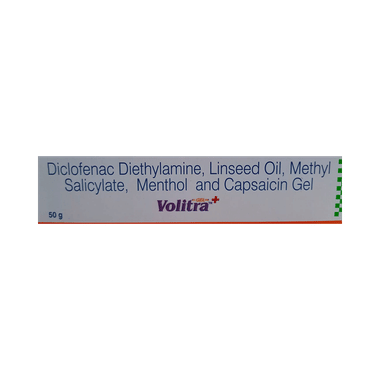


Panofenac-DC Gel is a combination medicine that helps in relieving pain. It works by first cooling the skin then warming it up. This cooling and warming up action improves blood circulation and distracts the patient from pain.
Panofenac-DC Gel is only meant for external use and should be used strictly as advised by your doctor. Rub a thin layer of the medicine into the affected areas with clean and dry hands. Avoid getting in contact with your eyes, nose, or mouth and avoid applying it on wounded or damaged skin. In case of accidental contact with these areas, you should rinse it with plenty of cold water.
Using this medicine may cause common side effects such as burning or stinging sensation, irritation, itching, and redness at the site of application in some people. Usually, the side effects will slowly go away as your body gets used to it. If they get worse or do not go away, you should let your doctor know.
Although medicines used on the skin are not normally affected by other medicines you should let your doctor know if you are taking any other medicine to be safe. You should also let your doctor know if you have any medical conditions or disorders to make sure it is safe. Ask your doctor for advice if you are pregnant or breastfeeding.
Panofenac-DC Gel gives fast relief from pain and swelling in the muscles and joints by creating a cooling-warming effect. It works by causing the skin to feel cool and then warm. These feelings on the skin distract you from feeling the pain. Panofenac-DC Gel work best if they are used as the first signs of pain occur. Apply a thin layer of the medicine to the affected area no more than 3 to 4 times a day and rub in gently and thoroughly.
Side effects of Panofenac-DC Gel
Most side effects do not require any medical attention and disappear as your body adjusts to the medicine. Consult your doctor if they persist or if you’re worried about them
Common side effects of Panofenac-DC
Application site reactions (burning, irritation, itching and redness)
How to use Panofenac-DC Gel
This medicine is for external use only. Use it in the dose and duration as advised by your doctor. Check the label for directions before use. Clean and dry the affected area and apply the gel. Wash your hands after applying, unless hands are the affected area.
How Panofenac-DC Gel works
Panofenac-DC Gel is a combination of four medicines: Diclofenac, Capsaicin, Methyl Salicylate, Menthol and Linseed Oil which relieves pain and inflammation. Diclofenac is a non-steroidal anti-inflammatory drug (NSAID) which works by blocking the release of certain chemical messengers in the brain that cause pain, fever, and inflammation (redness). Capsaicin works by blocking pain messages to the nerves. This relieves minor aches and pains in the muscles and joints. Methyl Salicylate and Menthol are topical analgesics (pain relievers). They work by first cooling the skin and then warming it up. This cooling and warming up action distracts from feeling the pain.
Safety advice
Alcohol
No interaction found/established

Pregnancy
CONSULT YOUR DOCTOR
Information regarding the use of Panofenac-DC Gel during pregnancy is not available. Please consult your doctor.
Breast feeding
CONSULT YOUR DOCTOR
Information regarding the use of Panofenac-DC Gel during breastfeeding is not available. Please consult your doctor.

Driving
No interaction found/established
Kidney
No interaction found/established

Liver
No interaction found/established
What if you forget to take Panofenac-DC Gel?
If you miss a dose of Panofenac-DC Gel, apply it as soon as possible. However, if it is almost time for your next dose, skip the missed dose and go back to your regular schedule. Do not double the dose.
All substitutes
For informational purposes only. Consult a doctor before taking any medicines.
Please send pictures of affected areaFaceclin gel/ D'acne gel twice daily over affected are.For marks- Photoscreen Depigment cream / demelan cream once weekly at night( very little on marks only)Rejuglow face wash /Episoft DC cleanser/ Sastic DS was.Tab. Limcee 500mg once daily for one month.Tab. Ascazin twice daily for one month.Chemical peels to clear face and spots.
Suffering with cold and headache. Should I take allercet dc or allegra m And whole mouth is full of ulcer. Pl recommend medicine for the same too Ulcer on tongue, roots of teeth. Walls of mouth from inside
Dr. Vijay Verma
ENT
This is not waste app first of all it is meant for second opinion as each symptoms have many diagnosis as of now take allercet dc and cobadex czs once a day for five days in case no improvement in two days visit ent specialist near you for proper examination
In my TLC report 14.3, what it's effect to me what type of medicine taken by me. All DC report is normal please respond my quary madam
Dr. Sfurti Mann
Internal Medicine
To start treatment just on the basis of TLc is not possible It suggests infection somewhere in the body Patient and symptoms/signs needs to be seen as a whole Source of infection and subsequent treatment decided
I am suffering from stiffness and pain from neak to lower back and right shoulder. Please suggest how to maintain this problem. B.P. 110/70mm Hg. R.BS 87 mg/DC Please help me to come out from this pain.
Panofenac-DC Gel is used on the skin for localized pain such as muscle strains, sprains, back and neck pain, joint pain from arthritis, and sports injuries. It is formulated to relieve pain for small, targeted areas.
How quickly might I feel relief after applying Panofenac-DC Gel?
The exact time Panofenac-DC Gel takes to relieve pain is not known. However, many people feel a cooling or warming sensation within minutes that helps distract them from pain. Additional relief typically builds over the next hour after each application and over a few days of consistent use.
Can I use Panofenac-DC Gel for arthritis flares in knees, shoulders, or hands?
Yes, Panofenac-DC Gel is commonly used on joints for osteoarthritis or overuse pain, helping relieve soreness and stiffness during daily activities like walking or reaching.
Is it okay to use Panofenac-DC Gel on multiple sore spots the same day?
You can use Panofenac-DC Gel to treat more than one small sore area, but avoid covering them. Follow your doctor's directions on total daily amount and frequency of this medicine to prevent skin irritation.
Are there places I should not apply Panofenac-DC Gel?
Do not use Panofenac-DC Gel on open wounds, cuts, rashes, infected skin, or near the eyes, mouth, or genitals. Wash hands after applying and avoid tight bandages, heating pads, or hot showers directly over the treated skin.
I am sensitive to strong smells. Will the scent of Panofenac-DC Gel be strong?
Products with menthol, methyl salicylate, and linseed oil can have a noticeable minty/herbal scent. Panofenac-DC Gel also has these ingredients. If fragrance sensitivity is an issue, try a small area first or discuss alternatives with your doctor.
What should I expect to feel on my skin after applying Panofenac-DC Gel?
A normal response of Panofenac-DC Gel is a cooling followed by a warming sensation at the application site. Mild redness or tingling can occur. If burning or irritation is intense or persistent, stop use and seek medical advice.
Can Panofenac-DC Gel help with neck or low‑back spasm from working at a desk?
Yes, Panofenac-DC Gel is often used for acute neck and low‑back pain related to muscle strain. Panofenac-DC Gel and other topical pain-relieving medicines have shown benefit for movement‑related pain in such areas. Talk to your doctor for the proper dose and duration for faster results.
What if my pain does not improve after several days of Panofenac-DC Gel use?
If pain persists, spreads, or interferes with sleep or daily activity even after several days of Panofenac-DC Gel use, consult your doctor. You may need dose adjustments, a different topical, physical therapy, or imaging to rule out deeper injury.
Tata 1mg's sole intention is to ensure that its consumers get information that is expert-reviewed, accurate and trustworthy. However, the information contained herein should NOT be used as a substitute for the advice of a qualified physician. The information provided here is for informational purposes only. This may not cover everything about particular health conditions, lab tests, medicines, all possible side effects, drug interactions, warnings, alerts, etc. Please consult your doctor and discuss all your queries related to any disease or medicine. We intend to support, not replace, the doctor-patient relationship.
References
Furst DE, Ulrich RW, Prakash S, et al. Nonsteroidal Anti-Inflammatory Drugs, Disease-Modifying Antirheumatic Drugs, Nonopioid Analgesics, & Drugs Used in Gout. In: Katzung BG, Masters SB, Trevor AJ (Editors). Basic and Clinical Pharmacology. 11th ed. New Delhi, India: Tata McGraw Hill Education Private Limited; 2009. pp. 621-642.
Yaksh T, Wallace M. Opioids, Analgesia, and Pain Management. In: Brunton LL, Hilal-Dandan R, Knollmann BC (Editors). Goodman & Gilman’s: The Pharmacological Basis of Therapeutics. 13th ed. New York, NY: McGraw-Hill Education; 2018. pp. 355-387.
Grosser T, Smyth EM, FitzGerald GA. Pharmacotherapy of Inflammation, Fever, Pain, and Gout. In: Brunton LL, Hilal-Dandan R, Knollmann BC (Editors). Goodman & Gilman’s: The Pharmacological Basis of Therapeutics. 13th ed. New York, NY: McGraw-Hill Education; 2018. pp. 685-709.