Lead, EDTA Blood


The Lead, EDTA Blood test is a blood test that measures the amount of lead, a toxic heavy metal that can cause serious health problems even at low levels of exposure. This test is used to identify lead poisoning or assess the risk of lead toxicity in the body.



Understanding Lead, EDTA Blood
Lead is a harmful environmental toxin that can enter the body through contaminated air, water, food, or dust, and may also be absorbed through lead-based paints, batteries, soil, water, or occupational exposure (industries like construction, mining, and manufacturing). Unlike essential minerals such as copper or iron, lead has no biological role and can cause serious health issues. Once in the blood, it interferes with the production of hemoglobin, damages the nervous system, and accumulates in bones and organs.
Symptoms of lead exposure can range from mild to severe and may include fatigue, irritability, abdominal pain, constipation, headaches, and, in children, developmental delays, learning difficulties, or behavioral changes. In adults, high lead levels may lead to high blood pressure, kidney dysfunction, reproductive problems, or neurological disorders.
Doctors may recommend a lead blood test when there is a possibility of lead exposure or symptoms suggestive of lead poisoning. It is particularly advised for children showing developmental delays or behavioral issues, individuals living in older houses with lead plumbing or paint, and workers in high-risk industries such as battery manufacturing, construction, smelting, or painting. Pregnant women may also be recommended for this test, as lead exposure can affect both maternal health and fetal development. Additionally, it is useful for adults with a history of occupational exposure, those living near industrial sites, or individuals undergoing treatment like chelation therapy, to monitor the effectiveness of interventions and assess whether further action is needed to reduce lead levels.
For this test, it is advised to avoid eating seafood and herbal supplements for at least 3 days before sample collection. The test should not be taken within 96 hours after imaging procedures that use gadolinium or iodine-based contrast media, as these may interfere with the results.
Test result ranges may vary across laboratories. Abnormal test results require expert interpretation. Therefore, self-medicating at home based solely on these results should be avoided. Always consult a doctor for a proper understanding of the test results.
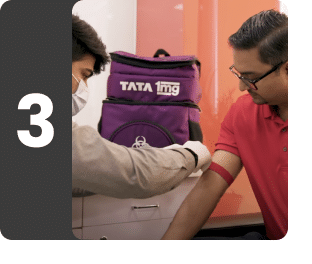
Please note: This is an outsourced test. The sample for this test is collected by TATA 1MG and processed at a NABL accredited partnered lab.
What does Lead, EDTA Blood measure?
The Lead, EDTA Blood test measures the concentration of lead in the blood, which reflects recent exposure to this toxic metal. Since lead binds to red blood cells and can also accumulate in bones and tissues, even relatively low levels in the blood may be harmful. High lead levels usually suggest environmental or occupational exposure, lead poisoning, or impaired clearance due to kidney dysfunction. Normal levels generally indicate minimal or no recent exposure, though they may not fully rule out past accumulation in the body. This test is performed using a highly specialised mass spectrometric technique (ICP-MS), which allows precise measurement of trace elements in body fluids. Detecting abnormal lead levels helps doctors evaluate exposure, assess risk, and support clinical decision-making and treatment planning when interpreted alongside symptoms and other investigations.


FAQs related to Lead, EDTA Blood
Other tests
- Niva Bupa - Comprehensive Check-up - 74496
- CRP (C-Reactive Protein), Quantitative
- Vitamin B12
- Magnesium
- TW-EYGDS HC
- Good Health Platinum Package with Smart Report
- Senior Citizen Health Checkup with Smart Report,
- Senior Citizen Essential Health Checkup with Smart Report
- Men Advanced Plus Health Checkup with Smart Report
- Men Advanced Health Checkup with Smart Report
- CBC (Complete Blood Count)
- FBS (Fasting Blood Sugar)
- Thyroid Profile Total (T3, T4 & TSH)
- HbA1c (Glycosylated Hemoglobin)
- PPBS (Postprandial Blood Sugar)
- Lipid Profile
- Vitamin D (25-Hydroxy)
- Urine R/M (Urine Routine & Microscopy)
- Coronavirus Covid -19 test- RT PCR
- LFT (Liver Function Test)
- KFT (Kidney Function Test)
- TSH (Thyroid Stimulating Hormone) Ultrasensitive
- ESR (Erythrocyte Sedimentation Rate)
- Uric Acid, Serum
- Vitamin B12
- CRP (C-Reactive Protein), Quantitative
- Urine C/S (Urine Culture and Sensitivity)
- Serum Electrolytes
- Serum Calcium
- Serum Creatinine
- Diabetes Screening (HbA1C & Fasting Sugar)
- KFT with Electrolytes (Kidney Function Test with Electrolytes)
- Cholesterol - Total
- Hb (Hemoglobin)
- Complete Hemogram (CBC & ESR)