Hemoglobin (Hb) is an iron-rich protein and a key component of red blood cells (RBCs), giving them their distinctive red color. It plays a crucial role in transporting oxygen from the lungs to body tissues and carrying carbon dioxide back to the lungs for exhalation.
Low Hb levels may indicate anemia or blood loss, while high Hb levels can suggest polycythemia, or other conditions affecting red blood cell production. The Hb (Hemoglobin) test helps assess these variations to evaluate your blood’s oxygen-carrying capacity.
Your doctor may recommend the Hb (Hemoglobin) test if you experience symptoms of abnormal hemoglobin. These may include fatigue, generalized weakness, pale skin, dizziness, shortness of breath, or rapid heartbeat. It can also help detect underlying chronic infections, blood cell disorders, and malnutrition. People with a history of anemia, blood disorders, or chronic illnesses may need regular testing for ongoing monitoring and management.
Usually, no special preparation is required for this test. Eat and drink as per the daily routine. However, let the doctor know about all the medications being taken, as some can affect the test results.
Test result ranges may vary across the laboratories depending on the methodology and laboratory guidelines. Do not self-medicate. Always consult your doctor to understand your test results correctly.
What Are the Symptoms or Conditions That May Require the Hb (Hemoglobin) Test?
You may need the Hb (Hemoglobin) test if you experience symptoms such as:
- Persistent fatigue or generalized weakness
- Pale or yellowish skin
- Dizziness or fainting spells
- Shortness of breath or chest pain on exertion
- Cold hands and feet
- Headaches or irritability
Your doctor may also recommend this test to:
- Evaluate unexplained tiredness or general weakness
- Check for anemia or polycythemia
- Monitor ongoing treatment for blood-related conditions
- Assess health during routine health screenings
When Would I Need the Hb (Hemoglobin) Test?
You may need the Hb (Hemoglobin) test:
- As part of routine health checkups to monitor your overall health.
- As part of a complete blood count (CBC) test.
- If you have symptoms such as generalized weakness, fatigue, pale skin, etc.
- To identify different types of anemia and other red blood cell disorders, such as polycythemia vera.
- To identify hemoglobin levels before and after blood transfusion.
- To monitor your health if you have a family history of thalassemia, sickle cell anemia, or other genetic blood disorders.
- In case of excessive blood loss due to an injury or a surgical procedure.
How Do I Prepare for the Hb (Hemoglobin) Test?
Do I need to fast or stop any medications before the Hb (Hemoglobin) test?
No, fasting is not required before the Hb (Hemoglobin) test. You can eat and drink normally before the test. However, it is essential to inform your doctor about any medications or supplements you are taking, as certain medications may interact with test results. Your doctor will guide you if any temporary adjustments are needed before the test.
How is the Hb (Hemoglobin) test done?
- The Hb (Hemoglobin) test is done by collecting a small amount of blood from a vein, usually in the arm.
- The procedure is quick, minimally invasive, and generally causes only slight discomfort
What happens before the Hb (Hemoglobin) test?
- Fasting is not required for this test.
- Kindly provide complete clinical details and medication history or a doctor's prescription. This information is important for the correlation of your test results.
- Take your medicines as usual. Inform your doctor about any special treatments or supplements.
- Let your doctor know if you are sick or have had recent blood loss, as this can affect results.
- Bring a list of your current medications, supplements, and any recent health history.
What happens during the Hb (Hemoglobin) test?
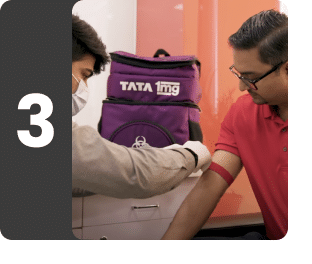
- You will be seated comfortably with your arm supported on a flat surface or armrest.
- A tourniquet (elastic band) is tied around your upper arm to make the veins more visible and easier to locate.
- The phlebotomist identifies a suitable vein for blood collection.
- The puncture site is then cleaned thoroughly with an alcohol swab to reduce the risk of infection.
- A thin, sterile needle is gently inserted into the vein, and a small amount of blood is collected into a test tube.
What happens after the Hb (Hemoglobin) test?
- Once enough blood has been collected, the tourniquet is released, and the needle is removed.
- A cotton ball or gauze is placed on the site, followed by a small bandage or dressing to stop any bleeding.
- The blood sample is carefully labeled with your details and sent to the laboratory for analysis.
- You can resume your daily routine after the test is done.
Is the Hb (Hemoglobin) test painful?
No, the test is generally simple and safe. However, you may feel slight discomfort during blood sample collection, but the chances of serious complications are extremely rare.
How Long Does the Hb (Hemoglobin) Test Take?
The procedure is quick, simple, and safe. It requires only a small blood sample and is completed within a short duration.
When Will I Get the Results?
The availability of your hemoglobin test report may vary depending on your location and the laboratory where the test is conducted. In general, Tata 1mg provides the results within the stipulated time after sample collection.
When Should I Consult a Doctor After the Test?
Consult your doctor if hemoglobin levels are abnormally high or low, or if you experience persistent fatigue, dizziness, breathlessness, or bleeding. Your doctor will interpret your hemoglobin result along with other CBC parameters to determine the cause and treatment plan.
Are There Any Risks Associated with the Hb (Hemoglobin) Test?
The Hb (Hemoglobin) test is safe, with only minimal and short-lasting effects like:
- Small bruise, pinch, or slight tenderness at the puncture site
- Occasional lightheadedness if you are sensitive to needles or blood
- Rarely, infection or blood vessel injury
Note: If you have a bleeding disorder or take blood thinners, inform the phlebotomist beforehand.
What Do the Results Mean?
Pathological Factors
|
Test Parameter
|
Interpretation (possible causes)
|
|
Low levels
|
- Anemia
- Decreased red blood cell production (e.g., chronic kidney disease, chronic inflammatory conditions, red blood cell aplasia, leukemias, drug toxicity, radiation therapy)
- Infection and bone marrow failure
|
|
High Levels
|
- Certain congenital defects of the heart, failure of the right side of the heart (cor pulmonale),
- Severe COPD
- Pulmonary fibrosis and other severe lung disorders are also associated with high hemoglobin
- Myeloproliferative neoplasms, such as polycythemia vera
|
Physiological Factors
👶 Age: Age differences may cause variations in hemoglobin (Hb) levels.
- In neonates, Hb levels are the highest. Hb levels first drop and then gradually increase until puberty.
- In healthy elderly individuals, Hb usually stays steady until around the age of 60.
🚹 Gender: Gender differences may cause variations in Hb levels, with males usually having higher values of Hb than females.
🏔️ Altitude: Higher altitudes can cause changes in Hb levels.
🤰 Pregnancy: During pregnancy, physiological changes cause a gradual decrease in the Hb levels, especially during the second trimester.
🧍 Posture: Changes in posture may impact Hb levels. For example, moving from lying to sitting can increase Hb.
🌞 Diurnal and seasonal variation: Slight fluctuations (about 3%) in Hb levels are observed throughout the day.
Lifestyle Factors
🥗 Diet: An inadequate diet, especially low intake of iron, vitamins, and folate, can lower hemoglobin levels.
🚬 Smoking: Long-term smoking can increase hemoglobin levels.
🍷 Alcohol: Excessive alcohol consumption can alter hemoglobin levels.
🚴♀️ Exercise: Intense exercise is likely to increase hemolysis and iron metabolism and lead to the development of sports anemia.
🥤 Dehydration: Severe dehydration can apparently raise hemoglobin levels.
Disclaimer: This information is for educational purposes only and should not replace professional medical advice, diagnosis, or treatment. Always consult your healthcare provider for personalized guidance.
What Do Normal Hemoglobin Levels Mean?
Normal hemoglobin levels indicate that your body has an adequate capacity to carry oxygen to tissues, ensuring proper function and energy levels.
What Do High Levels of Hemoglobin Indicate?
High hemoglobin levels may indicate chronic lung disease, high-altitude adaptation, or a rare bone marrow condition called polycythemia vera.
What to Do if Your Hemoglobin Is Higher Than Normal?
If your hemoglobin is higher than normal, your doctor will check for possible causes such as dehydration, lung or heart conditions, or increased red blood cell production. Treatment may involve staying well-hydrated, oxygen therapy, or medications to manage red blood cell levels.
What Do Low Levels of Hemoglobin Indicate?
Low hemoglobin levels may indicate anemia. It can be due to iron deficiency, blood loss, chronic illness, or nutrient deficiency (vitamin B12/folate).
What to Do if Your Hemoglobin Is Lower Than Normal?
If your hemoglobin is lower than normal, consult a doctor. The doctor may advise more tests to identify the cause of low levels. You can also improve your hemoglobin levels by dietary changes. Add iron-rich foods to your diet, such as leafy greens, beans, lentils, red meat, etc. Also, improve iron absorption by the body by eating foods rich in vitamin C (citrus fruits, tomatoes, bell peppers) and vitamin B12 (eggs, dairy, meat). If your doctor recommends it, take the necessary supplements.
Can Hemoglobin Results Be Inaccurate?
Yes, certain factors, such as improper sample handling, dehydration, recent blood transfusion, etc., can affect hemoglobin readings.
What Factors Can Affect Hb (Hemoglobin) Results?
Though it is a reliable test, several factors can influence accuracy:
- Dehydration
- High altitude
- Smoking
- Excess diuretic use
- Recent blood donation
- Hemodilution (excess IV fluids)
- Pregnancy
- Body posture
What Follow-Up Tests May Be Required?
If your hemoglobin levels are abnormal (too low or too high), your doctor may recommend additional tests to identify the underlying cause. These follow-up investigations help determine whether anemia, dehydration, nutritional deficiency, or another health condition is responsible. These tests may include:
Table: Tests Commonly Ordered Alongside Hemoglobin Test
Test Name
|
Primary Purpose
|
| CBC (Complete Blood Count) |
Provides a detailed overview of red and white blood cells and platelets |
| Serum Iron, Ferritin, Total Iron Binding Capacity (TIBC) |
Identifies iron deficiency or overload |
| Vitamin B12 and Vitamin B9 (Folate) Tests |
Detects deficiencies causing anemia |
| Reticulocyte Count |
Evaluates bone marrow response and new red blood cell production |
| Hemoglobin HPLC/ Electrophoresis |
Detects inherited blood disorders such as thalassemia or sickle cell anemia |
How Does the Hemoglobin (Hb) Test Differ from Other Blood Tests?
The Hb (Hemoglobin) test is different from other blood tests because it specifically measures the oxygen-carrying capacity of your blood, not other components:
- Red Blood Cell (RBC) Count: Shows the number of red blood cells, but doesn’t indicate how well they carry oxygen.
- Hematocrit (Hct): Measures the proportion of blood made up of red blood cells, but not the hemoglobin content directly.
- Iron Studies (Serum Iron, Ferritin, Total Iron Binding Capacity): Assess iron levels and storage, which affect hemoglobin, but don’t directly show oxygen transport.
- Complete Blood Count (CBC): Gives overall blood cell counts, but hemoglobin specifically tells how much oxygen your blood can carry.
Lifestyle Tips To Maintain Healthy Hemoglobin (Hb) Levels:
🥤 Hydration: Stay hydrated! Drinking enough water helps maintain healthy blood volume and supports oxygen transport.
🥗 Eat Well (Diet): Eat iron-rich foods like spinach, lentils, red meat, and beets. Include vitamin C (like oranges) to help your body absorb iron better.
🍺 Alcohol & Smoking: These habits can reduce hemoglobin and affect oxygen transport in the body.
🚴♀️ Lifetsyle (Exercise): Do regular moderate exercise to improve blood circulation and support red blood cell production.
👨⚕️ Talk to Your Doctor: Check your hemoglobin regularly and avoid taking iron or supplements without advice.
😴 Habits (Rest & Sleep): Get enough sleep and rest to help your body maintain healthy hemoglobin levels.
Note: The lifestyle tips shared here serve as an adjunct to the ongoing treatment. These tips in no manner are intended to replace professional medical advice or treatment. If you have medical concerns, ongoing symptoms, or underlying conditions, please consult a doctor before making changes to your health routine.



























 YES (15)
 NO (6)