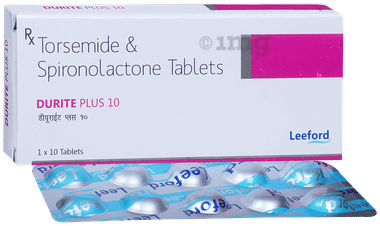
Spironolactone + Torasemide
INFORMATION ABOUT SPIRONOLACTONE + TORASEMIDE
Spironolactone + Torasemide Uses
Spironolactone+Torasemide is used in the treatment of Edema.
How Spironolactone + Torasemide works
Spironolactone + Torasemide is a combination of two medicines: Spironolactone and Torasemide.
Common side effects of Spironolactone + Torasemide
Most side effects do not require any medical attention and disappear as your body adjusts to the medicine. Consult your doctor if they persist or if you’re worried about them
Common
Dizziness, Frequent urge to urinate, Headache, Inflammation of the nose, Muscle pain, Gastrointestinal disturbance
CONTENT DETAILS
Last updated
14 Jun 2022 | 01:46 PM (UTC)
We provide you with authentic, trustworthy and revelant information
Read our editorial policy
Medicine brands for Spironolactone + Torasemide
Expert advice for Spironolactone + Torasemide
- Spironolactone + Torasemide helps removes excess water from your body.
- Take it in the morning with breakfast to avoid getting up at night to urinate.
- It may cause dizziness or sleepiness. Don't drive or do anything requiring concentration until you know how it affects you.
- To lower the chance of feeling dizzy or passing out, rise slowly if you have been sitting or lying down.
- It may cause excessive urine production, dehydration, and low electrolyte levels. Notify your doctor if you experience dizziness, tiredness, or muscle weakness that doesn't go away.
- Your doctor may regularly monitor your blood pressure, kidney function and the level of salts such as potassium and sodium in your blood while you're taking this medication.
Frequently asked questions for Spironolactone + Torasemide
Yes, the use of Spironolactone+Torasemide can cause dizziness (feeling faint, weak, unsteady or lightheaded) in some patients. If you feel dizzy or lightheaded, it is better to rest for some time and resume once you feel better. Do not drive or use any machines.
Yes, Spironolactone+Torasemide can cause gout. Spironolactone+Torasemide contains torasemide which can increase the blood uric acid levels by increasing its absorption from the kidneys. Increased uric acid levels can cause a gout attack. Inform your doctor if you have hyperuricemia (excess of uric acid in blood) or a history of gout before taking this medicine. Use of Spironolactone+Torasemide should be avoided in patients with gout.
Yes, the use of Spironolactone+Torasemide can cause dehydration (excessive loss of fluid). The patient may experience dryness of the mouth, thirst, drowsiness, restlessness, muscle pain, weakness, tiredness, fall in blood pressure (hypotension), decreased urination (oliguria), increased heart rate (tachycardia), nausea and vomiting. Inform your doctor if you experience persistent problems while taking this medicine.
Yes, Spironolactone+Torasemide can cause hyperkalemia (increased potassium levels). This occurs more commonly in patients with underlying kidney disease or in patients taking excessive potassium in their diet. High potassium levels can cause fatal heart problems. It is very important to get electrolytes and kidney function tests done on a regular basis while you are taking this medicine.
The use of Spironolactone+Torasemide should be avoided in patients with hypersensitivity to torasemide, sulfonylureas or spironolactone or any other ingredient of the product. The use of this medicine should also be avoided in patients with anuria, acute renal insufficiency, hepatic coma and pre-coma, low blood pressure (hypotension), cardiac arrhythmias, patients taking aminoglycosides or cephalosporins, kidney dysfunction due to drugs which cause renal damage, patients with high potassium levels (hyperkalemia), Addison's disease and in children with moderate to severe renal impairment.
Keep this medicine in the container or the pack it came in, tightly closed. Store it according to the instructions mentioned on the pack or label. Dispose of the unused medicine. Make sure it is not consumed by pets, children and other people.
Spironolactone+Torasemide is a fixed-dose combination of torasemide (a loop diuretic) and spironolactone (an antagonist of aldosterone). Both are diuretics and they help to remove excess fluid from the body. The use of this combination is advised in patients of congestive heart failure (heart failure leading to fluid accumulation in the lung and rest of the body), nephrotic syndrome (a kidney disorder), liver cirrhosis with fluid retention (edema) and swelling of the abdomen (ascites).
Yes, Spironolactone+Torasemide is safe to use in most of the patients. However, in some patients it may cause common side effects like dizziness, dehydration, decreased sodium level in blood, breast enlargement in males, decreased magnesium level in blood, decreased calcium level in blood, increased blood uric acid. Inform your doctor if you experience any persistent problem while taking this medicine.