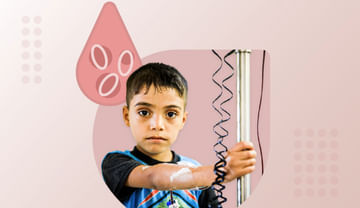

Thalassemia is a blood disorder that affects many people across the world. It is an inherited disorder which means it is passed on from parents to their children. It is a condition in which a person has less than the usual amount of hemoglobin (an oxygen-carrying protein) in their body.
The primary cause of thalassemia is a mutation in the DNA of the cells that limit the production of alpha or beta chains in the hemoglobin. Depending on which chain is affected, two types of thalassemia may arise - alpha thalassemia or beta-thalassemia. Thalassemia may also be characterized on the basis of its severity. A person with mild symptoms of thalassemia is known to have thalassemia minor. However, a person with moderate or severe symptoms may be considered as thalassemia major. A person may also be a carrier of thalassemia even if they do not show any symptoms of the disease.
For people with a thalassemia minor, regular screening and intake of necessary supplements may be enough. However, people with thalassemia major may require frequent blood transfusions or bone marrow transplants.
Although a genetic disease, thalassemia can be prevented in a child by the parents undergoing specific blood tests before conceiving giving birth. Adopting a healthy lifestyle and following a well-balanced diet can also help manage this condition well.


Symptoms of thalassemia generally occur during childhood or late adolescence. For people with thalassemia minor, the symptoms may not be visible. However, people suffering from thalassemia major may experience a wide range of symptoms. The severity of the symptoms may also vary and depend on the type of thalassemia.
Some of the common signs and symptoms of thalassemia include:
It is caused as the hemoglobin cannot carry enough oxygen to various parts of the body. The muscles do not receive enough oxygen and reduce the amount of energy produced by the body.
Some people with thalassemia may have extremely pale or yellowish skin as this condition reduces red blood cells in the body.
Another common symptom of thalassemia is weak bones. An increase in the amount of iron in the body may reduce or interfere with the absorption of calcium and Vitamin D. This may lead to weak and brittle bones over time.
In people with thalassemia, there may be an increase in the breakdown of red blood cells in the body. This may lead to an excess release of bilirubin from the cells, which may cause your urine to become darker.
In some cases, thalassemia may lead to an expansion in the bones, which in turn may cause the bones in your face to widen.
Anemia can cause the growth of a child to slow down. Puberty may also be delayed in children with thalassemia.
People with thalassemia can get an overload of iron in their bodies, either from the disease itself or from frequent blood transfusions. Too much iron can result in damage to the heart, liver, and endocrine system, which includes glands that produce hormones that regulate processes throughout the body. The damage is characterized by excessive deposits of iron. Without adequate iron chelation therapy, almost all patients with beta-thalassemia accumulate potentially fatal iron levels.
People with thalassemia have an increased risk of infection. This is especially true if the spleen has been removed.
The spleen aids in fighting infection and filters unwanted material such as old or damaged blood cells. Thalassemia is often accompanied by the destruction of a large number of red blood cells and the task of removing these cells causes the spleen to enlarge. Splenomegaly can make anemia worse, and it can reduce the life of transfused red blood cells. Severe enlargement of the spleen may necessitate its removal.
In alpha-thalassemia, the severity of the condition depends on the number of mutated genes you receive from your parents. In case you inherit:
One mutated gene - You are a carrier of thalassemia and may not show any symptoms.
Two mutated genes - You will show mild signs of thalassemia.
Three mutated genes - You will show moderate to severe signs of thalassemia.
Two genes are required for producing the beta-globin chain. In case you inherit:
One mutated gene - You may show mild symptoms of thalassemia. This condition is known as thalassemia minor. However, there is a 50% chance that you may not show symptoms if only one gene is damaged. In this case, you will be a thalassemia carrier.
Two mutated genes - Your symptoms may be moderate to severe. This condition is referred to as thalassemia major. Babies born with thalassemia major are generally healthy at birth but may show signs and symptoms within 2 years.
Every person has three types of blood cells in their body - red blood cells (RBCs), white blood cells (WBCs), and platelets. The red blood cells consist of an iron-rich protein known as hemoglobin, which is responsible for providing oxygen from lungs to other parts of the body.
Thalassemia occurs when there is a mutation in the gene that controls the formation of red blood cells. The hemoglobin in our body has two kinds of protein chains - alpha-globin and beta-globin. If mutations in the gene cause either of the alpha protein chain or the beta protein chain to be abnormal, it may stop the production of red blood cells in the body. There won't be enough cells to carry oxygen to various organs, and your body may not function properly.
The reduction in the number of alpha chains leads to alpha-thalassemia and the reduction in the number of beta chains causes beta-thalassemia. Children generally inherit these mutations from their parents.
Both α- and β-thalassemias are often inherited in an autosomal recessive manner. Cases of dominantly inherited α- and β-thalassemias have been reported, the first of which was in an Irish family with two deletions of 4 and 11 bp in exon 3 interrupted by an insertion of 5 bp in the β-globin gene. For the autosomal recessive forms of the disease, both parents must be carriers for a child to be affected.
As thalassemia is passed on from parents to children, the factors that may increase the risk of having thalassemia are:
Family history: If either your parents or close relatives suffer from thalassemia, you are at a greater risk of developing it.
Belonging from a certain ancestry: Thalassemia is mostly found in African Americans and Southeast Asians.
If you experience any thalassemia symptoms such as fatigue, then it is wise to consult a doctor. It may also be advised to consult a doctor if you're pregnant and either you or your partner have thalassemia or are carriers.
Your doctor might do some physical examination followed by a few thalassemia tests to evaluate the severity of your child's condition. The tests include:
In this test, the doctor evaluates the number of red blood cells in your body. They will also be able to detect the amount of hemoglobin in the cells and determine their shape and size.
The index is calculated from the results of a complete blood count. If the quotient of the mean corpuscular volume (MCV, in fL) divided by the red blood cell count (RBC, in millions per microLiter) is less than 13, thalassemia is said to be more likely. If the result is greater than 13, then iron-deficiency anemia is said to be more likely.
In this test, a trained professional examines a sample of your blood under the microscope. This test helps detect any abnormal cells in the blood.
These tests measure the body's iron storage capacity and usage. It may include tests for determining unsaturated iron-binding capacity, iron-binding capacity, and percent saturation of transferrin.
This testing is carried out during pregnancy to determine whether a baby has thalassemia or not before birth. Tests used to diagnose thalassemia before birth are:
Chorionic villus sampling: In this test, a tiny sample of the placenta is evaluated to find out whether the baby suffers from the condition or not.
Amniocentesis: Generally done during the 16th week, this test examines the fluid surrounding the fetus.
This test helps identify different types of hemoglobin present in the blood. It helps detect the abnormal type of hemoglobin and diagnose different types of anemia.
To get the right diagnosis, it is important to consult the right doctor. Consult India’s best doctors online.
As thalassemia is an inherited condition, it may be challenging to prevent it. However, there are not many ways to manage the condition and reduce its implications on your health excepy for genetic screening.
One of the sure-shot ways to prevent the passing of thalassemia from parents to offspring is through genetic screening. If either or both of the partners are a carrier of the gene that causes thalassemia, genetic screening may help determine whether the baby is affected by it or not. There are several types of prenatal tests available that can be taken in the early or later stages of pregnancy to check whether your baby is safe or has thalassemia, major or minor.
Large scale awareness campaigns are being organized in India by both the Government and non-government organizations in favor of voluntary premarital screening to detect carriers of thalassemia and marriage between both carriers is strongly discouraged.
The intensity of the symptoms of thalassemia may vary depending on the type of thalassemia. Most doctors can predict whether a baby has thalassemia if either parent has thalassemia majors or are carriers.
For people who are carriers or have thalassemia minor, medical treatment may not be required. However, children or adults with thalassemia major may need to visit their doctor regularly to manage the disease. Even a gynecologist and genetic counselor can help you diagnose or prevent the transmission of thalassemia to your child by conducting prenatal testing.
Specialists that can help manage thalassemia include:
General physician
Hematologist
Pediatrician
Consult India's best doctors here from the comfort of your home.
People who have thalassemia minor and show mild symptoms may not require any treatment. However, for people with moderate to severe thalassemia, the following treatments may be required:
Vitamin supplements may be required in addition to the regular treatments available to manage thalassemia successfully. For thalassemia minor patients, only vitamin supplements may be recommended to manage the condition.
Folic acid is the most common vitamin recommended to people with thalassemia. It helps build healthy red blood cells and is prescribed to people alongside transfusions and iron chelation therapy.
Apart from this, your doctor may also prescribe Vitamin D and calcium supplements to avoid osteoporosis and build stronger bones.
The hemoglobin present in the red blood cells consists of a high amount of iron. Thus, frequent blood transfusions may result in a build-up of excess iron in the body. This may lead to an iron overload and cause damage to the heart, liver, and other organs of the body.
Even for people who don't have frequent transfusions, an iron overload may still occur. Your doctor may recommend iron chelation therapy to maintain your health and eliminate the excess iron from your body.
Doctors use three common medicines for iron chelation therapy which include:
Deferoxamine: It is an injectable that is administered overnight to the patient. This therapy may take time and lead to various side effects.
Deferasirox: It is a pill that needs to be taken once daily. It may cause side effects such as nausea and vomiting; however, they are generally short-lived.
Deferiprone: This is a medication that is given by mouth. Nausea, vomiting, and diarrhea are relatively common with its use. It is available in both Europe and the United States. It appears to be the most effective agent when the heart is significantly involved.
Blood transfusion is considered the best treatment for people with thalassemia major. In this treatment, healthy red blood cells with high hemoglobin are transferred into your body using an intravenous (IV) line. This procedure usually takes around 1 to 4 hours.
Red blood cells (RBCs) usually live only up to 120 days. Hence, you may require frequent blood transfusions to manage your condition.
However, if you have beta-thalassemia intermedia, transfusions may be required occasionally. For example, when you have severe anemia or have contracted an infection.
Bone marrow transplant, also known as stem cell transplant, may be considered for your treatment if you have a severe case of thalassemia. Bone marrow is a spongy tissue present inside your bone. The stem cells in the bone marrow are responsible for producing red and other types of blood cells.
A bone marrow transplant is the only effective way to treat thalassemia. For children, it may also eliminate the need for frequent blood transfusions. This procedure requires receiving stem cells from a compatible donor, which are then infused inside your body. Success rates have been in the 80–90% range. Mortality from the procedure is about 3%.
Graft-versus-host disease (GvHD) is one relevant side effect of bone marrow transplantation. Further research is necessary to evaluate whether mesenchymal stromal cells can be used as prophylaxis or treatment for GvHD.
Thalassemia patients who do not respond well to blood transfusions can take hydroxyurea or thalidomide, and sometimes a combination of both. Hydroxyurea is the only FDA approved drug for thalassemia. Patients who took 10 mg/kg of hydroxyurea every day for a year had significantly higher hemoglobin levels, and it was a well-tolerated treatment for patients who did not respond well to blood transfusions. Another hemoglobin-inducer includes thalidomide, although it has not been tested in a clinical setting. The combination of thalidomide and hydroxyurea resulted in hemoglobin levels increasing significantly in transfusion-dependent and non-transfusion dependent patients
Gene therapy is being studied for thalassemia.The procedure involves collecting hematopoietic stem cells (HSCs) from the affected person's blood. The HSCs then have a beta-globin gene added using a lentiviral vector. After destroying the affected person's bone marrow with a dose of chemotherapy (a myeloablative conditioning regimen), the altered HSCs are infused back into the affected person where they become engrafted in the bone marrow where they proliferate. This potentially results in a progressive increase in hemoglobin A2 synthesis in all subsequent developing red blood cells, with resultant resolution of the anemia.
While one person with beta thalassemia has no longer required blood transfusions following treatment within a research trial, it is not an approved treatment as of 2018.
Diet plays a key role in the management of thalassemia. Here are some dos and don'ts you need to follow to help your body manage thalassemia:
Eat foods rich in calcium such as milk and other dairy products.
Consume a well-balanced diet that is low in sugar and carbohydrates.
Ask your doctor about the additional vitamin supplements that you may need to consume.
Avoid intake of iron supplements.
Avoid intake of foods rich in iron such as spinach, broccoli, dates, and fish.
Avoid engaging in strenuous exercises.
Avoid smoking or consuming alcohol.
Do not take any supplements or medicines without consulting your doctor.
Wash your hands regularly and avoid going near sick people if you've had your spleen removed.
Having thalassemia minor may not lead to any complications. However, if you have moderate to severe thalassemia, certain complications may arise.
Iron overload: Thalassemia may lead to an increase in the amount of iron in the body. A greater amount of iron may cause damage to the heart, liver, or other organs of the body.
Enlarged spleen: As the name suggests, thalassemia may often lead to inflammation and enlargement of the spleen. The spleen is responsible for filtering unwanted red blood cells, and hence, an enlarged spleen may make your anemia worse.
Heart problems: Thalassemia can lead to severe heart issues like abnormal heart rhythms or heart failure, if left untreated or unattended.
Infections: People with thalassemia who have had their spleen removed are at a greater risk of developing numerous diseases.
Delayed growth: Thalassemia may slow down or delay the growth of a child.
Bone deformities: Thalassemia may expand the bone marrow and widen the bones in the face or skull. The expansion may also make the bones more brittle and increase your risk of breaking them.
Since thalassemia is a genetic condition, no home remedies can prevent or treat it. However, certain home remedies may be helpful in managing this condition by providing the vitamins and minerals needed to optimally manage this condition. Some of them are as follows:
1. Holy basil (tulsi) juice
Tulsi leaves have a variety of properties and are also known to boost the production of healthy cells in your body.
Tip: Take 5 - 6 fresh tulsi leaves and add them into a blender with water. Strain the mixture using a fine mesh into a cup. Drink it regularly in the morning.
2. Sunbathing
The sun is a natural source of Vitamin D. Spending a few hours regularly in the sun may help get the optimal amount of Vitamin D required for healthy bone formation in the body.
Tip: Go for a walk early in the morning between 7 and 10 am to get optimum levels of Vitamin D.
3. Wheatgrass juice
Wheatgrass juice is the juice extracted from the pulp of wheatgrass. Several studies have found that a chlorophyll-like compound in wheatgrass helps absorb iron and discharge it from the body. The juice also does not have any side effects and has proved beneficial in the management of beta-thalassemia.
Tip: Take 4-5 blades of the wheatgrass and add it to the blender with water. Once the mixture is ready, strain the juice out using a fine mesh into a cup. Drink it daily on an empty stomach or in the evening.
4. Giloy
Giloy satva is a traditional herb that may help prevent the symptoms of thalassemia. It helps in blood formation and prevents the complications of this disease.
Tip: Add 1 tablespoon giloy satva extract to hot water. Mix well and drink. It is advised to drink it early in the morning, immediately after waking up.
5. Milk
People with thalassemia may have calcium deficiency and suffer from weaker bones. Hence, milk serves as an excellent source of calcium.
Tip: Drink a glass of milk every day after meals, if you have thalassemia for stronger bones and joints. Remember, not to add any sugar or honey and drink it plain or as advised by the doctor.
Thalassemia is a genetic blood disorder. This condition may require making significant changes to your lifestyle to manage it properly. Only a few diet and lifestyle modifications may be required, if you have thalassemia minor or beta-thalassemia intermedia.
However, if you are suffering from thalassemia major, you may need to take medications and additional treatments to manage thalassemia and prevent any long-term complications in addition to diet and lifestyle changes. Also, avoid taking over-the-counter medications or supplements. It is wise to talk to your doctor about the severity of your condition and the proper treatment approach to fight thalassemia and prevent it from worsening.
In addition, here are a few tips that can help you manage and prevent thalassemia.
Avoid foods rich in iron and lead to iron overloads like spinach, broccoli, or other green leafy vegetables. Say no to supplements that contain iron.
Avoid any form of strenuous exercise that may wear you out or put an extra load on your heart.
Do not miss any of your transfusion or chelation therapy appointments. Keep in touch with your doctor and monitor your condition regularly.
Take all your vitamin supplements as recommended by your doctor.
Try getting vaccinated against all major infections such as pneumonia and flu.
Opt for prenatal screening if either you or your partner have a family history of thalassemia.
Remember, thalassemia is a major blood disorder. So consult your doctor, if you experience severe anemia or any other symptoms related to this condition.
Although used interchangeably, these three terms have different meanings.
Thalassemia is a genetic blood disorder that is inherited from either or both parents. In this condition, the body makes an abnormal form of hemoglobin.
Sickle cell anemia is another type of genetic disorder that results in the red blood cells being sickle-shaped. Due to a change in shape, the red blood cells die early, leaving the person severely anemic. The sickle-shaped cells may also block blood flow in the veins and cause pain.
Cooley's anemia is generally used interchangeably with thalassemia. However, it is a subtype of thalassemia. It is another name for beta-thalassemia major and occurs when there is an absence of the beta-globin chain during hemoglobin production.