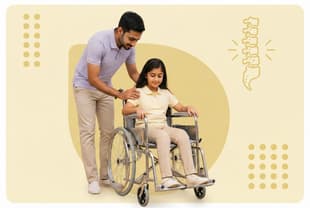
Also known as Brittle bone disease, Brittle bone dysplasia and OI
Overview
Osteogenesis Imperfecta (OI) is a rare genetic condition present from birth, caused by a problem with collagen—the key protein that gives bones their strength and structure. When collagen is missing, reduced, or not formed properly, the bones become fragile and break much more easily than normal.
The condition can show up in different ways: frequent fractures, short stature, a bluish tint in the eyes (blue sclerae), dental issues, and sometimes hearing loss. Symptoms can range from very mild to more severe, and many children are diagnosed early in life when these signs begin to appear.
While OI cannot be cured, treatment focuses on strengthening the body and reducing fractures. This usually includes physical therapy, bisphosphonate medicines to improve bone density, supportive devices for mobility, and regular follow-ups to help children grow, stay active, and maintain their independence.
Overview
Key Facts
Symptoms
Types
Causes
Risk factors
Diagnosis
Prevention
Specialist to visit
Treatment
Home-care
Complications
Alternatives therapies
Living with
FAQs
References
Frequently Asked Questions
Yes. OI does not affect fertility. However, many women with OI deliver by cesarean section because of pelvic bone differences or breech-position babies.
Use cushioned furniture, non-slip mats, and organized spaces to reduce accident risks while allowing independence.
Weight-bearing activities like walking, dancing, low-impact aerobics, stair climbing, and gardening help strengthen bones—especially in the hips, legs, and spine. Always check with your doctor before starting any new exercise.
Combine gentle physiotherapy, adaptive devices, rest, and activity planning to reduce discomfort and prevent overexertion.
Many people report more pain or stiffness in cold or damp weather, which is common in chronic bone conditions.
In our relentless endeavour to keep improving our services, you are our eyes. Kindly take out sometime to guide us on how to serve your better.
Subscribe to stay informed
Subscribe to our carefully crafted informative emailers by Medical Experts and be the first to get the latest health news, tips and important updates.
Want to know more?We provide you with authentic, trustworthy and relevant information
Have issues with the content?
Disclaimer
Tata 1mg's sole intention is to ensure that its consumers get information that is expert-reviewed, accurate and trustworthy. However, the information contained herein should NOT be used as a substitute for the advice of a qualified physician. The information provided here is for informational purposes only. This may not cover all possible side effects, drug interactions or warnings or alerts. Please consult your doctor and discuss all your queries related to any disease or medicine. We intend to support, not replace, the doctor-patient relationship.
Key Facts
Usually seen in
At birth or in early childhood
Gender affected
Both males and females
Body part(s) involved
Bones
Prevalence
Worldwide: 1 in 15,000 to 20,000 (2021)
Mimicking Conditions
Congenital hypophosphatasia
Achondroplasia
Pyknodysostosis
Diffuse osteopenia in the early stages of leukaemia
Surgery: Rodding surgery, Fracture repair and Spinal and skull surgery.
Symptoms of Osteogenesis Imperfecta
People with osteogenesis imperfecta (OI) can experience a wide range of symptoms.
Common bone-related features include:
Bones that fracture with minimal force
Persistent bone pain
Short height
Curved spine, such as scoliosis (side-to-side curve of your spine) or kyphosis (an excessive forward curve of your spine)
Visible bone deformities
A rib cage that appears barrel-shaped and an excessive forward curve of your spine
A triangular-shaped facial structure
A bluish or grey tint to the whites of the eyes.
Dental issues may also occur, such as:
Teeth that are weak, brittle, or discoloured
Poorly aligned teeth
Other possible symptoms include:
Frequent bruising
Joint looseness or instability
Muscle weakness
Breathing difficulties
Hearing problems.
Worried about weak bones, frequent fractures, or joint pain? Strengthen them with the right supplements. Find the best nutraceuticals for bones and joints.
Types of Osteogenesis Imperfecta
There are several types of OI ranging from mild to extremely severe. Types I to IV are most common, each with different levels of bone fragility and specific related symptoms.
Type I – mild (most common)
Most often affects children and adolescents with the mildest and most common form of OI, typically experiencing fractures during childhood through puberty.
Bones fracture easily (mostly in childhood)
Blue/blue-grey sclera
Loose joints and low muscle tone
Slight bone deformity (mild)
Hearing loss in adulthood
Easy bruising
Type II – extremely severe
Most often affects newborns, and is usually fatal before or shortly after birth.
Multiple fractures at birth
Severe bone deformities
Very small chest and underdeveloped lungs
Blue sclera
Low birth weight, short limbs
Fragile ribs leading to breathing failure
Type III – severe, progressive form
Most often affects infants who survive the neonatal period but develop severe and progressive bone deformities and lifelong mobility limitations.
Fractures present at birth; deformities worsen with growth
Very short stature and bowed limbs
Triangular face
Barrel-shaped chest, curved spine
Hearing loss, dental issues, blue sclera
Respiratory problems possible
Type IV – moderate to severe
Most often affects children with moderate bone fragility and fractures often occurring before puberty.
Mild to moderate bone deformities
Short stature
Triangular face
Normal or pale-blue sclera
Scoliosis
Possible hearing or dental problems
Short stature, loose joints, curved spine
Note: Apart from the well-known Types I–IV, doctors have now discovered more than 21 different types of OI based on new genetic research. Some of the important newer ones include:
Type V: Bones may create extra bone while healing.
Type VI: Bones don’t mineralise (harden) properly.
Types VII–VIII: Very severe forms due to rare gene issues.
Type XV: Caused by changes in a gene called WNT1, which affects bone strength.
Causes of Osteogenesis Imperfecta
Osteogenesis imperfecta happens because of a genetic mutation that affects bone strength. OI is not caused by low calcium or poor nutrition.
Most common OI types are caused by mutations in collagen-related genes), which disrupt normal collagen production in bones and other tissues.
Some rarer types of OI are caused by changes in a gene that helps make cartilage, the tissue that supports bones.
These changes lead to too little collagen or poor-quality collagen, making bones weak and easy to break.
The mutation may be inherited from one parent or can appear for the first time in the child.
Some rare types require mutations from both parents, and parents do not need to have OI to pass on the gene.
Risk Factors for Osteogenesis Imperfecta
OI happens because of a faulty gene that leads to too little or poor-quality collagen.
If one parent has OI, their child has a 50% chance of inheriting it.
It can also appear in children with no family history due to a new spontaneous mutation.
Diagnosis of Osteogenesis Imperfecta
Osteogenesis imperfecta diagnosis consists of:
1. Medical history and physical examination
Doctors begin by reviewing past fractures, bone pain, growth concerns, and any family history of OI or unexplained bone issues.
This is followed by a detailed physical exam to look for key signs such as blue sclerae, increased flexibility in the joints, bone deformities,or patterns of frequent fractures.
2. Imaging tests
X-rays: These help detect fractures, bone shape changes, bone thinning, osteoporosis and overall bone health.
Dual-energy X-ray absorptiometry scan (DXA or DEXA scan): This test shows how strong or mineralised the bones are.
3. Genetic testing
A blood test checks for changes in the genes that cause OI (often COL1A1 or COL1A2). This can confirm the diagnosis and identify the specific type.
4. Prenatal diagnosis (before birth)
In moderate to severe cases, OI may be detected during pregnancy.
Prenatal ultrasound: This test can show bent or fractured bones or poor skull formation in severe cases.
Amniocentesis: A small sample of the fluid around the baby is taken to check for OI-related genetic changes.
Chorionic villus sampling (CVS): A tiny piece of the placenta is tested to look for the same genetic changes linked to OI.
5. Genetic and collagen testing (or biopsy)
Blood tests look for mutations in collagen genes (often COL1A1 / COL1A2).
If results are unclear, fibroblast studies (to check how the cells produce collagen) or collagen analysis (test collagen for any defects) from a skin biopsy can confirm the diagnosis.
Check all your health parameters with a complete lab test at Tata 1mg. Fast, accurate, and hassle-free.
Prevention of Osteogenesis Imperfecta
Osteogenesis imperfecta is a genetic condition, so it cannot be prevented. However, if you or your partner has OI—or if the condition runs in your family—meeting with a genetic counsellor can be helpful.
Specialist to Visit
While a family doctor or general physician can help identify early signs of osteogenesis imperfecta, managing OI usually requires a multidisciplinary care team, including:
Pediatrician
Clinical geneticist
Endocrinologist
Orthopedic surgeon
Physical therapist
Occupational therapist
Dental specialists such as orthodontists and oral–oral-maxillofacial surgeons
Audiologist (for hearing-related complications)
A paediatrician manages childhood OI, monitors growth, development, nutrition, and fracture patterns in children.
A clinical geneticist confirms a diagnosis through genetic testing, explains inheritance patterns, and guides family planning decisions.
An endocrinologist assesses bone health, manages low bone density, and monitors medications like bisphosphonates.
An orthopaedic surgeon treats fractures, corrects bone deformities, and performs procedures like to strengthen fragile bones.
A physical therapist guides safe exercises to improve strength, mobility, and reduce the risk of fractures.
An occupational therapist teaches safe daily movements and recommends modifications or equipment to prevent injury.
A dental specialist manages brittle teeth, bite problems, and jaw issues and provides corrective dental treatments.
An audiologist detects and treats hearing loss, which is common in some types of OI.
When to see a doctor?
Seek prompt medical care if you or your child experiences:
New or frequent fractures
Sudden bone pain or deformity
Hearing problems
Dental issues like chipping, discolouration, or pain
Difficulty walking or performing daily activities
Do not wait until things get out of hand. Seek advice from our trusted team of doctors.
Treatment of Osteogenesis Imperfecta
While there is no cure for OI, treatment focuses on strengthening bones, preventing fractures, improving mobility, and supporting overall quality of life.
1. Non-surgical treatment
Medications:
Bisphosphonates: Help strengthen bones and reduce fractures in children and adults with low bone density. Commonly used drugs include: Pamidronate, Zoledronate
Other bone-strengthening medicines: Used mainly in adults to improve or maintain bone mass. Commonly used drugs are: Denosumab, Teriparatide
From everyday essentials to specialisedspecialized medicines, discover them all at Tata 1mg—India’s largest and most trusted online pharmacy.
Bone care and immobilisation
Braces and splints (orthotics) support weak bones and help prevent fractures.
After a fracture, lightweight casts or splints are used briefly – usually 2 to 4 weeks to avoid further bone loss from long immobilisation.
Browse lightweight casts, braces, and orthotic supports to support healing and daily movement.
Mobility aids
Walkers, crutches, braces, wheelchairs, or prosthetics can help with safe movement and independence.
Dental and hearing care
Regular dental visits help manage brittle teeth, alignment issues, or jaw problems.
Hearing checks starting in childhood are important; treatment may include hearing aids, cochlear implants, or ear surgery.
2. Surgical treatment
Rodding surgery
Metal rods are placed inside long bones (like legs or arms) to stabilise them, prevent fractures, and correct deformities.
Expandable (Fassier Duval) telescopic rods are used in children; they grow with the child.
Fracture repair
Surgery may be needed for repeated fractures or bones that do not heal correctly.
Spinal and skull surgery
Procedures may correct severe scoliosis (side-to-side curve of your spine) or relieve pressure between the spine and skull in more severe cases.
3. Emerging therapies
Newer treatments are being studied to improve bone strength and long-term outcomes in OI:
Anti-sclerostin therapy: Works by boosting bone formation; early research shows promising results in OI models.
Mesenchymal stem-cell therapy: Experimental studies suggest possible improvements in growth, strength, and bone quality.
Gene-based approaches: Techniques like gene editing and allele-specific silencing aim to correct faulty collagen genes (e.g., COL1A1) in the future.
Home Care for Osteogenesis Imperfecta
Home care for osteogenesis imperfecta centers on safety, smart nutrition, and daily habits that support stronger bones. With simple routine changes, individuals with OI can reduce fractures and improve comfort, confidence, and mobility—here are a few tips.
1. Home safety modifications to prevent falls
Clutter-free floors: Keeping pathways clear and removing loose rugs helps prevent tripping and falls.
Bright lighting: Ensuring good lighting in rooms, hallways, and stairs improves visibility and reduces fall risk.
Bathroom and stair support: Installing grab bars and sturdy handrails provides extra stability during movement.
Stable furniture: Using firm chairs with armrests supports safer sitting and standing.
Non-slip bathroom setup: Adding non-slip mats and a shower chair improves safety during bathing.
Safe play areas: Creating cushioned, low-risk play spaces helps protect children from injury.
Easy-reach storage: Keeping daily essentials within reach prevents climbing or stretching.
Mobility aids: Using walkers, crutches, or wheelchairs when needed increases stability and confidence.
Safe outdoor spaces: Maintaining smooth, well-lit outdoor pathways reduces the risk of accidents.
2. Healthy nutrition & eating considerations
Balanced diet: Choose meals low in fat, salt, and added sugar, focusing on nutrient-rich foods like vegetables, fruits, lean proteins, and whole grains. This supports bone health and prevents unnecessary weight gain.
Portion control: People with OI often need fewer calories due to smaller body size and reduced activity. Keeping portions moderate helps maintain a healthy weight.
Feeding challenges in infants: Some infants may grow slowly or struggle with reflux. Swallowing studies can guide safer feeding techniques and improve intake.
Prevent obesity: Choosing nutrient-dense foods over high-fat, high-sugar options supports overall health. It also reduces stress on bones and joints.
3. Eat bone- and joint-supportive foods
Get enough calcium: Include milk, yoghurt, cheese, broccoli, kale, nuts, dried beans, soy products, and fortified foods.
Boost intake with calcium supplements.
Maintain Vitamin D levels: Vitamin D improves calcium absorption and is often low in OI. Get 15 minutes of sunlight daily and include fortified foods like cereals and milk.
Add omega-3s: Include omega-3-rich foods like salmon, nuts, and fish oil to ease inflammation.
Boost your health with Omega supplements.
Include vitamin K–rich greens: Add spinach, fenugreek, cabbage, and kale to support joint comfort and overall bone health.
Vitamin C for healing: Vitamin C supports connective tissue formation and fracture healing. Good sources include citrus fruits, sweet potatoes, strawberries, tomatoes, and bell peppers.
Explore our range of Vitamin C supplements
Complications of Osteogenesis Imperfecta
Osteogenesis imperfecta primarily affects bones, but it can also lead to a range of other health issues like:
Frequent fractures: Bones in OI are fragile and can break easily, sometimes with minimal or no trauma.
Bone deformities: Repeated fractures may cause bones to become bowed or misshapen over time.
Dental and craniofacial abnormalities: Fragile teeth, misalignment, or jaw irregularities can occur.
Muscle weakness: Reduced muscle strength may affect mobility, balance, and overall daily function.
Hearing loss: It is more common in type I. Fragile bones in the middle ear can lead to partial or progressive hearing loss.
Respiratory complications: Weakness in the chest wall or spine deformities may impact breathing.
Cardiovascular complications: Rarely, heart or blood vessel issues may develop.
Hyperplastic callus (rare extra bone growth): Sometimes extra bone tissue forms at fracture sites, causing pain or stiffness.
Bone tumours: Very rarely, OI increases the risk of osteogenic sarcoma, a type of bone cancer.
Top spine pressure (basilar invagination): The upper spine can press on the brainstem, affecting nerve function and cerebrospinal fluid flow.
Anaesthesia sensitivity (malignant hyperthermia): People with OI may have rare reactions to certain anaesthesia drugs during surgery, requiring extra precautions.
Alternative Therapies for Osteogenesis Imperfecta
Living with OI can involve bone fragility and joint discomfort. While medical treatment is essential, some complementary therapies may help manage pain and improve daily function:
1. Acupuncture
A technique where fine needles stimulate specific points on the body. It may help reduce chronic pain, improve circulation, and support joint comfort in people with OI.
2. Yoga
Gentle stretching and breathing exercises enhance flexibility, strengthen muscles around fragile bones, and improve balance to prevent falls.
3. Tai chi
Low-impact, slow movements that promote coordination, stability, and joint mobility, reducing the risk of injuries and easing stiffness.
4. Massage therapy
Targeted massage can relieve muscle tension, improve circulation, and reduce discomfort around joints and weak muscles.
5. Physical and occupational therapy
These therapies help improve muscle strength and safe movement, teaching ways to protect fragile bones in daily activities.
Low-impact exercises like swimming or hydrotherapy gently strengthen the body with minimal fracture risk.
6. Relaxation techniques
Practices like meditation, guided imagery, and deep breathing help lower stress and pain perception, supporting overall well-being.
Take a moment for yourself – Browse stress-relief and wellness aids to manage anxiety and uplift your mood. Important: These therapies are complementary only—they do not replace prescribed medications or medical treatments. Always consult your doctor before starting any new therapy.
Living with Osteogenesis Imperfecta
Living with a rare condition like osteogenesis imperfecta (OI) requires balancing daily care, emotional well-being, and proactive health management. Here are some tips to help manage life with OI:
1. Everyday care tips
Support your emotional well-being: Talk to your doctor about stress, or anxiety, stay connected with support groups, and reach out to family or a counsellor when needed.
Handle fractures with care: Follow medical advice for casts and mobility, choose safe exercises, and keep your home fall-free to reduce injury risk.
Maintain a healthy lifestyle: Stay active with gentle activities, maintain a healthy weight, avoid smoking/alcohol, and keep up with regular bone health check-ups.
Take charge of your bone health – If you smoke and want to quit, explore the smoking cessation range to support stronger bones and overall wellness.
2. Care tips for children with Osteogenesis Imperfecta
Don’t blame yourself for fractures: Even with careful handling, fractures may still occur—this is part of living with OI.
Handle infants gently but confidently: Support one hand under the buttocks and the other behind the shoulders, neck, and head. Avoid lifting under the armpits or pulling on arms or legs. For severe OI, avoid raising legs by the ankles during diaper changes.
Choose supportive equipment: Use a reclined, well-padded infant car seat and a sturdy stroller that can accommodate casts.
Follow medical instructions closely: Keep casts clean and dry, and follow guidance on physical therapy and safe exercises like swimming and walking.
3. Monitoring
Regular check-ups are essential for people with OI to detect complications early and track overall health:
Hearing tests: Routine screening throughout life to detect early hearing loss.
Dental care: Regular dentist visits are important. Children should see an orthodontist by age 7 to monitor jaw growth and tooth alignment.
Lung checks: Pulmonary function tests (PFTs) should be done around age 5, again between ages 20–25, and every two years afterwards if results remain normal.
Heart evaluation: A baseline echocardiogram is recommended in late teen years or early adulthood.
Neck and skull imaging: Routine checks for basilar invagination at the junction of the skull and spine. At least one baseline X-ray is recommended.
Spine monitoring: Regular screening for scoliosis; if a curve is present, periodic X-rays track its progression.
Did you know?
Type I is the mildest and most common form of osteogenesis imperfecta, affecting about 50% of children with OI.
Worried your child might be at risk? Watch for frequent fractures or bone deformities and consult a doctor for guidance.
Did you know?
Some rare types can occur in different ways such as when both parents carry hidden genes for OI or when the gene change is linked to the X chromosome.