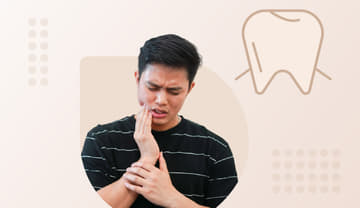
Wisdom teeth, located at the back of the mouth, often emerge later in life and may partially erupt or remain impacted which means they fail to erupt through the gums fully or become trapped within the jawbone. It occurs when the tooth fails to emerge fully or aligns improperly due to a lack of space in the jaw or obstruction by other teeth.
This can lead to symptoms like pain, infection, difficulty in mouth opening, or even cause damage to adjacent teeth. Risk factors for an impacted wisdom tooth include a small jaw, tooth misalignment, overcrowding, genetics, or late tooth eruption.
Treatment for an impacted wisdom tooth typically involves surgical removal to prevent or address pain, infection, or damage to nearby teeth. However, in some cases where the impacted tooth is asymptomatic and unlikely to cause complications, monitoring may be recommended.
Post-surgery care includes managing swelling, pain relief, and maintaining oral hygiene to ensure proper healing.
Impacted teeth can create hard-to-reach areas in the mouth, increasing the risk of plaque buildup, cavities, and gum infections. Proper oral hygiene is essential to prevent complications and keep the mouth healthy.
Types Of Impacted Wisdom Tooth
Impacted wisdom teeth are classified based on their growth angle and position relative to adjacent teeth and the jawbone. Common types include:
Mesioangular Impaction: The wisdom tooth is angled toward the front of the mouth, pressing against the second molar.
Vertical Impaction: The tooth is upright but fails to fully emerge through the gum line.
Horizontal Impaction: The tooth lies horizontally in the jaw, pressing against adjacent teeth.
Distoangular Impaction: The tooth is angled toward the back of the mouth, away from the second molar.
Transverse Impaction: The tooth is positioned sideways, at a 90-degree angle to its normal alignment.
Inverted Impaction: The tooth is upside down within the jaw, often requiring complex removal.
Note: Apart from these a soft tissue impaction occurs when a wisdom tooth partially erupts. In contrast, a bony impaction involves the tooth being fully trapped in the jawbone.
Causes Of Impacted Wisdom Tooth
The primary cause of impacted wisdom teeth is evolutionary changes in the human jaw structure.
Over time, as our diets have evolved and dental hygiene practices have improved, the size of the human jaw has become smaller.
This reduction in jaw size often leads to insufficient space for the third molars, or wisdom teeth, to emerge properly.
As a result, the wisdom teeth can become impacted. Here are some specific factors and causes:
Angulation of the tooth
Late eruption
Crowded teeth
Soft tissue obstruction
Risk Factors of Impacted Wisdom Tooth
The causes and risk factors for impacted wisdom teeth are related but not identical. Common risk factors include:
1. Jaw Size
Individuals with smaller jaw sizes may have less space for the wisdom teeth to properly emerge, increasing the risk of impaction. Factors that affect the jaw size include:
Feeding habits in infancy
Childhood habits like thumb sucking
Cross-breeding
High sugar consumption
2. Age
Wisdom teeth typically begin to emerge in the late teens or early twenties. The age at which the teeth start to come in can influence the likelihood of impaction.
3. Poor Dental Hygiene
Inadequate oral hygiene can lead to gum disease and infections, which may affect the proper eruption of wisdom teeth.
Maintain oral hygiene the natural way. Try our widest range of ayurvedic oral care products.
4. Previous Extractions
If you have had other teeth extracted, it might alter the alignment of the remaining teeth, impacting the eruption of wisdom teeth.
Want to keep your teeth healthy and get that sparkly smile? Learn more about dental hygiene tips.
5. Genetics
Having a family history of impacted teeth can increase your chances of getting impacted wisdom teeth.
Diagnosis Of Impacted Wisdom Tooth
Diagnosis of an impacted wisdom tooth typically involves the following:
1. Clinical Examination
A dentist or oral surgeon will begin by conducting a thorough clinical examination of the mouth, teeth, and surrounding tissues.
They will assess for signs and symptoms associated with impacted wisdom teeth, such as pain, swelling, redness, difficulty opening the mouth, and evidence of infection.
2. Imaging Tests
X-rays: Dental X-rays, like TMJ X-rays or periapical X-rays, help assess wisdom teeth's position, angulation, and proximity to other teeth, and detect issues like cysts or abscesses.
CBCT Scan: A cone-beam computed tomography (CBCT) scan may be recommended for detailed 3D imaging of an impacted tooth and surrounding structures, aiding in precise treatment planning for complex cases.
Want to get your tests done the hassle-free way?
Prevention Of Impacted Wisdom Tooth
The impaction of wisdom teeth cannot always be prevented, as it often depends on factors like genetics, jaw size, and tooth alignment.
However, maintaining good oral hygiene and regular dental check-ups can help monitor wisdom tooth development and address potential issues early.
Early removal of wisdom teeth showing signs of misalignment or lack of space in the jaw may prevent complications associated with impaction.
Does getting wisdom teeth mean you’re getting wiser? Listen to our expert break down wisdom tooth impaction for you. Watch This Video
Specialist To Visit
Experts who can help you diagnose and treat impacted wisdom teeth are:
General dentist
Oral & maxillofacial surgeon
A general dentist can evaluate your overall oral health, identify any issues with your wisdom teeth, and provide initial recommendations.
An oral and maxillofacial surgeon can expertly assess, extract, and manage complications of impacted wisdom teeth for safe and effective treatment.
When to see a doctor?
Consult a dentist immediately if you have:
Persistent pain or swelling around the wisdom tooth.
Difficulty in opening your mouth or chewing.
Signs of infection like redness, pus, or bad breath.
Jaw stiffness or swelling spreading to the face.
Repeated episodes of discomfort or inflammation near the tooth.
Adjacent teeth damage.
Have you noticed these symptoms lately? Get appropriate guidance from a professional.
Treatment Of Impacted Wisdom Tooth
The treatment of an impacted wisdom tooth depends on various factors, including the severity of impaction, symptoms, and the individual's overall oral health. Here are common treatment options:
1. Observation
In cases where the impacted wisdom tooth is not causing any symptoms,the dentist may recommend a wait-and-see approach.
Regular monitoring through dental check-ups and X-rays can help track any changes in the condition of the impacted tooth.
2. Extraction
The most common treatment for an impacted wisdom tooth is surgical extraction.
This involves removing the impacted tooth surgically under local anesthesia or sedation.
Depending on the position and complexity of the impaction, the dentist or oral surgeon may need to perform a simple extraction or a more complex surgical extraction.
3. Preventive Extraction
Some dentists may recommend preventive extraction of impacted wisdom teeth, even if they are not currently causing symptoms.
This proactive approach helps prevent potential future problems such as infection, damage to neighboring teeth, gum disease, and cyst formation.
4. Medications
Antibiotics: If an impacted wisdom tooth shows signs of infection or inflammation, antibiotics may be prescribed to manage symptoms temporarily. Commonly used ones are:
Analgesics (Pain relief): Over-the-counter pain medications may be recommended to manage pain and discomfort associated with an impacted wisdom tooth. Common ones include:
Unable to get your medications on time. Order with Tata 1mg for guaranteed delivery.
4. Other Procedures
Operculectomy: If a wisdom tooth is partially erupted but blocked by thick gum tissue, this procedure removes the tissue to help the tooth erupt. If the tooth still doesn't emerge fully, removal might be needed.
Autogenous Transplantation: Third molars can be moved to another site, like a missing first molar's spot. However, this is rarely done due to a low success rate, except in special cases.
Orthodontically Guided Eruption: This technique uses braces to help impacted teeth, like canines or premolars, move into the correct position in the dental arch.
Eruption-Activating Procedures: These methods are applied to developing teeth to encourage their eruption into the correct position.
Home- Care For Impacted Wisdom Tooth
Home remedies can help alleviate discomfort associated with impacted wisdom teeth temporarily, but it is important to consult a dentist and get the right treatment. Here are some home remedies that may provide relief:
1. Saltwater rinse: Gargling with warm saltwater can help reduce inflammation and alleviate pain associated with an impacted wisdom tooth.
How To Do It?
Mix half a teaspoon of salt in a glass of warm water and rinse your mouth thoroughly several times a day.
2. Cold compress: Applying a cold compress or ice pack to the outside of the cheek near the affected area can help reduce swelling and numb the pain.
How To Do It?
Wrap an ice pack in a cloth and apply it to the affected cheek for 15-20 minutes, repeating every few hours to reduce pain and swelling.
Explore our exclusive range of hot and cold compress to get some relief from your pain.
3. Soft Diet: Stick to a soft diet consisting of foods that are easy to chew and swallow to avoid putting pressure on the impacted tooth. Some examples include soups, yogurt, smoothies, fresh fruit juices, etc.
4. Clove (Laung) Oil: Clove oil contains eugenol, a natural anesthetic that can help numb the area and reduce pain.
How To Use It?
Apply a small amount of clove oil to a cotton swab and dab it onto the gums near the impacted tooth.
Cloves are not just for relieving toothaches, they offer a wide range of health benefits. Learn more about their uses and advantages here.
5. Peppermint: Peppermint has natural anti-inflammatory properties that can help that has been used to treat gum inflammation.
How To Use It?
Brew a cup of peppermint tea or use peppermint oil as mouthwash and gargle your mouth with it.
Complications Of Impacted Wisdom Tooth
Impacted wisdom teeth can lead to various complications, and if left untreated, these issues can become more severe. Common complications of impacted wisdom teeth include:
Pericoronitis: It is an inflammation of the soft tissues surrounding a partially erupted or impacted tooth, commonly a wisdom tooth. It occurs when food debris, plaque, or bacteria get trapped under the gum flap, leading to infection.
Gum disease (Periodontitis): Impacted wisdom teeth can create pockets where bacteria can accumulate and lead to inflammation of the gums.
Cysts and tumors: Impacted wisdom teeth can sometimes lead to the formation of cysts (fluid filled cavities) or tumors around the impacted tooth. These abnormalities can damage surrounding bone and tissues.
Damage to adjacent teeth: Wisdom teeth may push against adjacent teeth as they try to emerge, causing misalignment or damage to nearby teeth.
Abscess formation: Untreated infections around impacted teeth can lead to the formation of abscesses, which are pockets of pus.
Sinus issues: Impacted upper wisdom teeth can sometimes affect the sinus cavity, leading to sinus pain, pressure, or sinus infections.
Difficulty in cleaning: Proper oral hygiene around impacted wisdom teeth can be challenging, increasing the risk of decay and infection.
Speech and chewing problems: Impacted wisdom teeth can cause discomfort and difficulty in speaking or chewing.
Note: If you are experiencing any of these issues it is better to get the impacted wisdom tooth removed.
Living With Impacted wisdom tooth
Living with impacted wisdom teeth can be challenging due to the potential for discomfort, pain, and the risk of complications.
You can try the home remedies mentioned in the above section to get some relief.
However here are a few tips that you will need to follow once you get the impacted wisdom tooth removed.
Post-Surgical Tips
Reduce swelling with cold compresses for the first 24 hours.
Avoid strenuous activities for a couple of days.
Stick to soft foods like yogurt, soups, or mashed foods.
Prevent dry socket (painful condition where the blood clot at a tooth extraction site dislodges or dissolves, exposing the underlying bone and nerves) by avoiding drinking from straw
Refrain from smoking as it can hamper healing
Gently rinse with warm salt water but avoid brushing near the site initially.
Take prescribed pain relievers and antibiotics as directed.
Did you know?
Incorrect brushing techniques can irritate or injure the gums near an impacted wisdom tooth, increasing the risk of infection and complications like pericoronitis. Want to know if you are brushing the right way?
Did you know?
Smokers often experience slower healing after wisdom tooth removal, as tobacco use impairs blood flow and delays tissue repair in surgical wounds. Quit this habit to avoid complications.
Frequently Asked Questions
Wisdom teeth typically erupt between the ages of 17 and 25, but this can vary depending on individual factors.
Not necessarily. Treatment depends on factors like the degree of impaction, symptoms, and risk of complications.
Recovery time varies but typically ranges from a few days to a week or more.
Yes, some pain and discomfort are normal after surgery, but it should gradually improve.
Yes, impacted wisdom teeth can exert pressure on neighboring teeth, potentially affecting the results of orthodontic treatment (braces to straighten teeth).
In our relentless endeavour to keep improving our services, you are our eyes. Kindly take out sometime to guide us on how to serve your better.
Subscribe to stay informed
Subscribe to our carefully crafted informative emailers by Medical Experts and be the first to get the latest health news, tips and important updates.
Want to know more?We provide you with authentic, trustworthy and relevant information
Have issues with the content?
Disclaimer
Tata 1mg's sole intention is to ensure that its consumers get information that is expert-reviewed, accurate and trustworthy. However, the information contained herein should NOT be used as a substitute for the advice of a qualified physician. The information provided here is for informational purposes only. This may not cover all possible side effects, drug interactions or warnings or alerts. Please consult your doctor and discuss all your queries related to any disease or medicine. We intend to support, not replace, the doctor-patient relationship.