






Toor Dal
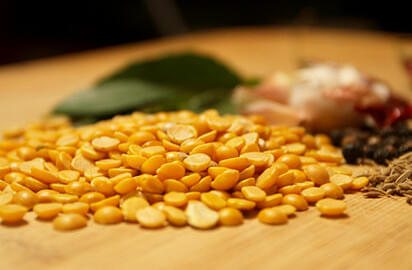
Toor dal, also known as Arhar dal, is an important legume crop which is mainly used for its edible seeds. It is a rich source of various nutrients including proteins, complex carbohydrates, minerals and vitamins.
Apart from its nutritional value, it also has many health benefits. It is useful in diabetes as it helps to lower blood glucose levels due to the presence of antioxidants. It aids in weight loss by lowering the cholesterol levels. According to Ayurveda, it is Grahi (absorbent) in nature due to which it helps to manage diarrhea.
Toor dal is beneficial in wounding healing due to its anti-inflammatory and astringent properties. It also helps in managing skin infections as it has antimicrobial properties.
Consumption of Toor Dal is generally considered safe. However, it might cause cause allergies in some individuals[1][2][13-15].
Apart from its nutritional value, it also has many health benefits. It is useful in diabetes as it helps to lower blood glucose levels due to the presence of antioxidants. It aids in weight loss by lowering the cholesterol levels. According to Ayurveda, it is Grahi (absorbent) in nature due to which it helps to manage diarrhea.
Toor dal is beneficial in wounding healing due to its anti-inflammatory and astringent properties. It also helps in managing skin infections as it has antimicrobial properties.
Consumption of Toor Dal is generally considered safe. However, it might cause cause allergies in some individuals[1][2][13-15].
What are the synonyms of Toor Dal?
Red gram, Tuver, Toor, Pigeon pea, Arhar, Ruharmah, Togari, Thuvara, Thuvarai, Tuvarai, Adagi Tuvari, Adhaki, Kakshi
What is the source of Toor Dal?
Plant Based
Benefits of Toor Dal
Wound healing
Toor dal leaves help in wound healing, decreasing the swelling and bringing back the normal texture of the skin. Applying a paste of Toor dal leaves along with coconut oil on the wound helps in quick healing and reduces inflammation due to its Ropan (healing) property.
Tip
1. Take a few fresh leaves of Toor dal.
2. Make a paste with water or honey.
3. Apply this paste on the affected area once a day for quick wound healing.
Stomatitis
Stomatitis is a condition of painful swelling inside the mouth. It is referred to as Mukhapaka in Ayurveda. Mukhapaka involves all the three doshas (mainly Pitta) and can also lead to bleeding in some cases. Chewing fresh leaves of Toor dal improves the healing process and reduce inflammation due to its Ropan (healing) property.
Tip
1. Take a few fresh leaves of Toor dal.
2. Wash them and chew once or twice a day for quick healing of stomatitis.
Toor dal leaves help in wound healing, decreasing the swelling and bringing back the normal texture of the skin. Applying a paste of Toor dal leaves along with coconut oil on the wound helps in quick healing and reduces inflammation due to its Ropan (healing) property.
Tip
1. Take a few fresh leaves of Toor dal.
2. Make a paste with water or honey.
3. Apply this paste on the affected area once a day for quick wound healing.
Stomatitis
Stomatitis is a condition of painful swelling inside the mouth. It is referred to as Mukhapaka in Ayurveda. Mukhapaka involves all the three doshas (mainly Pitta) and can also lead to bleeding in some cases. Chewing fresh leaves of Toor dal improves the healing process and reduce inflammation due to its Ropan (healing) property.
Tip
1. Take a few fresh leaves of Toor dal.
2. Wash them and chew once or twice a day for quick healing of stomatitis.
How to use Toor Dal
1. Toor Dal Paste
a. For Baldness
i. Soak the Toor dal for 2 hours.
ii. Crush the dal in a pestle mortar to form a fine paste.
iii. Apply the paste evenly on bald patches.
iv. Leave it for 1 hour.
v. Wash thoroughly with tap water.
vi. Use this remedy twice a week to control baldness.
b. For Swelling
i. Soak the Toor dal for 2 hours.
ii. Crush the dal in a pestle mortar to form a fine paste.
iii. Apply the paste evenly on the affected area.
iv. Use the paste twice a day to control swelling.
2. Toor Dal Leaves
i. Take a few fresh leaves of Toor dal.
ii. Make a paste with water or honey.
iii. Apply on the affected area once a day for quick wound healing.
a. For Baldness
i. Soak the Toor dal for 2 hours.
ii. Crush the dal in a pestle mortar to form a fine paste.
iii. Apply the paste evenly on bald patches.
iv. Leave it for 1 hour.
v. Wash thoroughly with tap water.
vi. Use this remedy twice a week to control baldness.
b. For Swelling
i. Soak the Toor dal for 2 hours.
ii. Crush the dal in a pestle mortar to form a fine paste.
iii. Apply the paste evenly on the affected area.
iv. Use the paste twice a day to control swelling.
2. Toor Dal Leaves
i. Take a few fresh leaves of Toor dal.
ii. Make a paste with water or honey.
iii. Apply on the affected area once a day for quick wound healing.
Frequently asked questions
Q. Do you need to soak Toor dal?

MODERN SCIENCE VIEW
Yes, Toor dal needs to be soaked for 20 minutes. Soaking Toor dal prior to cooking decreases the cooking time and enhances the taste of the dal.
Q. Is Toor dal high in carbs?
MODERN SCIENCE VIEW
Toor dal or pigeon pea is a rich source of proteins and carbohydrates both in fresh and dried form[14]. It can also be used by making flour out of it. Toor dal flour can be a suitable ingredient for food products like bread, pasta, and nutritional bars which can make it a gluten-free substitute for cereals[14].
Q. Is Toor dal rich in protein?
MODERN SCIENCE VIEW
Toor dal is an excellent source of inexpensive plant-based protein[19]. Toor dal is commonly used in the sambar or with cooked vegetables or cooked with green chilies salt and lime.
References
- Bakhru HK.Foods That Heal The Natural Remedies For Good Health.Orient Paperbacks.1990.
- Pal D, Mishra P, Sachan N.Biological activities and medicinal properties of Cajanus cajan (L) Millsp.J Adv Pharm Technol Res. 2011;2(4):207–214.

- Dai FJ, Hsu WH, Huang JJ et al. Effect of pigeon pea (Cajanus cajan L.) on high-fat diet-induced hypercholesterolemia in hamsters.Food Chem Toxicol. 2013 Mar;53:384-91.
- Chang HY, Wu JR, Gao WY et al. The Cholesterol-Modulating Effect of Methanol Extract of Pigeon Pea (Cajanus cajan (L.) Millsp.) Leaves on Regulating LDLR and PCSK9 Expression in HepG2 Cells. Molecules. 2019 Jan 30;24(3). pii: E493.
- Ariviani S , Affandi DR , Listyaningsih E et al. The potential of pigeon pea (Cajanus cajan) beverage as an anti-diabetic functional drink. IOP Conf. Ser.: Earth Environ. Sci. 2018; 102 012054.
- Motiwala MN, Gupta RA, Dumore NG et al. In vivo wound healing activity of Cajanus cajan on burn wound model in mice by regulating antioxidant and inflammatory mediators. Pharmaceutical Summit and Expo. 2015.
- Patil BS, MastiholimathVS. Wound healing activity of hydrogel obtained from pigeon pea (Cajanus cajan) seed husk. JCHPS. 2011;4: 108-110.
- Mahitha B, Archana P, Ebrahimzadeh MH et al. In vitro Antioxidant and Pharmacognostic Studies of Leaf Extracts of Cajanus cajan (L.) Millsp. Indian J Pharm Sci. 2015 Mar-Apr;77(2):170-7.
- Agbafor K, Nwaka A, Dasofunjo K et al . CREATININE, UREA AND URIC ACID LEVELS IN ALBINO RATS TREATED WITH LEAF EXTRACT OF CANJANUS CAJAN (PIGEON PEA). Journal of Applied Sciences. 2017:2; 1-9.
- Anadebe VC, Okafor NA , Ezeugo JO et al. GC-MS Analysis of Phytochemical Compounds in Cajanus Cajan Leaf. J. chem. pharm.2017; 9(5):360-363.
- Aja PM, Alum EU, Ezeani NN et al. Comparative Phytochemical Composition of Cajanus cajan Leaf and Seed. Intl. J. Microbiol. Res.2015; 6 (1): 42-46.
- Russel K. Yoga for Hair Growth. 2012.
- Sameer Kumar CV , Naik S , Mohan Net al. Botanical Description of Pigeonpea [Cajanus Cajan (L.) Millsp.].2017: 10.1007/978-3-319-63797-6_3.
- Rabia S, Ying W. A review article on health benefits of Pigeon pea (Cajanus cajan (L.) Millsp). International Journal of Food and Nutrition Research, 2018; 2:15.
- Gupta RK, Kumar S, Gupta K et al. Cutaneous exposure to clinically-relevant pigeon pea (Cajanuscajan) proteins promote TH2-dependent sensitization and IgE-mediated anaphylaxis in Balb/c mice. Journal of Immunotoxicology. 2016; 13(6): 827-841.
- Ezike A, Akah P, Okoli C, et al.Experimental evidence for the antidiabetic activity of Cajanus cajan leaves in rats. Journal of basic and clinical pharmacy.2010;1;81-84.
- Shamsi TN, Parveen R, Ahamad S, et al. Structural and Biophysical Characterization of Cajanus cajan Protease Inhibitor. J Nat Sci Biol Med. 2017;8(2):186–192.
- The Ayurvedic Pharmacopoeia Of India.Part 1 Volume 1.
- Harvard Health Publishing. Glycemic index for 60+ foods
Disclaimer
The content is purely informative and educational in nature and should not be construed as medical advice. Please use the content only in consultation with an appropriate certified medical or healthcare professional.
Author Details

M.Tech, B.Tech

BAMS

MBA, MBBS
Last updated 29 Aug 2022 | 04:38 PM (IST)

Introduction
Benefits
How to use
FAQs
References