






Nirgundi
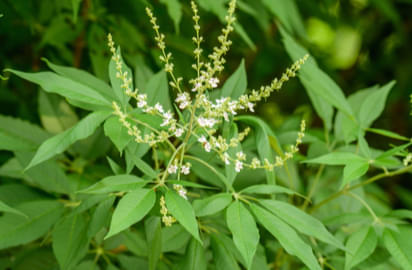
Nirgundi is a large aromatic shrub found mostly in the warmer zone of India. In Indian traditional medicine system, it is referred as ʽsarvaroganivaraniʼ – the remedy for all diseases.
Nirgundi might be helpful in managing diabetes by improving insulin levels due to its antioxidant property. It also helps manage inflammatory reactions by inhibiting the activity of certain mediators due to its anti-inflammatory property. So, As per Ayurveda ,consuming Nirgundi powder two times a day or applying Nirgundi paste to the affected area helps manage arthritis and provides relief from pain due to its Vata balancing property. The root powder of Nirgundi might also help in case of piles by reducing the irritation of inflamed tissue.
Nirgundi is beneficial for hair growth. Massaging with oil obtained from Nirgundi leaves along with sesame seed oil can help manage grey hair and scalp infections.
In some cases, Nirgundi might cause stomach upset and mild skin rashes on skin[2][8][13][14].
Nirgundi might be helpful in managing diabetes by improving insulin levels due to its antioxidant property. It also helps manage inflammatory reactions by inhibiting the activity of certain mediators due to its anti-inflammatory property. So, As per Ayurveda ,consuming Nirgundi powder two times a day or applying Nirgundi paste to the affected area helps manage arthritis and provides relief from pain due to its Vata balancing property. The root powder of Nirgundi might also help in case of piles by reducing the irritation of inflamed tissue.
Nirgundi is beneficial for hair growth. Massaging with oil obtained from Nirgundi leaves along with sesame seed oil can help manage grey hair and scalp infections.
In some cases, Nirgundi might cause stomach upset and mild skin rashes on skin[2][8][13][14].
What are the synonyms of Nirgundi?
Vitex negundo, Sinduvara, Samphalika, Nila, Aslak, Nishinda, Five Leaved Chaste tree, Nagod, Sinduar, Sambhalu, Lakkigida, Nekkigida, Indranee, Sambhalu, Banna, Karunochchi, Nocchi, Nallavavilli[1].
What is the source of Nirgundi?
Plant Based
Benefits of Nirgundi
1. Rheumatoid Arthritis
Rheumatoid Arthritis, known as Amavata in Ayurveda,is a disease in which vitiation of Vata dosha and accumulation of Ama takes place in the joints. Amavata starts with a weak digestive fire which leads to accumulation of Ama (toxic remains in the body due to improper digestion) in the body. Nirgundi helps in the management of Amavata due to its Vata balancing and Ushna (hot) properties. It helps to increase the digestive fire which enhances the digestive system and prevents the formation as well as the accumulation of Ama, thereby reducing the symptoms of Amavata[11].
2. Cough
A Cough is a common ailment that is known as Kapha disorder in Ayurveda. The cough is generally caused by the formation and accumulation of mucus in the respiratory tract. Nirgundi helps in managing cough due to its Kapha balancing and Ushna (hot) properties. It helps the accumulated mucus to pass out easily and prevent, thereby providing relief from Cough.
3. Epilepsy
Epilepsy is termed as Apasmara in Ayurveda. In Epilepsy, the patient experiences seizures with jerky movements of body parts. The patient might even lose consciousness. Epilepsy involves all the three doshas - Vata, Pitta and Kapha, especially the Vata dosha which affects the nerves. Nirgundi helps manage Epilepsy due to its Vata balancing and Medhya (brain tonic) properties. It helps in the relaxation of nerves and prevents further attacks of Epilepsy.
Rheumatoid Arthritis, known as Amavata in Ayurveda,is a disease in which vitiation of Vata dosha and accumulation of Ama takes place in the joints. Amavata starts with a weak digestive fire which leads to accumulation of Ama (toxic remains in the body due to improper digestion) in the body. Nirgundi helps in the management of Amavata due to its Vata balancing and Ushna (hot) properties. It helps to increase the digestive fire which enhances the digestive system and prevents the formation as well as the accumulation of Ama, thereby reducing the symptoms of Amavata[11].
2. Cough
A Cough is a common ailment that is known as Kapha disorder in Ayurveda. The cough is generally caused by the formation and accumulation of mucus in the respiratory tract. Nirgundi helps in managing cough due to its Kapha balancing and Ushna (hot) properties. It helps the accumulated mucus to pass out easily and prevent, thereby providing relief from Cough.
3. Epilepsy
Epilepsy is termed as Apasmara in Ayurveda. In Epilepsy, the patient experiences seizures with jerky movements of body parts. The patient might even lose consciousness. Epilepsy involves all the three doshas - Vata, Pitta and Kapha, especially the Vata dosha which affects the nerves. Nirgundi helps manage Epilepsy due to its Vata balancing and Medhya (brain tonic) properties. It helps in the relaxation of nerves and prevents further attacks of Epilepsy.
Precautions when using Nirgundi
Other Interaction

MODERN SCIENCE VIEW
Since enough scientific evidence is not available, it is advisable to consult your doctor before taking Nirgundi along with any other herb[8].
Pregnancy
MODERN SCIENCE VIEW
Since enough scientific evidence is not available, it is advisable to avoid or consult your doctor before taking Atis during pregnancy [8].
Side Effects
MODERN SCIENCE VIEW
1. Stomach upset
2. Itching
3. Skin rash[8].
2. Itching
3. Skin rash[8].
Recommended Dosage of Nirgundi
- Nirgundi Powder - 1.5-3gm as per requirement in a day.
- Nirgundi Juice - 10-20 ml in a day or as per your requirement.
How to use Nirgundi
1. Nirgundi Juice
a. Take Nirgundi leaf juice 10-20 ml or as directed by the physician
b. Consume it twice after meals.
c. Repeat daily to get relief from cough.
2. Nirgundi Powder
a. Take Nirgundi powder 3-6 g or directed by the physician
b. Consume it with lukewarm water.
c. Repeat regularly to get relief from rheumatic pain and swelling.
3. Nirgundi Capsules
a. Take 1 capsule or as directed by physician twice a day.
b. Consume it regularly after meals.
c. Repeat daily to get relief from any generalized pain in the body.
a. Take Nirgundi leaf juice 10-20 ml or as directed by the physician
b. Consume it twice after meals.
c. Repeat daily to get relief from cough.
2. Nirgundi Powder
a. Take Nirgundi powder 3-6 g or directed by the physician
b. Consume it with lukewarm water.
c. Repeat regularly to get relief from rheumatic pain and swelling.
3. Nirgundi Capsules
a. Take 1 capsule or as directed by physician twice a day.
b. Consume it regularly after meals.
c. Repeat daily to get relief from any generalized pain in the body.
Frequently asked questions
Q. How to store Nirgundi oil?
MODERN SCIENCE VIEW
Nirgundi oil should be stored in an airtight glass container to protect it from direct exposure of heat and light[10].
Q. What are the other ways of using Nirgundi?
MODERN SCIENCE VIEW
Oral Consumption
1. Nirgundi Juice
a. Take 10-20 ml (or as directed by a physician) of Nirgundi leaf juice.
b. Consume it twice after meals.
c. Repeat daily to get relief from cough.
2. Nirgundi Powder
a. Take 3-6 g (or as directed by physician) of Nirgundi powder.
b. Consume it with lukewarm water.
c. Repeat regularly to get relief from rheumatic pain and swelling.
3. Nirgundi Capsules
a. Take 1 capsule (or as directed by physician) twice a day.
b. Consume it regularly after meals.
c. Repeat daily to get relief from any generalised pain in the body.
External Use
1. Nirgundi Oil
a. Take a few drops of Nirgundi oil on a cotton swab and apply on the affected area.
b. Leave it for about 10-15 min.
c. After 10-15 min, wash the area with lukewarm water to promote ulcer and wound healing.
d. Use Nirgundi oil before a bath 2-3 times a day to get optimum results[8].
2. Nirgundi Leaf
a. Burn few dry leaves of Nirgundi.
b. Inhale the fumes to get relief from headache.
3. Nirgundi Paste
a. Make a paste of Nirgundi leaves.
b. Slightly heat the paste.
c. Apply the paste on the affected area to get relief from headaches[8].
1. Nirgundi Juice
a. Take 10-20 ml (or as directed by a physician) of Nirgundi leaf juice.
b. Consume it twice after meals.
c. Repeat daily to get relief from cough.
2. Nirgundi Powder
a. Take 3-6 g (or as directed by physician) of Nirgundi powder.
b. Consume it with lukewarm water.
c. Repeat regularly to get relief from rheumatic pain and swelling.
3. Nirgundi Capsules
a. Take 1 capsule (or as directed by physician) twice a day.
b. Consume it regularly after meals.
c. Repeat daily to get relief from any generalised pain in the body.
External Use
1. Nirgundi Oil
a. Take a few drops of Nirgundi oil on a cotton swab and apply on the affected area.
b. Leave it for about 10-15 min.
c. After 10-15 min, wash the area with lukewarm water to promote ulcer and wound healing.
d. Use Nirgundi oil before a bath 2-3 times a day to get optimum results[8].
2. Nirgundi Leaf
a. Burn few dry leaves of Nirgundi.
b. Inhale the fumes to get relief from headache.
3. Nirgundi Paste
a. Make a paste of Nirgundi leaves.
b. Slightly heat the paste.
c. Apply the paste on the affected area to get relief from headaches[8].
References
- The Ayurvedic Pharmacopoeia Of India.Part 1 Volume 1.
- Venkateswarlu K.Vitex negundo: Medicinal Values, Biological Activities,Toxicity Studies and Phytopharmacological Actions.Int J Pharm Phytopharmacol Res.2012;2(2):126-133. 3.Suganthi N, Dubey S.Phytochemical constituents and pharmacological activities of Vitex negundo Linn.JOCPR.2016;8(2):800-807.
- Suganthi N, Dubey S.Phytochemical constituents and pharmacological activities of Vitex negundo Linn.JOCPR.2016;8(2):800-807.
- Raja P, Sivakumar V, Riyazullah MS.Antidiabetic potential of aqueous and ethanol leaf extracts of Vitex negundo. International journal of pharmacognosy and phytochemical research.2012;4(2): 38-40.

- Basri F, Sharma HP, Firdaus S, et al. A review of ethnomedicinal plant - Vitex negundo Linn.International Journal of Advanced Research.2014;2(3):882-894.
- Mahalakshmi R, Rajesh P, Ramesh N/, et al. Hepatoprotective activity on Vitex negundo Linn. (Verbenaceae) by using Wistar albino rats in the ibuprofen-induced model.International Journal of Pharmacology.2010;6(5):658-663.
- Murthy JR, Venkataraman S, Meera R, et al. Phytochemical investigation and antipyretic activity of leaf extract of Vitex negundo Linn.International Journal of PharmTech Research.2010;2(2):1068-1073.
- Kumar D, Kumar R, Sharda K. Medicinal property of Nirgundi.Journal of Pharmacognosy and phytochemistry.2018;SPI:2147-2151.
- Keerti G, Padma K.Evaluation of phytochemical and antimicrobial study of extracts of Vitex negundo Linn.International Journal of Drug Development and Research.2012;4(4):192-199.
- Mishra SB.Essentials of herbal drug technology: A guide of standardization quality control.Educreation publishing.2018.
- T.Singh.Effect of Nirgundi (Vitex negundo teum Baker) on Amavata.International Ayurvedic Medical Journal.2018;6(1):207-212.
- D.Kumar, R.Kumar,K.Sharda.Medicinal property of Nirgundi. Journal of Pharmacognosy and Phytochemistry.2018; SP1: 2147-2151.
- Lad H, Dixit D , Joshi A et al. Antioxidant and antiinflammatory effects of Vitex negundo on Freund’s complete adjuvant induced arthritis. International Journal of Pharmacy and Pharmaceutical Sciences. 2014;7(1):81-85.
- Panda H. Medicinal Plants Cultivation & Their Uses. 2002.
- Ahuja SC, Ahuja S and Ahuja U. Nirgundi (Vitex negundo) – Nature’s Gift to Mankind. 2015
Disclaimer
The content is purely informative and educational in nature and should not be construed as medical advice. Please use the content only in consultation with an appropriate certified medical or healthcare professional.
Author Details

M.Pharm, B.Pharm

BAMS

MBA, MBBS
Last updated 29 Aug 2022 | 04:38 PM (IST)

Introduction
Benefits
Precautions
Recommended dosage
How to use
FAQs
References