






Lajvanti
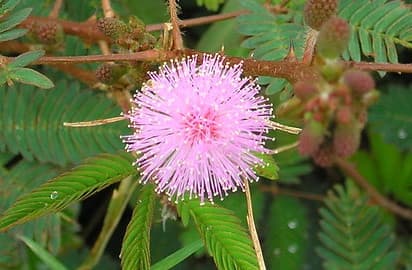
Lajvanti is commonly known as “Touch-me-not” plant. It is generally regarded as a plant of high ornamental value and is also used for various medicinal purposes.
Lajvanti helps in managing blood sugar levels by increasing insulin secretion due to its antioxidant properties. It is useful for urinary problems as it increases urine production due to its diuretic property. Lajvanti might also help in managing epilepsy as it has anticonvulsant property.
You can use Lajvanti paste for quicker wound healing due to its antioxidant and antimicrobial properties. It also helps in reducing pain and swelling related to wounds due to its anti-inflammatory property.
According to Ayurveda, Lajvanti might help in managing piles due to its Sita (cool) and Kashaya (astringent) properties. Applying a paste of Lajvanti on the forehead might help relieve migraine pain due to its Vata balancing property[2-4][7][8].
Lajvanti helps in managing blood sugar levels by increasing insulin secretion due to its antioxidant properties. It is useful for urinary problems as it increases urine production due to its diuretic property. Lajvanti might also help in managing epilepsy as it has anticonvulsant property.
You can use Lajvanti paste for quicker wound healing due to its antioxidant and antimicrobial properties. It also helps in reducing pain and swelling related to wounds due to its anti-inflammatory property.
According to Ayurveda, Lajvanti might help in managing piles due to its Sita (cool) and Kashaya (astringent) properties. Applying a paste of Lajvanti on the forehead might help relieve migraine pain due to its Vata balancing property[2-4][7][8].
What are the synonyms of Lajvanti?
Mimosa Pudica, Samanga, Varakranta, Namaskari, Lajubilata, Adamalati, Lajaka, Lajjavanti, Touch-me-not, Risamani, Lajavanti, Lajamani, Chhuimui, Lajauni, Muttidasenui, Machikegida, Lajjavati, Thotta Vati, Lajalu, Lajakuri, Lajan, Thottavadi, Tottalchurungi, Mudugudamara[1].
What is the source of Lajvanti?
Plant Based
Benefits of Lajvanti
1. Piles
Piles, known as Arsh in Ayurveda, is caused due to an unhealthy diet and a sedentary lifestyle. This leads to the impairment of all the three doshas, mainly Vata and Pitta dosha, resulting in a low digestive fire and eventually persistent constipation. This causes swelling of the veins in the rectum area and development of piles mass. Lajvanti paste or ointment can be applied on the piles mass to get relief from the burning or itching conditions due to its Sita (cool) and Kashaya (astringent) properties[16].
2. Migraine
Migraine is a condition that occurs due to the aggravation of Pitta dosha. Lajvanti paste is applied on the forehead to provide relief from Migraine due to its Pitta balancing property[16].
Piles, known as Arsh in Ayurveda, is caused due to an unhealthy diet and a sedentary lifestyle. This leads to the impairment of all the three doshas, mainly Vata and Pitta dosha, resulting in a low digestive fire and eventually persistent constipation. This causes swelling of the veins in the rectum area and development of piles mass. Lajvanti paste or ointment can be applied on the piles mass to get relief from the burning or itching conditions due to its Sita (cool) and Kashaya (astringent) properties[16].
2. Migraine
Migraine is a condition that occurs due to the aggravation of Pitta dosha. Lajvanti paste is applied on the forehead to provide relief from Migraine due to its Pitta balancing property[16].
How to use Lajvanti
Lajvanti paste
1. Take some fresh Lajvanti leaves.
2. Crush the leaves to form a paste.
3. You can also add some water to make a smooth paste.
4. Apply this paste on wounds or swellings to promote healing.
1. Take some fresh Lajvanti leaves.
2. Crush the leaves to form a paste.
3. You can also add some water to make a smooth paste.
4. Apply this paste on wounds or swellings to promote healing.
Frequently asked questions
Q. How can Lajvanti be grown?

MODERN SCIENCE VIEW
Lajvanti is easy to grow. It can be cultivated from seeds as well as branch cuttings, but transferring/transplanting the rooted cuttings frequently can harm the plant and it can go into shock.
Q. What is the lifespan of Lajvanti tree?
MODERN SCIENCE VIEW
The typical lifespan of Lajvanti tree is about 20 years.
Q. From where can I get Lajvanti seeds?

AYURVEDIC VIEW
You can get Lajvanti seeds from any Ayurvedic medicine store in your nearby area or you can also buy it from various online medicine platforms.
Q. What are the nutritional factors of the Lajvanti plant?
MODERN SCIENCE VIEW
Lajvanti plant also known as Chuimui in Hindi is rich in important nutrients which were used in traditional medicine for the treatment of various ailments. It contains alkaloids, amino acid, flavonoids, glycosides, sterols, terpenoids, tannins and fatty acids in it. Apart from that, studies suggest that the plant possesses anti-diabetic, anti-hepatotoxic, antioxidant, anti-asthmatic, aphrodisiac, sedative and wound healing properties[17].
Q. Is Mimosa pudica dangerous?
MODERN SCIENCE VIEW
No, it is not a dangerous plant. It is listed as a non-toxic plant for humans on the University of California's list of safe and poisonous garden plants.
Q. What is the common name of Mimosa pudica?
MODERN SCIENCE VIEW
Mimosa pudica is commonly known as Lajvanti or Chuimui.
Q. How does a Lajvanti plant respond when you touch it?
MODERN SCIENCE VIEW
Mimosa pudica or Lajvanti plant have sensitive soft grey green leaflets that fold and droop at night or when touched and cooled. These unique bending movements give this plant the identity of ‘curosuty plant’[16].
References
- The Ayurvedic Pharmacopoeia Of India.Part 1 Volume 1.
- Joseph B, George J, Mohan J. Pharmacology and traditional uses of Mimosa pudica. Int J Pharm Sci Drug Res. 2013;5(2):41-4.

- Singh MP,Bhargava S, Bhaduaria RS, et al. Wound healing potential of alcoholic extract of Mimosa pudica Linn. leaves.Pharmacologyonline.2010;2:32-38.
- Johnson K, Narasimhan G, Krishnan C. Mimosa Pudica Linn. - A shyness princess: A review of its plant movement, active constituents, uses and pharmacological activity.2014;5(12): 5104-5118.
- Yupparach P, Konsue A. Hypoglycemic and hypolipidemic activities of ethanolic extract from mimosa pudica L. in normal and streptozotocin-induced.Pharmacogn J.2017;9(6):834-837.
- Patro G, Bhattamisra SK, Mohanty BK. Effects of mimosa pudica L. leaves extract on anxiety, depression, and memory.Avicenna J Phytomed.2016;6(6):696-710.
- Prathima C, Shashikumara, Thippeswamy T, et al.Evaluation of anticonvulsant activity of mimosa pudica root linn in swiss albino mice.2016;8(9).
- Hl K, SI S, Ps V, et al.Diuretic activity of ethanolic root extract of mimosa pudica in albino rats.J Clin Diagn Res.2015;9(12).
- Ahmad H, Sehgal S, Mishra A, et al.Mimosa Pudica L. (Laajvanti):An overview.Pharmacognosy reviews.2012;6(12):115-124.
- Pokharkar RD, Saraswat RK, Kanawade MG.Contraceptive evaluation of the oil extract of seeds of mimosa pudica (L) in male wistar rats. Pharmacologyonline.2009;3:479-488.
- Pande M, Pathak A.Aphrodisiac activity of roots of Mimosa pudica Linn. Ethanolic extract in mice.International.journal of pharmaceutical sciences and nanotechnology.2009;2(1);477-486.
- Aarthi N, Murugan K.Antimalarial activity and phytochemical screening of ethanolic leaf extract phyllanthus niruri and mimosa pudica.IJPRD.2011;3(3):198-205.
- Khalid S, Kumar SJ, Suresh DK, et al.Evaluation of the anti-diarrhoeal potential of ethanolic extract of mimosa pudica leaves.IJGP.2011;5(1):75-78.
- Vinothapooshan G, Sundar K.Anti-ulcer activity of mimosa pudica leaves against a gastric ulcer in rats.Research Journal of pharmaceutical, biological and chemical sciences.2010;1(4):606-614.
- Vejayan J, Ibrahim H, Othman I.The potential of mimosa pudica (Mimosaceae) against snake envenomation.Journal of tropical forest science.2007;19(4):189-197.
- Ahmad H, Sehgal S, Mishra A, et al. Mimosa pudica L. (Laajvanti): An overview.Pharmacogn Rev. 2012;6(12):115–124.
- 17. Patro G, Bhattamisra SK, and Mohanty BK. Effects of Mimosa pudica L. leaves extract on anxiety, depression and memory. Avicenna J Phytomed. 2016 Nov-Dec; 6(6): 696–710.
- Vaidya GH, Sheth UK. Mimosa pudica (Linn.): Its medicinal value and pilot clinical use in patients with menorrhagia. Ancient Sci Life. 1986;5(3):156-61
Disclaimer
The content is purely informative and educational in nature and should not be construed as medical advice. Please use the content only in consultation with an appropriate certified medical or healthcare professional.
Author Details

M.Pharm, B.Pharm

BAMS

MBA, MBBS
Last updated 28 Mar 2025 | 11:34 PM (IST)

Introduction
Benefits
How to use
FAQs
References