






Masoor Dal
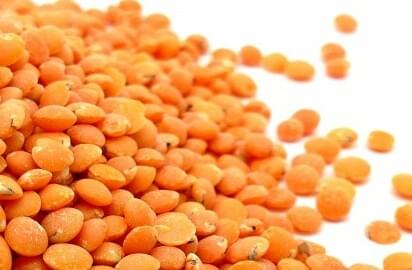
Masoor Dal, known as Lentil in English, is one of the most ancient legume crops. It has high nutritional value as it is a rich source of protein, fiber and minerals and has low-fat content.
Masoor Dal is beneficial for the skin as it keeps the skin moisturized and healthy due to the presence of vitamin B. It also helps in managing acne as it is a good source of zinc and has anti-inflammatory properties. Applying a face pack made of Masoor Dal powder along with milk or honey on the face acts as a natural scrub and helps in managing facial hair.
Masoor Dal has many health benefits when incorporated into the diet. It reduces the risk of heart disease by lowering blood pressure and cholesterol levels due to the presence of dietary fiber, protein, and antioxidants. It is also beneficial in pregnancy and helps in fetal development due to the presence of iron and folate. It can be consumed in the form of Dal (curry), soup or sprouts [1][8][10][14-16].
Masoor Dal is beneficial for the skin as it keeps the skin moisturized and healthy due to the presence of vitamin B. It also helps in managing acne as it is a good source of zinc and has anti-inflammatory properties. Applying a face pack made of Masoor Dal powder along with milk or honey on the face acts as a natural scrub and helps in managing facial hair.
Masoor Dal has many health benefits when incorporated into the diet. It reduces the risk of heart disease by lowering blood pressure and cholesterol levels due to the presence of dietary fiber, protein, and antioxidants. It is also beneficial in pregnancy and helps in fetal development due to the presence of iron and folate. It can be consumed in the form of Dal (curry), soup or sprouts [1][8][10][14-16].
What are the synonyms of Masoor Dal?
Lens culinaris, Masoor Dali, Masur, Lentil, Masoor Dala, Masura Bele, Chanam payar, Vattupparupu, Massora, Masara, Masoor Paruppu, Masoor Pappu, Masooralu[20].
What is the source of Masoor Dal?
Plant Based
Benefits of Masoor Dal
Wound Healing
Wound occurs due to any external injury and leads to some conditions like pain, swelling, and sometimes bleeding. This aggravates the doshas (Vata, Pitta or Kapha) on the affected area. Masoor Dal helps manage wounds due to its Kashaya (astringent) and Sita (cold) properties. It reduces symptoms like pain, swelling or bleeding and provides quick healing to the affected area.
Tips for using Masoor Dal in wound healing.
a. Grind Red Masoor Dal to make a powder.
b. Take Masoor Dal powder (as per your requirement) and add sufficient honey or water to make a paste.
c. Apply this paste to the affected area once a day to get quick healing of the wounds.
Wound occurs due to any external injury and leads to some conditions like pain, swelling, and sometimes bleeding. This aggravates the doshas (Vata, Pitta or Kapha) on the affected area. Masoor Dal helps manage wounds due to its Kashaya (astringent) and Sita (cold) properties. It reduces symptoms like pain, swelling or bleeding and provides quick healing to the affected area.
Tips for using Masoor Dal in wound healing.
a. Grind Red Masoor Dal to make a powder.
b. Take Masoor Dal powder (as per your requirement) and add sufficient honey or water to make a paste.
c. Apply this paste to the affected area once a day to get quick healing of the wounds.
Precautions when using Masoor Dal
Breastfeeding

MODERN SCIENCE VIEW
Enough scientific evidence is not available for the external use of Masoor Dal during breastfeeding. So, it is advisable to consult a physician before using Masoor Dal during breastfeeding.
Pregnancy
MODERN SCIENCE VIEW
Enough scientific evidence is not available for the external use of Masoor Dal during pregnancy. So, it is advisable to consult a physician before using Masoor Dal during pregnancy.
How to use Masoor Dal
1. Masoor Dal Face Pack
Tips for making a face pack
a. Grind and sieve ½ cup of red Masoor Dal a few times to get a fine powder.
b. Take 2 tablespoons of Masoor Dal powder and add sufficient milk or honey to make a paste.
c. Leave the paste for 15 minutes.
d. Apply the paste on the face and let it dry for 15-20 minutes.
e. Scrub off the paste.
f. You can use this paste 2-3 times a week for better results. In case of dry skin, use it once a week.
2. Masoor Dal Paste
Tips for using Masoor Dal for wound healing, pigmentation and healthy skin
a. Grind Red Masoor Dal to make a powder.
b. Mix this Masoor Dal powder (as per your requirement) with honey or water to make a paste.
c. Apply this paste to the affected area once a day to get quick healing of the wound.
Tips for making a face pack
a. Grind and sieve ½ cup of red Masoor Dal a few times to get a fine powder.
b. Take 2 tablespoons of Masoor Dal powder and add sufficient milk or honey to make a paste.
c. Leave the paste for 15 minutes.
d. Apply the paste on the face and let it dry for 15-20 minutes.
e. Scrub off the paste.
f. You can use this paste 2-3 times a week for better results. In case of dry skin, use it once a week.
2. Masoor Dal Paste
Tips for using Masoor Dal for wound healing, pigmentation and healthy skin
a. Grind Red Masoor Dal to make a powder.
b. Mix this Masoor Dal powder (as per your requirement) with honey or water to make a paste.
c. Apply this paste to the affected area once a day to get quick healing of the wound.
Frequently asked questions
Q. How can I use Masoor Dal for managing facial hair?
MODERN SCIENCE VIEW
Masoor Dal can be used as a natural scrub for managing facial hair. It slows down the growth of facial hair and gives a soft and radiant look to the skin. Masoor Dal face pack can be made by the following method[8].
Tips for making Masoor dal face pack
a. Grind and sieve ½ cup of red Masoor Dal a few times to get a fine powder.
b. Take 2 tablespoons of Masoor Dal powder and add sufficient milk or honey to make a paste.
c. Leave the paste for 15 minutes.
d. Apply the paste on the face and let it dry for 15-20 minutes.
e.Scrub off the paste.
f. You can use this paste 2-3 times a week for better results. In case of dry skin, use it once a week.
Tips for making Masoor dal face pack
a. Grind and sieve ½ cup of red Masoor Dal a few times to get a fine powder.
b. Take 2 tablespoons of Masoor Dal powder and add sufficient milk or honey to make a paste.
c. Leave the paste for 15 minutes.
d. Apply the paste on the face and let it dry for 15-20 minutes.
e.Scrub off the paste.
f. You can use this paste 2-3 times a week for better results. In case of dry skin, use it once a week.
Q. What varieties of Masoor Dal are available in India?
MODERN SCIENCE VIEW
Two types of Masoor Dal are used in Indian cuisine which are brown (whole) Masoor Dal and orange Masoor Dal.
Q. Do I need to soak Masoor Dal before cooking?
MODERN SCIENCE VIEW
Masoor Dal is soft and takes lesser time to cook so it does not require soaking. However, the whole Masoor Dal takes a longer time to cook and can be soaked for 15-20 minutes to reduce the cooking time.
Q. What can be made from Masoor dal?

AYURVEDIC VIEW
Masoor dal can be used in various ways. Here are some suggestions to incorporate Masoor dal:
Toss into salads or cooked whole grains.
Lentils can also be sprouted and mixed with raw tomato and onion with some lime juice for a different crunchy texture.
You can add it in a pasta sauce to make it thicker and healthier.
You can substitute cooked red lentils (Masoor) for chickpeas in a hummus recipe.
Grind the lentils into a paste and stir into a veggie burger mixture.
Toss into salads or cooked whole grains.
Lentils can also be sprouted and mixed with raw tomato and onion with some lime juice for a different crunchy texture.
You can add it in a pasta sauce to make it thicker and healthier.
You can substitute cooked red lentils (Masoor) for chickpeas in a hummus recipe.
Grind the lentils into a paste and stir into a veggie burger mixture.
Q. How to store Masoor dal or other lentils?
MODERN SCIENCE VIEW
Dry lentils or Masoor dal can be kept in a tightly sealed container in a dark, dry and cool location for upto one year. Cooked lentils can be stored for one week in the refrigerator or up to three months in the freezer[24]. Make sure the container is airtight to avoid any possibility of stale food. However, it is best to have freshly cooked food to best enjoy the taste and flavors.
Q. What are the other names used for Masoor dal?
MODERN SCIENCE VIEW
Masoor dal is known by various names around the world. Masur or Masoor in Hindi, Masur in Marathi, Masuri in Bengali, Chanagi in Kannada, Misur paruppu in Tamil and Masur pappu in Telugu.
References
- Issa A, Takruri H, Faris M.Role of lentils (Lens culinaris L.) in human health and nutrition: a review.Mediterr J Nutr Metab.2013;6:3–16.

- Shams H, Tahbaz F, Entezari MH, et.al.Effects of cooked lentils on glycemic control and blood lipids of patients with type 2 diabetes.ARYA Athero J.2008; 4(1):1-5.
- Erskine W.The Lentil: Botany, Production and Uses.CABI.2009.
- Johnson CR, Thavarajah D, Combs GF Jr, Thavarajah P. Lentil (Lens culinaris L.): A prebiotic-rich whole food legume. Food Res Int. 2013;51(1):107-111.
- Tannis A.Feed Your Skin, Starve Your Wrinkles: Eat Your Way to Firmer, More Beautiful Skin with the 100 Best Anti-Aging Foods.Fair Winds Press.2009.
- Raghuvanshi RS, Singh DP.The Lentil: Botany, Production and Uses.CABI.2009.
- Vidyavathi M, Farhana SK, Sreedevi A, et.al.Design and Evaluation of Lentil Seed Extract Loaded Bio Scaffolds for Wound Healing Activity.Biomed Pharmacol J.2018;11(1):503-511.
- Mut M.Natural Remedies for Women’s Health Issues.GlobalGreenHouse.2019.
- Margier M, Georgé S, Hafnaoui N, et.al.Nutritional Composition and Bioactive Content of Legumes Characterization of Pulses Frequently Consumed in France and Effect of the Cooking Method.Nutrients.2018;10(11):1668.
- Rahaman A, Mahafooj A, Kumari A, et.al.The importance of micro-propagation of Lens Culinaris and its medicinal significance.World J Pharm Pharm Sci.2016;5(5):1301-1311.
- Sreedevi A.Nephroprotective Potential of Lens Culinaris Against Cisplatin-induced Nephrotoxicity.Indian J Physiol Pharmacol.2018;62(1):139-148.
- Ibáñez Sandín D, Martínez San Ireneo M, Marañón Lizana F, et.al.Specific IgE determinations to crude and boiled lentil (Lens culinaris) extracts in lentil-sensitive children and controls.Allergy.1999;54(11):1209-14.
- Akkerdaas J, Finkina EI, Balandin SV, et al.Lentil (Lens culinaris) lipid transfer protein Len c 3: a novel legume allergen.Int Arch Allergy Immunol.2012;157(1):51-57.
- Min M, Shin H. Chemical Composition and Nutritional Characteristics of Lentils ( Lens culinaris ), and Their Application in the Food Industry: A Review.2015:47(3):273-280.
- Wu J.Feed Your Face: The 28-day plan for younger, smoother skin and a beautiful body.Hachette Digital.2012.
- Lewis T, Waring F, Curtis S. Neal's Yard Remedies Eat Beautiful.Dorling Kindersley Ltd.2017.
- Rinzler CA.The New Complete Book of Food: A Nutritional, Medical, and Culinary Guide.Infobase Publishing.2010.
- Faith S. Lentil Cooking, Indian Style.Balboa Press.2019.
- Rahim S, Dawar S, Tariq M.Mycoflora associated with lentil (Lens Culinaris L.) seeds of Pakistan.Pak J Bot.2010;42(6):4345-4352.
- The Ayurvedic Pharmacopoeia Of India. Part 1. Volume 1.
- Devi GC.The Power of Ancient Ayurveda: Ancient Ayurvedic Cookbook.Partridge Publishing.2018.
- Butu M ,Rodino S, Butu A, et.al.Screening of bioflavonoid and antioxidant activity of Lens Culinaris Medikus.Dig J Nanometer Bios.2014;9(2):519-529.
- Choi HK, Atkinson K, Karlson EW, et.al.Purine-rich foods, dairy and protein intake, and the risk of gout in men.N Engl J Med.2004;350(11):1093-1103.
- Harvard TH Chan. The nutrition source. Lentils.
- Gupta RK, Gangoliya SS, Singh NK. Reduction of phytic acid and enhancement of bioavailable micronutrients in food grains. J Food Sci Technol. 2015 Feb; 52(2): 676–684.
Disclaimer
The content is purely informative and educational in nature and should not be construed as medical advice. Please use the content only in consultation with an appropriate certified medical or healthcare professional.
Author Details

M.Pharm, B.Pharm

BAMS

MBA, MBBS
Last updated 29 Mar 2025 | 12:54 PM (IST)

Introduction
Benefits
Precautions
How to use
FAQs
References