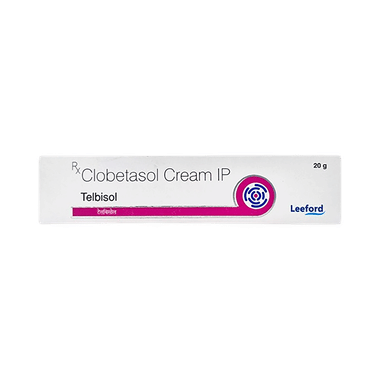

Clozema Cream
 Prescription Required

Product introduction
Clozema Cream is meant for external use and is to be used only as advised by your doctor. Wash and dry the affected area before applying a thin layer of the medicine. Avoid any contact with your eyes, nose, or mouth. Rinse it off with plenty of water if you accidentally get it in these areas. Avoid covering the treated area with airtight dressings such as bandages unless directed by a doctor.
Using the medicine may cause skin thinning, burning sensation, irritation, redness, and swelling at the site of application. These are temporary and usually resolve with time. However, if they persist or worsen, let your doctor know. Clozema Cream is not recommended to be used in children. Pregnant and breastfeeding mothers should consult their doctors before using this medicine.
Uses of Clozema Cream
Benefits of Clozema Cream
In Treatment of Allergic skin conditions
You should always use the cream or ointment as prescribed and only apply the amount you have been told to. Keep using it for as long as it is prescribed to get the full benefits.
Side effects of Clozema Cream
Common side effects of Clozema
- Skin atrophy
- Telangiectasia
- Skin irritation
- Dry skin
How to use Clozema Cream
How Clozema Cream works
Safety advice
What if you forget to take Clozema Cream?
All substitutes
Quick tips
- Clozema Cream is used to treat redness, swelling, itching, and discomfort of various skin conditions.
- It should be applied to the affected areas as a thin film two or three times daily, or as advised by your doctor.
- Don't use it more often or for longer than advised by your doctor.
- Don't cover the area being treated with airtight dressings such as bandages unless directed by a doctor, as this may increase the risk of side effects.
- If you think the area of skin you are treating has become infected you should stop using Clozema Cream and consult your doctor.
- Consult your doctor if your skin condition has not improved after four weeks of treatment. Do not use it for more than 4 consecutive weeks at a time.
Fact Box
Patient concerns
FAQs
Can Clozema Cream be used for a long time?
Does Clozema Cream cause severe skin reactions?
Can Clozema Cream be used on the face?
Can Clozema Cream be applied to children?
Can we use Clozema Cream in infections?
Can I stop taking Clozema Cream when my symptoms are relieved?
Does Clozema Cream cause dangerous skin reactions?
Can Clozema Cream be used for a long time?
Does Clozema Cream cause severe skin reactions?
Can Clozema Cream be used on the face?
Can Clozema Cream be applied in children?
Can we use Clozema Cream in infections?
Can I stop taking Clozema Cream when my symptoms are relieved?
Does Clozema Cream cause dangerous skin reactions?
Want to share the information?


Disclaimer:
Tata 1mg's sole intention is to ensure that its consumers get information that is expert-reviewed, accurate and trustworthy. However, the information contained herein should NOT be used as a substitute for the advice of a qualified physician. The information provided here is for informational purposes only. This may not cover everything about particular health conditions, lab tests, medicines, all possible side effects, drug interactions, warnings, alerts, etc. Please consult your doctor and discuss all your queries related to any disease or medicine. We intend to support, not replace, the doctor-patient relationship.References
- Clobetasol. Uxbridge, Middlesex: GlaxoSmithKline UK; 1993 [revised 18 Oct. 2017]. [Accessed 04 Apr. 2019] (online) Available from:

- Clobetasol. Melville, New York: Fougera Pharmaceuticals Inc.; 1994. [revised Nov. 2012] [Accessed 04 Apr. 2019] (online) Available from:
- Clobetasol propionate [Prescribing Information]. Fort Worth, Texas: GALDERMA LABORATORIES, L.P.; 2012. [Accessed 20 Feb. 2024] (online) Available from:
Marketer details
Lab tests offered by us