


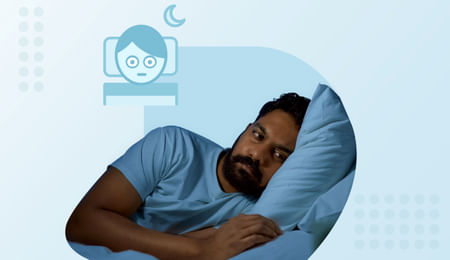
In simple terms, insomnia is characterized by dissatisfaction with sleep quantity or quality. It is associated with difficulty falling asleep, frequent nighttime awakenings with difficulty returning to sleep and waking up earlier in the morning than desired.
The immediate effects of insomnia include poor performance, daytime sleepiness, and fatigue, while the long term complications include poor immunity, indigestion, forgetfulness, risk of heart diseases, anxiety, depression, vision disturbances and even premature mortality.
Hence, timely management of insomnia is of utmost importance. Acute or short term insomnia will often go away on its own following home-based interventions. However, chronic or long term insomnia may require making changes in sleep habits, taking prescribed medications, doing relaxation exercises, and treating the underlying condition that is causing insomnia.

The symptoms of insomnia include:
To know the causes, it is important to understand the basics of sleep. Several structures within the brain are involved with sleep mechanisms. Two internal biological mechanisms – circadian rhythm and homeostasis – work together to regulate when you are awake and asleep. One of the key hormones responsible for maintenance of the sleep wake cycle is melatonin, which is secreted by the pineal gland in our body.
Circadian rhythm influences many functions from daily fluctuations in wakefulness to body temperature, metabolism, and release of hormones. It controls the cause of being sleepy at night and the tendency to wake in the morning without an alarm. The body’s biological clock, which is based on a roughly 24-hour day, controls most circadian rhythms. Circadian rhythms synchronize with environmental cues (light and temperature) about the actual time of day, but they continue even in the absence of cues as they are not driven by the environment.
It keeps track of your need for sleep. The homeostatic sleep drive reminds the body to sleep after a certain time and regulates sleep intensity. This sleep drive gets stronger every hour you are awake and causes you to sleep longer and more deeply after a period of sleep deprivation.
Factors that influence your sleep-wake needs include medical conditions, medications, stress, sleep environment, and what you eat and drink.
The type of insomnia one experiences has a lot to do with the underlying causes of insomnia.
It is having problems with sleep only for a brief period of time. This could be due to:
It happens when you have trouble falling asleep for at least 3 days in a week for 3 consecutive months. It may occur due to:
Stress
Parkinson's disease
Alzheimer's disease
Mania or bipolar disorder
Post traumatic disorder
Drug abuse
Alcohol intake
Heavy smoking
Obstructive sleep apnea
Poor sleep habits
Medical conditions like asthma & heart failure
Almost everyone might have experienced difficulty in sleeping at one point in their life. However, your risk of suffering insomnia is high, if you:
Are a woman due to hormonal changes during periods and pregnancy
Are above 60 years of age as with age changes in sleep patterns occur
Have a chronic health condition which can impact your physical as well as mental health
Are taking certain medications such as steroids, decongestants, and antihypertensives which risk of sleeping problems as a side-effect
Are stressed due to family matters, job pressure or any other triggers of stress
Have an irregular lifestyle pattern such as night shifts, poor sleep environment, exercising or use of devices close to bedtime
Excessive use of stimulants like coffee or tea especially during the evening or close to bed can can interfere with your sleep schedule
Alcohol consumption may help you fall asleep, but when consumed in excess, it prevents deeper stages of sleep and often causes awakening in the middle of the night and hence deteriorates the sleep quality
The diagnosis of insomnia includes taking an extensive history of the patient that includes questions on:
A doctor may conduct a few tests such as:
Tests for thyroid disorders, anemia (low hemoglobin), and uremia (high uric acid levels) are recommended to rule out any underlying health problems.
These are recommended to know if there are any problems with the brain or nerve problems that may be responsible for problems with sleep. Imaging tests such as CT and MRI scan are advised, in some cases.
Sleep record over a period of 2 weeks to know the time at which a patient falls asleep, the duration of sleep in the daytime as well as night time. The patient may be asked to record these in a diary.
It is to detect movements during sleep. A device called actigraphy is worn on the wrist during sleeping. It records body movements and can help distinguish wakefulness from sleep.
These tests are done to measure the quality of sleep such as the insomnia severity index or Pittsburgh sleep quality index.
Polysomnography is done, if the cause of your insomnia isn't clear or you have signs of another sleep disorder such as sleep apnea or restless legs syndrome. It is used to record a set of parameters like brain waves, heart rate, breathing, oxygen levels, and eye and leg movements during sleep. You may need to spend a night at a sleep center for this test.
To prevent insomnia, you need to have a good night’s sleep. Here are a few simple and effective habits that you can adapt to ensure that you get a sound sleep.
Read about daytime habits that can prevent insomnia and improve your sleep!
If you face any difficulty in falling asleep at night or if you have been suffering from any chronic health problem that is affecting your sleep patterns, then it is wise to consult a doctor at the earliest.
Although, your general physician is the first doctor you may need to consult to know the cause of insomnia, other specialists who can help in the diagnosis and treatment of insomnia and its related health complications are:
Sleep specialist
Neurologist
Psychiatrist
Psychologist
Treatment of insomnia includes making changes in sleep habits, taking medicines, doing relaxation exercises, and treating the underlying condition that causes insomnia.
Cognitive behavioral therapy for insomnia (CBT-I) can help you control or eliminate negative thoughts and actions that keep you awake and is generally recommended as the first line of treatment for people with insomnia. Typically, CBT-I is equally or more effective than sleep medications.
The cognitive part of CBT-I teaches you to recognize and change beliefs that affect your ability to sleep while the behavioral part of CBT-I helps you develop good sleep habits and avoid behaviors that keep you from sleeping well.
1. Benzodiazepines
It inhibits the reticular activating system (RAS) center, also known as awakening center, thereby inducing sleep. Benzodiazepines carry a risk of addiction and abuse, especially in patients with history of alcohol or sedative abuse, so medical supervision is advisable. Some of the common examples of this class of drugs include:
2. Barbiturates
These drugs act on the GABA receptor thereby aiding in sleep. It causes long term changes thereby ensuring that the effect of the drug lasts for a long time. Examples include:
Thiopentone sodium
Methohexitone
3. (Z) Drugs
These drugs are basically newer drugs of benzodiazepine agonist class, however they are relatively more specific as these act on alpha 1 subunit of GABA-A receptor. These are recommended for early phase insomnia, late phase insomnia and middle of night awakening problems. The medications that belong to this group include:
4. Heterocyclic antidepressants
These are the most commonly prescribed alternatives to benzodiazepine receptor agonists due to their lack of abuse potential and lower cost. The common examples include:
5. Melatonin receptor agonists
As the name suggests, these drugs act on the melatonin receptor to include sleep. These drugs are mostly recommended for people with sleep cycle disorder (people who sleep at any time other than the actual sleeping time), shift workers, and insomnia due to jet lag. Some of the common drugs include:
6. Orexin pathway inhibitors
These drugs inhibit the chemical orexin, which is known to keep the RAS center active. Suvorexant is a commonly used drug that belongs to this class.
7. Antihistamines
Antihistamines such as diphenhydramine are the primary active ingredients in the most over-the-counter sleep aids. Some of the side effects include dry mouth and constipation.
Never mix sleeping pills with alcohol or other sedative drugs.
Always consult your doctor prior to taking any sleeping pill as most of these medicines have abuse potential.
Don’t take a second dose in the middle of the night.
Start with the lowest recommended dose.
Avoid frequent use of sleeping pills to avoid dependency and lower its side-effects.
Never drive a car or operate machinery after taking a sleeping pill.
Carefully read the package insert for any potential side effects and drug interactions.
Note: Medications for insomnia may increase the risk of injurious falls and confusion in elderly. Hence, they should be taken cautiously in the lowest effective dose and under strict medical supervision.
Your need for sleep and your sleep patterns change as you age but this varies significantly across individuals of the same age. There is no magic “number of sleep hours” that works for everybody of the same age.
Babies initially sleep as much as 16 to 18 hours per day, which may boost growth and development (especially of the brain).
School-aged children and teens on an average need about 9.5 hours of sleep per night.
Most adults need 7-9 hours of sleep a night but after age 60, nighttime sleep tends to be shorter, lighter, and interrupted by multiple awakenings.
Poor sleep habits are one of the common causes of insomnia. Here are 8 effective ways to improve your child's sleeping habits.
Sleep problems are associated with short and long-term effects on health and well-being. The immediate effects include poor performance, daytime sleepiness, and fatigue. The long term complications caused due to sleep deprivation include premature mortality, cardiovascular disease, hypertension, obesity, diabetes, impaired glucose tolerance, and psychiatric disorders such as anxiety and depression.
Some of the common effects of sleep deprivation include:
Fatal road accidents are caused due to sleepiness or driver fatigue.
Insomnia and obstructive sleep apnoea have also been linked to higher rates of hypertension. Moreover, sleep loss can affect inflammatory markers, which in turn can increase the risk of heart disease. Studies have shown that inflammatory responses are increased in people with obstructive sleep apnoea.
The role of obesity and sleep loss is bidirectional. The prevalence of obstructive sleep apnoea is over double among the obese. It is reported that 3–5% of the overall proportion of obesity in adults could be attributable to short sleep.
Sleep restriction and poor quality of sleep are linked to increased risk of diabetes. Lack of sleep is linked to glucose dysregulation and an increase in hunger and appetite via hormonal imbalance. It causes down-regulation of the satiety hormone, leptin, and up-regulation of the appetite-stimulating hormone, ghrelin.
Lack of sleep can lead to mental disorders such as stress and anxiety. However, depression is also one of the most prevalent of the conditions associated with troubled sleep. Poor sleep can up the levels of stress hormones and in the long run, can affect mental health. Insomnia can negatively affect work performance, impair decision-making, damage relationships and decline overall quality of life.
A direct way that sleep and school or job performance are connected is through effects on mental functioning. Some known problems associated with lack of sleep include decreased attention. The ability to concentrate is vital to learning and academic achievement but insufficient sleep reduces attention and focus.
Here are a few tips that will help you get a goodnight’s sleep and avoid complications of insomnia.
If you are one of those who has problems falling asleep, read on to know about some of the best foods to have before you hit the bed.
1. Cherries
Cherries contain melatonin, which is a sleep-regulating hormone. A study shows that drinking 200 ml tart cherry juice twice a day helps in increasing sleep quality and duration. This is an excellent remedy for people suffering from insomnia. Drink a glass of cherry juice before going to bed. You can add some water, if you do not like its taste.
2. Kiwis
Kiwis have high levels of antioxidants and serotonin, a hormone that aids in sleep. As low levels of serotonin can lead to insomnia, munching two kiwis an hour before sleep can help you to sleep better.
3. Walnuts (Akhrot)
Like cherries, walnuts are also a source of melatonin. Eating a handful of walnuts will help you sail through the night. Since nuts are high in calories, just having 20-30 gms of it would be sufficient.
4. Banana (Kela)
They are a rich source of potassium and magnesium which acts as muscle relaxing agents. In addition, they contain amino acid tryptophan which the body converts to serotonin. Plus, they are a source of carbohydrates which will make you feel sleepy as well.
5. Leafy green vegetables
Leafy green vegetables such as turnip green and spinach have calcium which is used by the brain to produce sleep-inducing hormone melatonin. Try a leafy vegetable salad for dinner.
6. Almond butter
Almond butter is a source of magnesium, low levels of which are related to insomnia. Munch a whole grain toast coated with almond butter as a pre-sleep snack.
7. Sleep-inducing teas
Teas like chamomile (babunah ke phul) tea, passion flower tea, magnolia bark tea, peppermint (pudina) tea, and lavender tea can promote good sleep.
However, remember not to eat too much just before trying to sleep. Scheduling your dinner time in the evenings may help you sleep better. Doing regular light exercise can help you get a good sleep. Try yoga, meditation or breathing exercises to relax.
There are many dietary and herbal supplements available in the market that are known for their sleep-promoting effects. As these supplements can interfere with other medications and vitamin supplements, it is best to talk to your doctor before taking them. The two common supplements for insomnia are:
Melatonin: It is a hormone that helps to regulate the sleep-wake cycle and is known to be effective for people who are night owls (who go to bed and wake up late). It is available as an over-the-counter (OTC) supplement.
Valerian: It is a herbal supplement which is known to have mild sedative (sleep-inducing) effects. There are a wide range of valerian supplements available. Pick the one that best suits your needs.
Insomnia can cause difficulty in falling asleep or can wake you up in the middle of the night. Here are a few tips to deal with these issues and improve your condition.
1. Maintain a sleep diary
A sleep diary can pinpoint day and nighttime habits that may contribute to your problems at night. Your sleep diary should include:
2. Create a better sleep environment
A quiet, comfortable sleep environment and a relaxing bedtime routine can make a big difference in improving the quality of your sleep.
Make sure your bedroom is quiet, dark, and cool and also invest in proper mattress, foam toppers, and pillows.
Try using a sound machine or earplugs to mask outside noise and use blackout curtains or an eye mask to block out light.
Keep your window open for proper ventilation and to keep the room cool
Stick to a regular sleep schedule such as going to bed and getting up at the same time every day, including weekends.
Turn off all screens at least an hour before bed as electronic devices emit a blue light that disrupts your body’s production of melatonin and combats sleepiness.
Avoid stimulating activity and stressful situations before bedtime such as checking messages on social media, discussions or arguments, or catching up on work.
Avoid naps during the day as it can make it more difficult to sleep at night. However, power naps of 30 minutes when tired, especially in the afternoon, can be of great help.
3. Avoid certain things before going to bed
These include:
Drinking too many liquids or alcohol just before bed.
Big evening meals and spicy or acidic foods that can promote acidity or uneasiness while sleeping.
Drinking caffeinated beverages at least six hours before bedtime.
4. Say NO to negative thoughts and worries
The more trouble you have with sleep, the more it starts to invade your thoughts. These self-destructing thoughts can further fuel insomnia. For example, instead of thinking "I’m never going to be able to sleep well. It’s out of my control, "think of a self promoting comeback like, "insomnia can be cured and if I stop worrying so much and focus on positive solutions, I can beat it."
5. Make your bed your buddy
Use the bedroom only for sleeping (and sex) but not for work, watch TV or scroll through your phone at night.
Do not hang wall clocks in the bedroom as watching the time tick as you count sheep in bed can further make you anxious about getting tired the next day, adding fuel to your worries.
Instead of tossing and turning in bed, leave the bedroom, and do something relaxing like taking a stroll on your balcony or drinking a cup of herbal tea.
Many people with insomnia are able to fall asleep at bedtime, but then wake up in the middle of the night. And once they wake up, they find it difficult to go back to sleep, often lying awake for hours. If this is your problem, then here are a few tips that can help you!
1. Do not stress too much
As stressing over not being able to fall asleep at night can further activate your brain and elevate stress levels making you stay awake at night. Instead, taking deep breaths or closing your eyes and concentrating on your breathing can help to ease stress and induce sleep. Ways to do abdominal breathing:
Close your eyes
Take deep, slow breaths
Make sure each breath is deeper than the last
Breathe in through your nose and out through your mouth
2. Try relaxation techniques
If you find it hard to fall back to sleep, try a relaxation technique such as visualization or meditation on your bed. This can help you to rejuvenate your mind and body and may help you sleep. Steps for mindfulness meditation:
Sit or lie quietly
Focus on your natural breathing
Allow thoughts and emotions to come and go without judgment
As you do so, always focus on your breath and body
3. Say yes to simple exercises
Simple exercises such as rubbing your ears or rolling your eyes can help promote calmness and relaxation, thereby helping you to sleep better.
4. Get out of your bedroom
If you have been lying on your bed for more than 30 minutes, then get out of your bedroom and try reading a book or drinking herbal teas. Do not watch TV or check your phone.
5. Postpone your worries for the next day
Whether you feel anxious about something or have an idea for your presentation, then make a note of it on paper and go back to sleep. Leave your ideas or worries for the next day and get a good night’s sleep.

