Hair fall can make you reach for almost anything that promises stronger, thicker hair. Biotin is one of the most common choices. You’ll find it in hair gummies, multivitamins, and supplements marketed for hair, skin, and nails.
But does taking extra biotin actually make your hair grow?
Not necessarily.
Biotin, also called vitamin B7, is a nutrient your body needs to help turn carbohydrates, fats, and proteins from food into energy. It’s also involved in several processes that support normal cell function. But having an important role in the body doesn’t mean that taking large amounts will automatically give you thicker hair.
Before you add a biotin supplement to your routine, here’s what you should know.
What is Biotin?
Biotin is a water-soluble B vitamin. Your body needs it in small amounts, and you can get it from foods such as eggs, meat, fish, nuts, seeds, sweet potatoes, spinach, and broccoli.
For adults aged 19 years and older, the adequate intake for biotin is 30 micrograms (mcg) per day. The amount is 35 mcg per day during breastfeeding. Most people can get enough biotin through a varied diet [1].
Biotin deficiency is also rare. When it does occur, hair thinning or hair loss can be one of the symptoms. Other signs can include skin rashes, brittle nails, and certain nervous system problems.
This is where some of the confusion around biotin starts.
If a lack of biotin can contribute to hair loss, it sounds logical that taking extra biotin should help everyone’s hair. But your body doesn’t work quite that way. If you’re already getting enough, adding much more doesn’t necessarily give you better results.
Does Biotin Actually Help with Hair Growth?
The short answer is the evidence is limited.
Biotin has become popular as a hair supplement, but there isn’t strong evidence that taking high-dose biotin improves hair growth in healthy people who aren’t deficient.
A 2024 review looked specifically at studies of oral biotin for hair growth and hair quality. Only three studies met the researchers’ criteria. The highest-quality study found no difference in hair growth between people taking biotin and those taking a placebo. The other studies looked at specific groups and had important limitations [2].
Earlier research reached a similar conclusion. Biotin supplementation may help people who actually have a biotin deficiency or certain uncommon conditions linked with poor hair or nail growth. But there’s not enough evidence to recommend high-dose biotin simply because your hair is shedding.
So if you’ve been taking 5,000 or 10,000 mcg of biotin every day because your hair is falling out, more isn’t automatically better.
When Biotin Supplements Can Help?
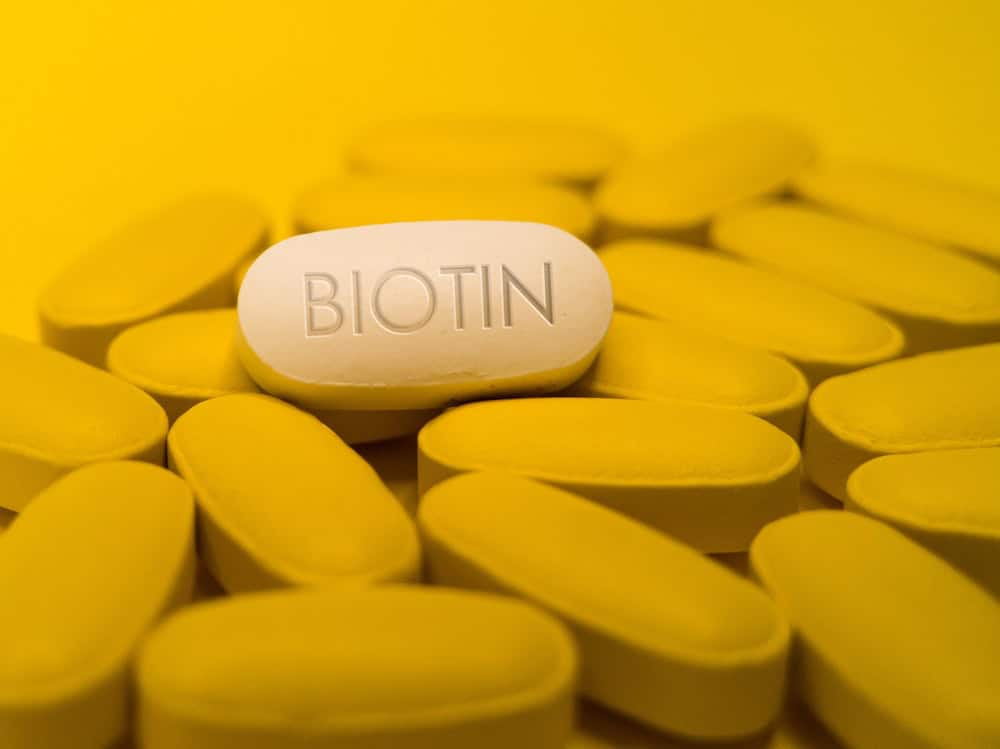
Biotin/Vitamin B7
Biotin supplements can help if you’re not getting enough of it.
True biotin deficiency is uncommon, but certain situations can increase the risk. These include some rare genetic conditions, long-term alcohol dependence, and certain medical or nutritional problems.
If a deficiency is causing your hair loss, correcting that deficiency can help address the underlying problem.
But hair loss has many possible causes. Low iron, inadequate protein intake, thyroid problems, hormonal changes, illness, major weight loss, stress, and some medicines can all play a role. Conditions such as female pattern hair loss and alopecia areata also need specific treatment.
That’s why taking a hair supplement without finding out what’s actually causing the hair loss can be frustrating. You may spend months waiting for results while the real cause remains untreated.
How Much Biotin Do You Actually Need?
For adults, the adequate intake for biotin is 30 mcg per day.
That’s very different from the doses found in many hair supplements.
Some products contain thousands of micrograms of biotin per serving. A supplement labelled 5,000 mcg contains more than 160 times the adult adequate intake. A 10,000 mcg supplement contains more than 300 times that amount.
A higher dose isn’t automatically more effective for hair.
There is no established tolerable upper intake level for biotin because researchers haven’t found enough evidence of toxicity to set one. That doesn’t mean very high doses are useful or risk-free.
One of the biggest concerns with high-dose biotin isn’t hair. It’s your blood tests.
Biotin can interfere with some laboratory tests.
This is the part many people don’t hear about when they buy a “hair growth” supplement.
High amounts of biotin can interfere with certain blood tests and cause results to appear falsely high or falsely low. This can affect tests used to check hormones, including thyroid-related tests, as well as some other laboratory tests.
The U.S. Food and Drug Administration has also warned about biotin interference with certain laboratory tests, including some troponin tests used when evaluating possible heart problems [3].
That means you should always tell your doctor and the laboratory staff that you’re taking biotin or a supplement containing biotin.
Don’t assume a vitamin is too harmless to mention. Your doctor needs to know about all supplements you’re taking, especially before blood tests or medical procedures.
How Should You Take Biotin?
If a healthcare professional has recommended biotin, follow their advice on dose. If you’re using an over-the-counter supplement, follow the label carefully and avoid taking multiple biotin-containing products at the same time.
Biotin supplements can be taken orally and are available on their own or as part of multivitamins and B-complex supplements.
You don’t need to take a large dose just because a product is marketed for hair growth. Check the label first. Some multivitamins and “hair, skin, and nails” products already contain biotin, so taking more than one supplement can increase your total intake without you realizing it.
You should also check the serving size. Sometimes a bottle may list the amount per two gummies or two tablets rather than per single serving.
If you’re scheduled for blood work, tell your healthcare provider about your biotin supplement before the test. Depending on the test and your situation, they may advise you whether and when to stop it.
Should You Take Biotin Every Day for Hair Fall?
Not unless there’s a reason to.
If your diet already provides enough biotin and you don’t have a confirmed deficiency, taking a high-dose supplement may not address your hair loss.
Instead, look at the bigger picture.
Are you getting enough protein? Have you recently lost weight? Are your periods very heavy? Have you been ill or under a lot of stress? Did the hair shedding start after a fever, infection, surgery, or major life event? Are you noticing a widening of your hair part or thinning around the crown? Are you taking any medicines?
These details can give your doctor clues about what may be happening.
A dermatologist may examine your scalp and hair and, when needed, recommend blood tests to look for nutritional deficiencies, hormone problems, or other medical causes.
Your diet matters more than a single “hair vitamin.”
Hair is made from protein, so your overall diet matters. Getting enough protein and a range of vitamins and minerals supports normal hair growth.
You don’t need to build your entire diet around supplements.
Eggs, fish, meat, dairy products, nuts, seeds, legumes, vegetables, and whole grains can all contribute different nutrients. If you’re vegetarian or vegan, you’ll need to pay extra attention to getting enough protein, iron, vitamin B12, and other nutrients from food or supplements when needed.
And if you’re already working on your diet, don’t forget that the rest of your food choices count too. For example, if you’re comparing fats for everyday meals, you can read our guide on avocado and ghee for a closer look at how they differ nutritionally.
Likewise, if coffee is part of your morning routine, our guide to black coffee looks at what a daily cup may offer and where moderation still matters.
When Should You See a Doctor About Hair Loss?
Don’t wait months for a biotin supplement to work if your hair loss is significant or getting worse.
See a dermatologist if you’re losing hair rapidly, developing bald patches, noticing scalp redness or scaling, or seeing a clear change in hair density. It’s also worth getting medical advice if hair loss continues for several months or started after a major illness, rapid weight loss, or another health change.
The goal isn’t simply to stop hair from falling. It’s to find out why it’s happening.
Once the cause is identified, treatment can be much more targeted.
The Bottom Line
Biotin is an essential nutrient, but that doesn’t make it a universal hair-growth treatment.
If you have a biotin deficiency, correcting it can help. If you don’t have a deficiency, there isn’t strong evidence that taking high-dose biotin will make your hair grow faster or thicker.
Before starting a supplement, check the dose, look at what you’re already taking, and tell your healthcare provider about it before blood tests.
And if you’re experiencing persistent hair loss, don’t let a bottle of “hair vitamins” delay a proper evaluation. Your hair may be trying to tell you something else.
FAQs
1. Can biotin stop hair fall?
Biotin may help when hair loss is related to a true biotin deficiency. However, there isn’t strong evidence that biotin supplements stop hair fall in people who already get enough biotin.
2. How much biotin should I take for hair growth?
There isn’t a proven high-dose biotin amount specifically recommended for hair growth in healthy adults. The adequate intake for adults is 30 mcg per day. If you’re considering a supplement, discuss the dose with a healthcare professional rather than choosing a high-dose product on your own.
3. Is 5,000 mcg of biotin safe?
High doses of biotin haven’t been shown to cause the same type of toxicity seen with some other vitamins, but that doesn’t mean they’re necessary. High-dose biotin can interfere with certain laboratory tests and may lead to incorrect results. Tell your healthcare provider if you’re taking it.
4. Can biotin cause hair loss?
Biotin itself isn’t known to commonly cause hair loss. However, taking unnecessary high-dose supplements can expose you to problems such as laboratory-test interference. If your hair loss starts or worsens after beginning a supplement, speak with your doctor and review all the ingredients in the product.
5. How long does biotin take to work for hair?
There isn’t a reliable timeline because biotin hasn’t been shown to consistently improve hair growth in people without a deficiency. If your hair loss has another cause, taking biotin may not improve it at all.
6. Can I take biotin with other vitamins?
Biotin is included in many multivitamins, B-complex supplements and hair supplements. Check the labels before combining products so you know how much you’re taking in total. If you’re taking medicines or several supplements, ask your healthcare professional whether the combination is appropriate.
7. Should I stop biotin before a blood test?
Don’t stop a prescribed or recommended supplement without discussing it with your healthcare provider. However, always tell your doctor and the laboratory that you’re taking biotin because it can interfere with some tests. They can advise you based on the specific test being performed.
8. What foods are naturally high in biotin?
Biotin is found in foods including eggs, meat, fish, nuts, seeds, sweet potatoes, spinach and broccoli. Eating a varied diet can help you meet your body’s nutritional needs without relying on high-dose supplements.
9. Can biotin make hair thicker?
There’s no strong evidence that high-dose biotin makes hair thicker in people who aren’t deficient. If your hair is thinning, identifying the cause is more useful than assuming you need more biotin.
10. Should I take biotin for hair loss without seeing a doctor?
If your hair loss is mild and you’re simply considering a standard multivitamin, you may not need a medical appointment just for that. But persistent, sudden, or significant hair loss deserves an evaluation, especially if you have bald patches, scalp symptoms, or other health changes.
References
1. National Institutes of Health, Office of Dietary Supplements. Biotin: fact sheet for health professionals [Internet]. Bethesda (MD): National Institutes of Health; [cited 2026 Oct 1]. Available from: https://ods.od.nih.gov/factsheets/Biotin-
2. Yelich A, Jenkins H, Holt S, Miller R. Biotin for hair loss: teasing out the evidence. J Clin Aesthet Dermatol. 2024;17(8):56-61. https://pubmed.ncbi.nlm.nih.gov/39148962/
3. U.S. Food and Drug Administration. Biotin interference with troponin lab tests: assays subject to biotin interference [Internet]. Silver Spring (MD): U.S. Food and Drug Administration; [cited 2026 Oct 1]. Available from: https://www.fda.gov/medical-devices/in-vitro-diagnostics/biotin-interference-troponin-lab-tests-assays-subject-biotin-interference
The article is written by Mantasha, Sr. Executive, Clinical Health & Content, and reviewed by Monalisa Deka, Deputy Manager, Clinical Health & Content, Medical Affairs.)
Recommended Reads:
Eat to Ease Pain: 5 Anti–Inflammatory Foods to Reduce Joint Pain
Joint Pain In Winter: Essential Steps To Follow Before The Cold Sets In