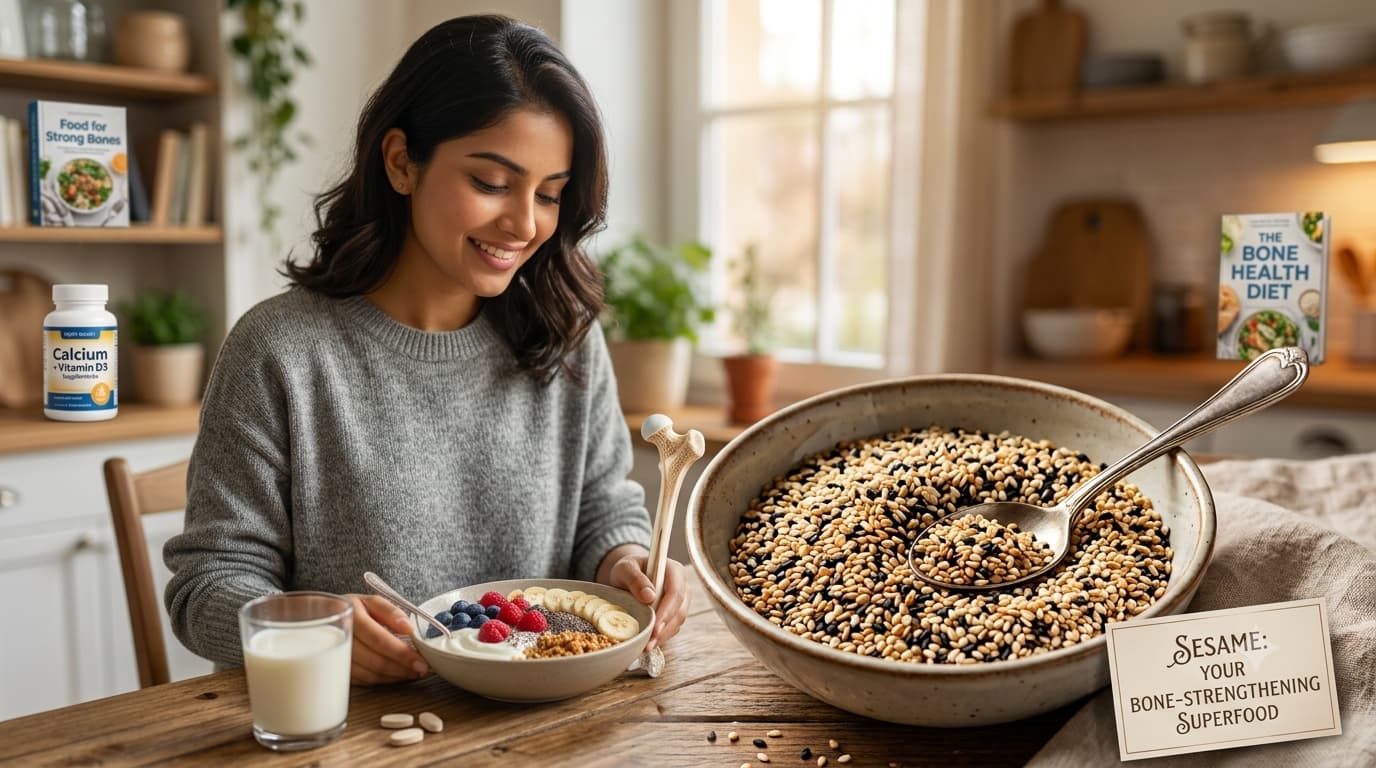
When you think about foods that support strong bones, milk, curd and cheese probably come to mind first. Sesame seeds may not be on that list, but these tiny seeds pack several nutrients linked to bone health.
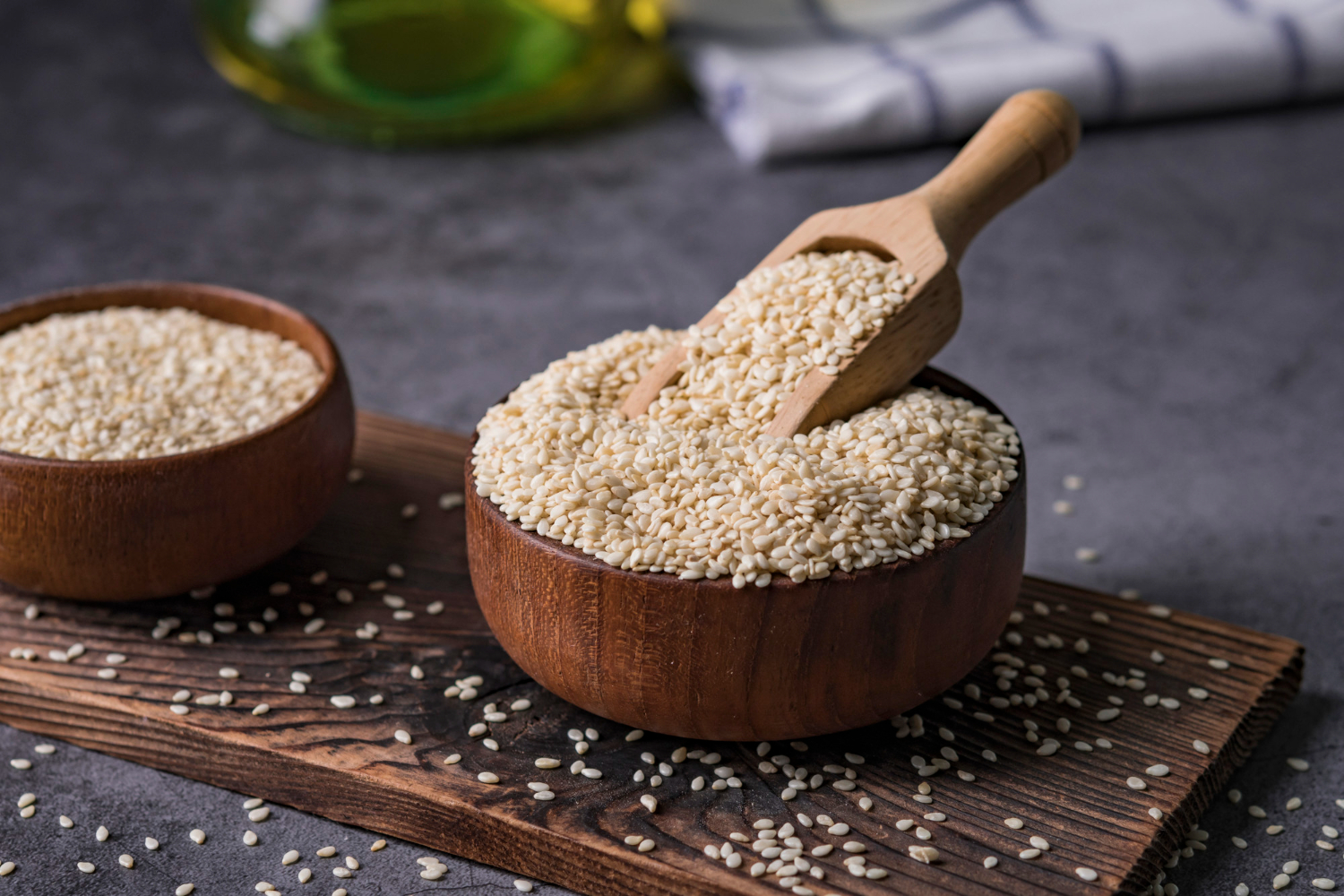
Sesame seeds contain calcium, magnesium, phosphorus, zinc and protein. They also contain plant compounds called lignans, including sesamin and sesamolin, which researchers have studied for their possible effects on bone formation and bone loss.
But there’s a catch. Sesame seeds aren’t a magic fix for weak bones, and research in humans is still limited. So, should you add them to your diet? Yes, they can be a useful part of a balanced diet. But it’s worth understanding what they can and can’t do.
Why are sesame seeds linked to bone health?

Your bones aren’t just hard structures that stay unchanged throughout life. Your body constantly breaks down old bone and builds new bone. Calcium and phosphorus form much of the mineral structure of bone, while other nutrients help support this process.
Sesame seeds provide several of these nutrients. Research reviews report that sesame contains substantial amounts of calcium, magnesium and phosphorus, along with protein and other plant compounds.
Calcium is particularly important because your body stores almost all of its calcium in bones and teeth. If your diet doesn’t provide enough, your body can draw calcium from your bones to maintain normal blood calcium levels. Over time, this can contribute to weaker bones.
For most adults aged 19 to 50, the recommended calcium intake is about 1,000 mg a day. Women over 50 generally need 1,200 mg daily.
That doesn’t mean you need to eat huge amounts of sesame seeds to reach your target. In fact, doing so isn’t a good idea because sesame seeds are also calorie-dense.
Sesame seeds are rich in calcium, but there’s more to the story
Sesame is often promoted as a calcium-rich food, and there is truth behind that claim. Some food composition data report close to 1,000 mg of calcium per 100 g of sesame seeds. Sesame also provides magnesium and phosphorus, both of which have roles in bone structure and function.
However, there’s an important detail that often gets missed online.
The amount of calcium listed on a nutrition chart isn’t necessarily the amount your body absorbs.
Sesame seeds contain oxalates and phytates. These compounds can bind minerals and reduce the amount of calcium that becomes available for absorption. Laboratory research has found relatively low calcium availability from sesame compared with its total calcium content.
So, don’t look at a nutrition label and assume that all the calcium in sesame will automatically end up in your bones.
This doesn’t make sesame a bad food. It simply means you should get calcium from a variety of sources instead of relying on sesame alone.
What does research say about sesame and osteoporosis?
This is where things get interesting.
A 2023 review looked at research on sesame seeds and their bioactive compounds in relation to bone health, particularly in postmenopausal women. The review suggested that sesame and compounds such as sesamin may have protective effects on bone health. However, much of the evidence comes from laboratory and animal research rather than large human clinical trials [1].
Researchers have also studied sesamin, one of sesame’s major lignans. In experimental research, sesamin appeared to support bone formation while reducing processes involved in bone breakdown. One study using a mouse model of postmenopausal osteoporosis found that sesamin helped reduce bone loss.
Another experimental study found that sesamin supported the healing of osteoporotic fractures in mice. But the researchers themselves pointed out that the dose used was high and that more research is needed before such findings can be applied to humans [2].
That’s an important distinction.
A compound showing promise in a mouse study doesn’t mean eating sesame seeds will prevent osteoporosis in humans.
We need larger, well-designed human studies before making that claim.
Can sesame seeds increase bone mineral density?
At present, there’s not enough strong human evidence to say that eating sesame seeds regularly will increase bone mineral density.
Some research reviews suggest a possible benefit, especially among postmenopausal women, but the evidence isn’t strong enough to treat sesame as an osteoporosis therapy.
There’s stronger evidence for the general role of adequate calcium intake in maintaining bone mineral density. A systematic review of randomized trials found that increasing calcium intake from food produced small increases in bone mineral density at several skeletal sites. However, the researchers also noted that these increases were unlikely to translate into a major reduction in fracture risk on their own.
So think of sesame as one piece of the bone-health puzzle, not the whole puzzle.
What about vitamin D?

This is the part many people forget.
You can eat calcium-rich foods, but your body also needs vitamin D to absorb calcium properly. Vitamin D helps your intestine absorb calcium from food and supports healthy bones and muscles.
Sesame seeds aren’t a significant source of vitamin D. So if you’re trying to support your bones, don’t build your entire plan around sesame.
Your diet should include calcium-rich foods, adequate protein and sources of vitamin D. Regular weight-bearing activity, such as walking, climbing stairs or strength training, also matters.
Your bones respond to the demands you place on them. Sitting all day and eating a spoonful of sesame at night isn’t exactly a winning strategy.
How much sesame should you eat?
There’s no established dose of sesame seeds specifically for preventing osteoporosis.
For everyday eating, a small serving can fit easily into a balanced diet. You can sprinkle sesame seeds over vegetables, salads or soups, add them to chutneys, mix them into homemade energy bites or use tahini in meals.
You don’t need 100 g of sesame seeds every day just because the seeds contain a lot of calcium on paper.
A tablespoon or two can add flavor and nutrients without turning your snack into a calorie bomb.
If you’re using sesame in the form of tahini, remember that the nutritional content can vary by product and preparation.
White or black sesame seeds: which is better for bones?
Both white and black sesame seeds contain nutrients that can contribute to a healthy diet.
There’s no strong human evidence showing that black sesame is dramatically better than white sesame for building stronger bones.
So you don’t need to overthink the color. Choose whichever you enjoy and can include regularly.
What matters more is your overall diet.
Does roasting sesame reduce its benefits?
Roasting can change the nutrient composition and may affect some plant compounds, but lightly roasted sesame can still be a nutritious food.
The bigger issue is how you use it. Sesame covered in large amounts of sugar or incorporated into calorie-heavy sweets isn’t the same thing as simply adding a small amount of seeds to a balanced meal.
Traditional foods such as til ladoos can contain sesame, but they may also contain substantial amounts of sugar and calories. Enjoy them as treats rather than treating them as a daily osteoporosis remedy.
Can sesame seeds replace milk for calcium?
Not necessarily.
If you don’t consume dairy, sesame can contribute calcium to your diet, but you should also consider other calcium-rich foods. Calcium-fortified plant milks, calcium-set tofu, certain leafy greens and some fish are other options.
People who avoid dairy may need to pay closer attention to their total calcium intake because dairy products are convenient sources of calcium.
The goal isn’t to find one “best” calcium food. It’s to consistently get enough from your overall diet.
Who should pay extra attention to bone health?
Bone health matters at every age, but certain periods deserve more attention.
Teenagers and young adults build much of their peak bone mass. Adults then work to maintain it, while bone loss can accelerate with ageing. In women, the drop in estrogen around menopause can increase bone breakdown and contribute to bone loss.
People with osteoporosis, osteopenia, previous fractures, low vitamin D, low calcium intake or certain medical conditions may need a more personalised plan.
If you’ve already been diagnosed with osteoporosis, don’t replace prescribed treatment with sesame seeds or other home remedies.
Food can support your health, but it isn’t a substitute for medical treatment when you need it.
The bottom line on sesame seeds for bones
Sesame seeds deserve a place in a healthy diet. They’re nutritious and provide calcium, magnesium, phosphorus, protein and plant compounds that may support bone health.
Research on sesamin and sesame has also produced some interesting findings, particularly in laboratory and animal studies. But human evidence specifically showing that eating sesame seeds prevents osteoporosis or significantly increases bone mineral density is still limited.
So, add sesame to your meals if you enjoy it. Just don’t expect a spoonful of seeds to undo years of poor nutrition or replace calcium, vitamin D, exercise and medical care.
Strong bones are built through habits, not one miracle food.
FAQs
1. Are sesame seeds good for your bones?
Yes. Sesame seeds provide calcium, magnesium, phosphorus and protein, all of which contribute to a nutritious diet that supports bone health. However, research hasn’t proven that sesame seeds alone can prevent osteoporosis.
2. How much sesame should I eat daily for bone health?
There is no scientifically established daily dose of sesame specifically for bone health. A small serving, such as a tablespoon or two, can be included in a balanced diet.
3. Are black sesame seeds better than white sesame seeds for bones?
There’s no strong human evidence that black sesame seeds are significantly better than white sesame seeds for bone health. Both can be part of a healthy diet.
4. Does sesame contain more calcium than milk?
Sesame can contain a high amount of calcium by weight, but that doesn’t mean your body absorbs all of it. Sesame also contains compounds such as oxalates and phytates that can reduce mineral availability.
5. Can I eat sesame seeds if I have osteoporosis?
You can generally include sesame seeds as part of a balanced diet unless you have an allergy or your doctor has advised otherwise. But sesame shouldn’t replace prescribed osteoporosis treatment.
6. Do sesame seeds contain vitamin D?
Sesame seeds aren’t a meaningful source of vitamin D. If you’re concerned about bone health, make sure your diet and lifestyle provide adequate vitamin D along with calcium.
7. Can sesame seeds prevent fractures?
There’s currently not enough human evidence to say that eating sesame seeds prevents fractures. Fracture prevention involves several factors, including bone density, muscle strength, balance, nutrition and treatment of osteoporosis when present.
8. Are sesame seeds good for women after menopause?
They may be useful as part of a nutrient-rich diet. Some research has suggested potential bone-protective effects from sesame and its lignans in postmenopausal women, but stronger human trials are needed before sesame can be recommended as a treatment for postmenopausal bone loss.
9. Is sesame better than calcium supplements?
Not necessarily. Sesame is a food that provides several nutrients, while calcium supplements provide a measured amount of calcium. Whether you need a supplement depends on your diet, age, health and individual risk factors. Speak with a healthcare professional if you’re considering one.
10. What other foods help support strong bones?
Include a variety of calcium-rich foods such as milk, yogurt, cheese, calcium-fortified foods, calcium-set tofu and certain leafy greens. Also get enough protein and vitamin D, and stay physically active.
You may also like
If you’re interested in how everyday foods and lifestyle choices affect your health, you can also read about how different fats compare for heart health in this guide to avocado and ghee.
For another useful health reference, see this simple blood pressure guide by age.
- Arooj, A., Rabail, R., Naeem, M., Goksen, G., Xu, B., & Aadil, R. M. (2023). A comprehensive review of the bioactive components of sesame seeds and their impact on bone health issues in postmenopausal women. Food & function, 14(11), 4966–4980. https://doi.org/10.1039/d3fo00531c
- Yang, Z., Feng, L., Wang, M., Li, Y., Bai, S., Lu, X., Wang, H., Zhang, X., Wang, Y., Lin, S., Tortorella, M. D., & Li, G. (2022). Sesamin Promotes Osteoporotic Fracture Healing by Activating Chondrogenesis and Angiogenesis Pathways. Nutrients, 14(10), 2106. https://doi.org/10.3390/nu14102106
The article is written by Mantasha, Sr. Executive, Clinical Health & Content, and reviewed by Monalisa Deka, Deputy Manager, Clinical Health & Content, Medical Affairs.)