
One day it’s chia seeds. The next, it’s sea moss. You have probably seen sea moss all over your social media feeds lately. Influencers are blending it into smoothies and slathering it on their skin, claiming it has several amazing health benefits. But most people scrolling through the internet and seeing sea moss on their feeds have no idea what it is. But unlike many wellness trends, sea moss isn’t new. It’s a type of seaweed that has been eaten in different parts of the world for generations. From the claims to its actual health benefits and how you should eat it- in this blog, we will dig deep into sea moss and everything you need to know about it.
What Is Sea Moss?
Despite its name, sea moss isn’t actually a moss. It is a type of red seaweed, scientifically known as Chondrus crispus, that naturally grows along the rocky Atlantic coastlines of Ireland, North America, and parts of the Caribbean. The plant itself is small and spiny, with thin, fan-like fronds that branch out unevenly. Color depends on where it grows: greenish-yellow near the surface, deep purple or almost black in darker water. For centuries, it has been used in traditional cuisines, particularly in soups, drinks, and desserts, and has also been valued in folk medicine.
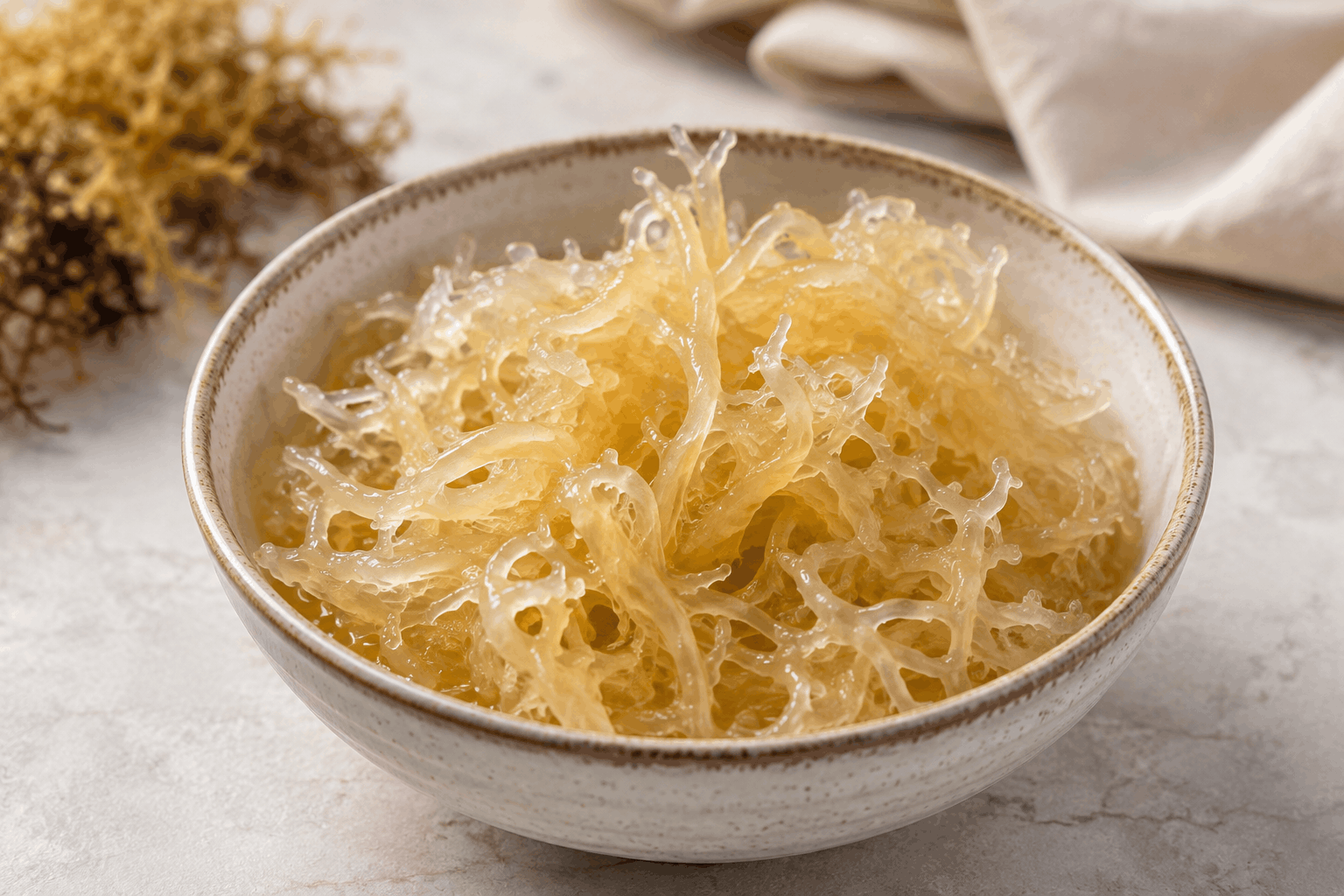
If you touch raw sea moss, it feels a bit tough and rubbery. That is because it is loaded with carrageenan. This natural carbohydrate acts as a strong thickener, which is exactly why sea moss turns into a slick, jelly-like paste when you soak it in water. Today, sea moss is available in several forms, including dried seaweed, powders, capsules, gummies, and the increasingly popular sea moss gel. Part of the appeal comes from vitamins, minerals, fiber, and antioxidants that the plant carries.
What Nutrients Does It Provide?
Sea moss’s reputation rests almost entirely on what it carries naturally: iodine, potassium, calcium, magnesium, and iron, alongside smaller amounts of vitamins and antioxidant compounds. It also brings soluble fiber to the table, which supports digestion and works as a prebiotic, feeding the good bacteria already living in your gut [1].
One thing to keep in mind is that sea moss isn’t a standardised food. Hence, nutritional value shifts with the species, where it grew, and how it was processed afterward. That’s part of why the popular claim that sea moss contains “92 of the 102 minerals the human body needs” doesn’t hold up. No research backs that number. Sea moss is genuinely nutrient-rich, but it works best as one solid piece of a balanced diet, not a stand-in for one.
Sea Moss Health Benefits
Rich in Antioxidants
Like many edible seaweeds, sea moss contains antioxidant compounds that help protect cells from damage caused by unstable molecules known as free radicals. Researchers believe these bioactive compounds may contribute to its potential health-promoting properties. However, most studies have investigated seaweed extracts in laboratory settings, so scientists are still working to understand how these findings translate to people who regularly consume sea moss as food.
Aids Gut Health
Your gut bacteria depend on a steady supply of fiber to do their job. Sea moss carries a particular type of gelatinous fiber your body can’t fully break down on its own. Rather than passing through untouched, this mucilage ferments in the lower intestine, becoming food for the bacteria that live there. Research on red algae suggests that feeding these microbes this way can strengthen the gut lining and support digestion [2]. It’s a genuine mechanism, not a miracle one. Fiber from vegetables and whole grains does the same work too.

Immune Defense
Carrageenan, the compound that gives sea moss its gel-like texture, does more than thicken. Studies on carrageenans extracted from red algae have found immune-stimulating and antiviral activity [3]. That’s promising, but it comes with a catch. The research is largely lab-based, tested on cells in controlled settings, not on people eating sea moss day to day. The honest read: sea moss brings compounds that interest researchers studying immunity. It isn’t a guaranteed defense against getting sick.
Promotes Satiety and Weight Management
Sea moss is packed with soluble dietary fiber that absorbs water and forms a thick gel inside your digestive tract. This gel moves slowly through your system, delaying stomach emptying and helping you feel full for much longer after a meal. By naturally curbing your overall appetite and reducing the urge to snack, this fibrous plant can be a helpful addition to support a sustainable weight loss routine.
Supports Healthy Thyroid Function
Your thyroid runs on iodine. It needs the mineral to make hormones that keep metabolism, growth, and a long list of everyday functions ticking along. Sea moss happens to be a naturally rich source of it. If your diet falls short on iodine, working in a food like this can genuinely help. But treat it like a dietary supplement, not a substitute for thyroid medication. And more isn’t automatically better here. Push iodine intake too high, and you can trigger the same thyroid problems you were trying to avoid.
May Support Heart Health
A growing body of research suggests that seaweeds may have a positive effect on heart health, partly because of their fibre, antioxidants and mineral content. Some studies have reported improvements in blood pressure, cholesterol and other cardiometabolic markers, although the evidence is stronger for seaweeds as a group than for sea moss specifically. More well-designed human studies are needed before firm conclusions can be drawn [4].
How to Eat Sea Moss
Sea moss is available in several forms, so it’s easy to find one that fits your routine. Sea moss gel is the most popular and can be stirred into smoothies, yogurt, soups, or even oatmeal without changing the flavour too much. If you prefer convenience, capsules and gummies are also widely available, while powdered sea moss can be mixed into juices, protein shakes, or homemade energy bites.
If you’re trying sea moss for the first time, start with a small amount rather than making it a daily staple straight away. Because sea moss naturally contains iodine, more isn’t necessarily better. As with any food or supplement, moderation is key, and choosing products from reputable brands can help ensure better quality and safety.
References
1- Cherry P, O’Hara C, Magee PJ, McSorley EM, Allsopp PJ. Risks and benefits of consuming edible seaweeds. Nutrients. 2021;13(7):2307. doi:10.3390/nu13072307.
2Brown ES, Allsopp PJ, Magee PJ, Gill CI, Nitecki S, Strain CR, et al. Proteins and carbohydrates from red seaweeds: Evidence for beneficial effects on gut function and microbiota. Mar Drugs. 2015;13(8):5358-5383. doi:10.3390/md13085358.
3- Lomartire S, Marques JC, Gonçalves AMM. An Overview to the Health Benefits of Seaweeds Consumption. Mar Drugs. 2021;19(6):341.
4- Gómez-Guzmán M, Rodríguez-Nogales A, Algieri F, Gálvez J. Seaweeds as Preventive Agents for Cardiovascular Diseases: From Nutrients to Functional Foods. Mar Drugs. 2015 Nov 12;13(11):6759-81. doi: 10.3390/md13116759. PMID: 26569273; PMCID: PMC4663556.
(The article is written by Ehsan Siddiqui, Team Lead, Clinical Health & Content and reviewed by Monalisa Deka, Senior Health Content Editor)
Recommended Reads:
Cortisol Face: The Viral Term That Has Everyone Looking in the Mirror