
Imagine swapping seven insulin injections a week for just one. That’s not a future promise anymore. It’s here, and it’s called insulin icodec, once weekly.
For decades, insulin has meant daily needles. However, that’s changing fast. Insulin icodec once weekly is a new kind of insulin that only needs one injection every seven days, and it’s already making life easier for adult patients with diabetes.
That said, if you or someone in your family takes insulin, you’re probably wondering how this medication actually works, who it’s for, and whether it’s safe. This blog breaks it all down in plain, simple language.
What Is Insulin Icodec Once Weekly?
Insulin icodec once weekly is a long-acting “basal” insulin. Basal insulin is the background insulin your body needs all day and night, even when you’re not eating. It’s different from the fast-acting insulin some people take right before meals.
For example, think of it this way:
1. Basal insulin
Think of basal insulin like a security guard who’s always on duty. Even when nothing much is happening between meals or overnight, you’re still not eating, and your body still releases small amounts of glucose into your blood. Basal insulin just quietly handles that in the background, keeping things steady without you ever noticing.
2. Mealtime insulin
On the other hand, it is more like extra security called in for a big event. The moment you eat, especially carbs, glucose rushes into your bloodstream fast. Mealtime insulin shows up right around that meal to manage the sudden surge, then it’s done, job over until the next one.
Additionally, most basal insulins are administered every single day, at roughly the same time. That daily routine can get exhausting, especially for people managing diabetes for years. Insulin icodec, taken once a week, entirely changes that math, reducing the routine from seven jabs a week to just one [1].
Insulin Icodec: Who Is It For and How Is It Used in Type 1 and Type 2 Diabetes?
Insulin icodec can be used in different ways, depending on the type of diabetes and your treatment plan [8].
For type 1 diabetes
It can provide basal insulin through a once-weekly injection, helping maintain blood glucose levels steadily between meals and overnight. Mealtime insulin may still be needed when clinically appropriate to manage the rise in blood glucose after eating.
For type 2 diabetes
It can be used alone or combined with diabetes tablets, GLP-1 injections, or mealtime insulin, depending on what your doctor prescribes. Either way, it works all week to help keep your blood sugar in a healthier range.
How Does Insulin Icodec Once Weekly Work Inside Your Body?
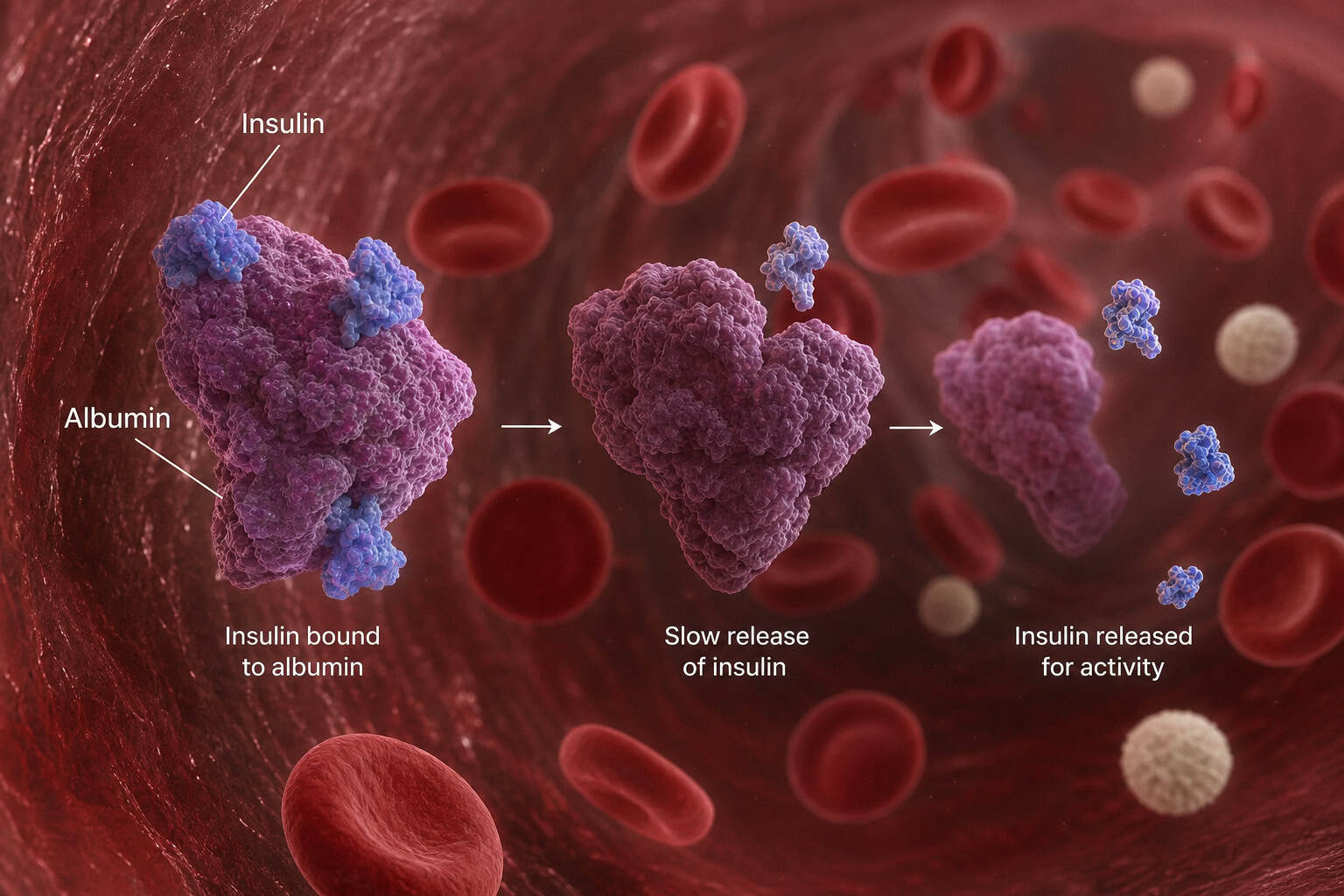
Here’s the clever part. Insulin icodec once weekly is built to attach loosely to a protein in your blood called albumin. Albumin is naturally abundant in your bloodstream, so it acts like a slow-release storage tank for the insulin.
In simple terms, here’s what happens after your shot:
- The insulin binds to albumin in your blood, almost like parking itself there.
- It’s released slowly, bit by bit, over the following days.
- This gives it a half-life of around eight days, which is why one dose comfortably covers a full week [2].
- Your blood sugar stays on a steadier path, without the sharp ups and downs some daily routines can cause.
That said, it takes a few weeks of regular weekly dosing before the insulin reaches a stable level in your blood. So don’t expect instant results from the very first shot. Your doctor will usually start you on a dose and adjust it gradually based on your blood sugar readings [2].
Is It as Effective as Daily Insulin?
Large trials known as the ONWARDS studies compared insulin icodec, administered once weekly, with daily basal insulins in thousands of people with type 2 diabetes:
- It lowered blood sugar (HbA1c) just as well as daily insulin and, in some trials, slightly better [3].
- Side effects like hypoglycemia, injection-site reactions, and weight gain occurred at rates similar to daily insulin [4].
- Switching to once-weekly icodec, especially with a “loading dose” (a bigger first dose) – gave effective blood sugar control and more time in a healthy range than daily insulin without raising hypoglycemia risk [7].
Your doctor may keep a closer eye on your sugar levels for the first week or two as you settle into the routine.
Who Can Actually Use Insulin Icodec Once Weekly?
Adults with type 1 and type 2 diabetes can currently receive insulin icodec once a week. It should be used in conjunction with a nutritious diet and regular exercise, rather than as a replacement for them. However, a few groups need extra caution or aren’t covered yet.
Who Should Wait or Needs Extra Caution?
1. Children: Not approved for use in kids.
2. Pregnancy or Breastfeeding: Needs a detailed conversation with your doctor first, since it hasn’t been studied enough in this group yet [4].
3. Kidney issues: Also needs a doctor’s individual assessment before starting [4].
Quick Byte: Who Should Avoid It Altogether
| Insulin icodec once weekly shouldn’t be used during an active episode of low blood sugar or by anyone with a known allergy to it. If you have kidney disease, liver disease, or heart failure, tell your doctor upfront – they may need to watch you more closely or adjust your dose [4]. |
Is Insulin Icodec Once Weekly Available in India?
Good news for readers in India: Insulin icodec once weekly is available here now. It rolled out as the world’s first once-weekly basal insulin, giving Indian patients access to the same technology used globally [5].
This is more important than it may seem:
- India has one of the largest populations of people living with diabetes in the world, and a huge share of them eventually need insulin [6].
- Sticking to a daily injection routine isn’t always easy, especially for working professionals, elderly patients, or anyone who travels often.
- Fewer injections often mean fewer missed doses, and fewer missed doses usually mean better blood sugar control over time.
That’s exactly where insulin icodec, taken once weekly, can make a real difference.
What to Know Before You Switch

Even though it sounds simple, switching to insulin icodec once weekly isn’t a DIY decision. Here are a few things to consider:
1. Getting Your Starting Dose Right
Your doctor needs to work out your correct starting dose, since it isn’t just “seven times your daily dose in one shot.”
2. Watch the Strength
This insulin comes in a different, more concentrated strength than most daily insulins, so never mix it up with your old insulin pen or borrow a dose calculation from someone else’s prescription [4].
3. Picking Your Weekly Day
Once you’re on a stable routine, you simply pick one day of the week, inject at roughly the same time, and you’re done till next week.
4. Changing Your Injection Day
You can change your injection day if needed, as long as at least 4 days have passed since your last dose. Thereafter, just continue weekly on your new chosen day [4]. However, it is always advisable to consult your doctor before changing it.
5. Needle Safety
Always use a new needle for each injection, and never keep the pen with the needle still connected, as reusing needles increases the risk of infection and dosing errors [4].
6. Rotating Injection Sites
Rotate your injection site (thigh, upper arm, or abdomen) each time, and avoid injecting into skin that’s bruised, thickened, or has lumps.
7. Missed a Dose? Here’s What Changes
What you do next depends on how many days have passed since your missed dose:
- Within 4 days: Take the missed dose as soon as you remember. Your weekly schedule then resets from there — your new injection day becomes the day you actually took this dose, not your old one.
- More than 4 days: Skip that dose entirely. Don’t double up to make up for it. Just take your next dose on your original scheduled day, as usual.
Either way, keep a closer eye on your blood sugar for the next few days, and check with your doctor if you’re ever unsure which of the two applies to you [4].
On Insulin Icodec? Don’t Stop Without Talking to Your DoctorEven if your blood sugar looks great, don’t stop insulin icodec once a week without first talking to your doctor. Stopping suddenly or skipping doses can cause your blood sugar to rise and, in some cases, lead to serious complications like diabetic ketoacidosis [4]. |
The Bigger Picture
Insulin icodec, taken once weekly, isn’t just a new drug. It’s a genuine shift in how insulin therapy can fit into real, busy lives. For someone who dreads their daily jab, or a caregiver managing insulin for an elderly parent, cutting injections from seven a week to one is a big quality-of-life change. Meanwhile, the science shows it works just as well as the daily options we’ve relied on for years.
If you’re on daily basal insulin and curious whether insulin icodec once weekly could work for you, talk to your doctor. It’s a conversation worth having.
FAQs
Is insulin icodec the same as regular insulin injections?
Not exactly. It’s still insulin, but it’s engineered to release slowly over a week instead of being used up in a day, so it replaces your daily basal shot, not your mealtime insulin.
Does the insulin icodec injection hurt more than a daily insulin injection?
No, the injection itself feels the same as any insulin shot. The needle and technique are similar to what most patients already use.
Can I switch from insulin icodec back to daily insulin?
Yes, that’s absolutely doable. Your doctor will need to plan the right dose for the switch, so this isn’t a decision to make on your own — talk to them first.
What happens if you miss an insulin icodec dose?
If you miss an insulin icodec dose, talk to your doctor about when to take it and how to adapt your treatment schedule. Take no more than your doctor recommends.
Does insulin icodec cause weight gain?
It can, for some people – that’s true of most basal insulins, not just this one. If it’s something you’re worried about, it’s worth a chat with your doctor about diet and activity to help manage it.
Can insulin icodec be used with other diabetes medications?
Like other insulins, insulin icodec may be used alongside oral diabetes medicines or other injectable medicines, such as GLP-1 receptor agonists, when clinically appropriate. Your doctor will decide which medicines are suitable for you and how they should be used together.
How should insulin icodec be stored at home?
Nothing too different here, keep it away from heat and don’t let it freeze, the same as most insulins. Check the pack for exact instructions, or ask your pharmacist if you’re unsure.
What happens if blood sugar drops too low on insulin icodec?
Act fast. Check your sugar if you can, and reach for something quick like glucose tablets, fruit juice, or a sugary drink. If it feels severe, isn’t getting better, or you lose consciousness, get medical help right away [4].
Can I stop taking insulin icodec if my blood sugar is normal?
No, and this catches people off guard. Good numbers usually mean the treatment’s working, not that you’re done with it. Stopping on your own can send your blood sugar climbing and even lead to complications, so any change needs to go through your doctor [4].
Can I drink alcohol while taking insulin icodec?
You can, but be careful. Alcohol can throw off your blood sugar and raise your hypoglycemia risk, so talk to your doctor about your habits and keep a closer watch on your levels if you do drink [4].
Note: However, it is advisable to avoid alcohol, as even moderate consumption can affect blood sugar levels and have harmful effects on health.
Who should not use insulin icodec?
Insulin icodec should not be used during an episode of low blood sugar (hypoglycaemia) or if you have a known allergy to it. And if you have kidney or liver disease, heart failure, or you’re pregnant, trying to conceive, or breastfeeding, that’s worth discussing with your doctor before you start [4].
Disclaimer: This article is for general health awareness only and isn’t a substitute for professional medical advice. Please consult your doctor before starting, switching, or stopping any insulin therapy.
References:
1. National Institute of Diabetes and Digestive and Kidney Diseases (NIDDK), National Institutes of Health. Diabetes Overview: Insulin, Medicines, & Other Diabetes Treatments. Available from: https://www.niddk.nih.gov/health-information/diabetes/overview
2. Pham DQ, Andraos J, Ayoub J. Insulin icodec: A novel once-weekly formulation for the treatment of type 1 and type 2 diabetes mellitus. Rev Endocr Metab Disord. 2025. Available from: https://pmc.ncbi.nlm.nih.gov/articles/PMC12316791/
3. ClinicalTrials.gov, National Library of Medicine (NIH). Efficacy and Safety of Once-Weekly Insulin Icodec (ONWARDS 1). NCT04460885. Available from: https://clinicaltrials.gov/study/NCT04460885
4. U.S. Food and Drug Administration. Awiqli (insulin icodec-abae) injection– Prescribing Information. Available from: https://www.accessdata.fda.gov/drugsatfda_docs/label/2026/761326Orig2s000lbl.pdf
5. Efficacy and Safety of Once-Weekly Insulin Icodec in Indian Patients with Type 2 Diabetes. PMC. Available from: https://pmc.ncbi.nlm.nih.gov/articles/PMC12579031/
6. Socioeconomic inequality in awareness, treatment and control of diabetes among adults in India: Evidence from National Family Health Survey (NFHS), 2019–2021. PMC. Available from: https://www.ncbi.nlm.nih.gov/pmc/articles/PMC9941485/
7. Bajaj HS, Bergenstal RM, Christoffersen A, et al. Switching to Once-Weekly Insulin Icodec Versus Once-Daily Insulin Glargine U100 in Type 2 Diabetes Inadequately Controlled on Daily Basal Insulin: A Phase 2 Randomized Controlled Trial. Diabetes Care. 2021;44(7):1586-1594. PMC. Available from: https://pmc.ncbi.nlm.nih.gov/articles/PMC8323191/
(The article is written by Nancy Dixit, Associate Manager, Clinical Health & Content, Medical Affairs, and reviewed by Monalisa Deka, Deputy Manager, Clinical Health & Content, Medical Affairs.)
Recommended Reads:
GLP-1 Medicines: What’s True, What’s Not, What Matters to You (Myths & Facts)
Ozempic: A New Option For Managing Type 2 Diabetes Arrives in India