
When you think about fiber, your mind probably goes to oats, fruits, vegetables, or a bowl of dal. Drinks may not be the first thing that comes to mind. But with the right ingredients, a drink can also help you add more fiber to your day.
Fiber supports regular bowel movements, helps keep stools softer, and can help you feel full for longer. Some types of fiber also act as food for beneficial bacteria in your gut. Adults generally need around 22 to 34 grams of fiber a day, depending on age and sex. [1]
The catch? Not every healthy-looking drink contains much fiber. A glass of fruit juice, for example, can contain much less fiber than eating the whole fruit.
So, if you want your drink to do more than just quench your thirst, try these seven options.
1. Chia Seed Water

Chia seeds may be tiny, but they pack a good amount of fiber. When soaked in water, they absorb liquid and develop a gel-like texture.
You can make chia water by soaking 1 to 2 tablespoons of chia seeds in a glass of water for around 15 to 20 minutes. Add a squeeze of lemon if you like.
The soluble fiber in chia can help slow digestion and may help you feel satisfied for longer. Soluble fiber absorbs water and forms a gel in the digestive tract, which can slow digestion. [2]
Start with a small amount if you’re not used to eating much fiber. Suddenly increasing your fiber intake can lead to gas or bloating.
2. Psyllium Husk Drink
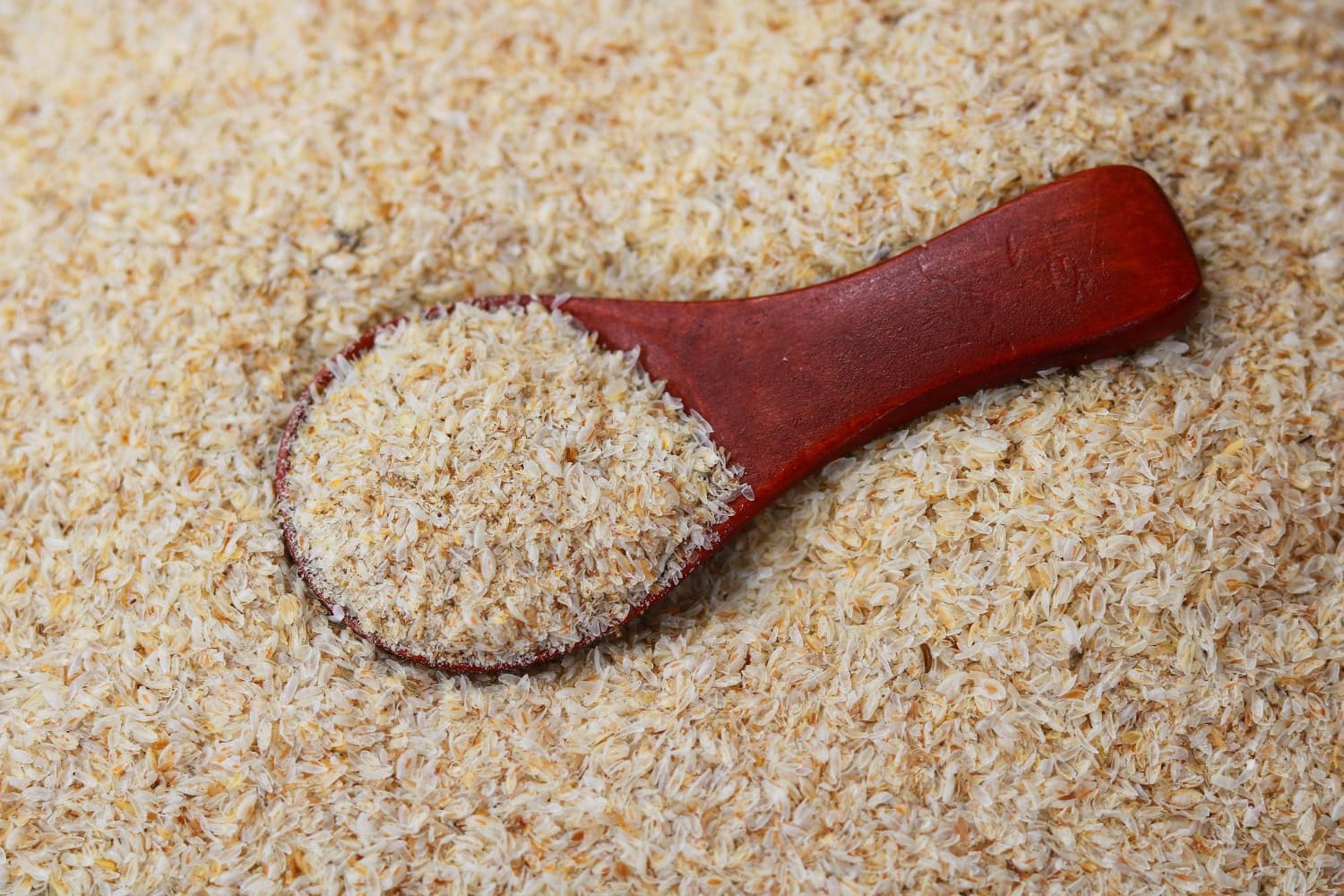
Psyllium husk, also known as isabgol, is another simple way to add soluble fiber to your diet.
Mix the amount recommended by your doctor or the product label with plenty of water and drink it soon after mixing. Follow it with additional water if advised on the product instructions.
Psyllium absorbs water and adds bulk to stool. This can help support regular bowel movements, especially when constipation is linked to low fiber intake. Fiber works better when you also drink enough fluids. [3]
Don’t start with large amounts. Too much fiber at once can leave you feeling more bloated rather than better.
3. Berry and Yogurt Smoothie

A smoothie can be a much better source of fiber than strained fruit juice because the whole fruit stays in the drink.
Blend berries with plain yogurt and a little water or milk. You can use strawberries, raspberries, blackberries, or a mix of them. Add a spoonful of chia or ground flaxseed if you want even more fiber.
Berries provide fiber, while yogurt can add protein. Together, they can make a more filling snack than a sugary fruit drink.
If you’re buying yogurt, check the label for added sugar. Your smoothie doesn’t need to taste like dessert to be enjoyable.
4. Pear and Flaxseed Smoothie

Pears are a useful source of fiber, especially when you keep the skin on. One medium pear with its skin provides about 5.5 grams of fiber. [4]
Blend one ripe pear with plain yogurt or milk and one tablespoon of ground flaxseed. Add water to adjust the consistency.
The combination gives you fiber from the pear and flaxseed, along with protein if you use yogurt or milk.
Keep the pear whole instead of turning it into strained juice. Much of the benefit comes from keeping the fruit’s fiber in your glass.
5. Oats and Banana Smoothie
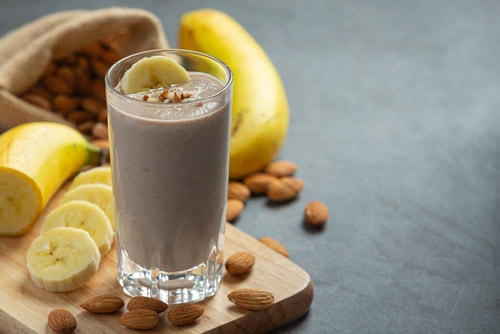
Your breakfast oats don’t always have to sit in a bowl.
Blend rolled oats with a banana, milk or unsweetened soy milk, and a little cinnamon. You can also add chia seeds or ground flaxseed.
Oats contain soluble fiber, including beta-glucan, while bananas add fiber and natural sweetness. Adding a protein source such as plain yogurt, milk, or unsweetened soy milk can make the smoothie more filling.
If you’re watching your overall calorie intake, keep the portion sensible. Healthy ingredients can still add up when you turn half the kitchen into one smoothie.
6. Vegetable Smoothie

A vegetable smoothie can be an easy way to add more plant foods to your day.
Try blending cucumber, tomato, carrot, spinach, and a small piece of apple with water. You can add lemon, mint, or spices for taste.
The key is to blend rather than strain the drink. Straining removes much of the fiber that you actually want.
Vegetables, fruits, beans, and whole grains are all useful sources of fiber and can support a healthy gut microbiome. Some types of fiber also act as prebiotics, which help feed beneficial gut microbes. [5]
If you have a sensitive stomach, start with a smaller portion. A sudden jump in high-fiber foods can cause gas and bloating in some people.
7. Prune and Chia Drink

Prunes are well known for supporting bowel regularity. They contain fiber as well as naturally occurring compounds that can help bowel movements.
You can blend a small serving of prunes with water and add soaked chia seeds. Keep it thick rather than straining it.
This can be useful if your diet is low in fiber, but don’t treat it like a quick fix for ongoing constipation. Persistent constipation, blood in the stool, unexplained weight loss, or ongoing abdominal pain needs medical attention. [6]
A few things to remember before adding more fiber
More fiber isn’t always better, especially if your body isn’t used to it.
Increase your fiber intake slowly and drink enough water. This helps fiber work properly and can reduce the chance of constipation or bloating. [1]
Also, don’t rely only on drinks to meet your fiber needs. Whole foods such as vegetables, fruits, beans, lentils, nuts, seeds, and whole grains should still make up most of your diet.
And don’t confuse a fiber-rich smoothie with a fruit juice. If you remove the pulp and strain the drink, you may be removing much of the fiber you’re trying to add.
If you’re interested in other everyday drinks and foods that may fit into a healthy routine, you can also read about the potential benefits of black coffee in your daily routine: Black Coffee for Better Health: 6 Benefits You May Get From Your Daily Cup
And if you’re comparing different sources of healthy fats, this guide on avocado and ghee may help you understand how they differ: Avocado vs Ghee: What’s the Healthier Choice for Your Heart?
The simplest approach is to focus on variety. Add some fiber to your breakfast, include vegetables and pulses in your meals, snack on whole fruits, and use a fiber-rich drink when it fits your routine.
Your gut doesn’t need a complicated detox. It needs consistent habits.
FAQs
1. Can high-fiber drinks help with constipation?
They may help, especially when constipation is linked to low fiber intake. Fiber adds bulk to stool, while adequate fluids help fiber work better. If constipation continues despite dietary changes, speak with a healthcare professional.
2. Which drink is best for increasing fiber?
There isn’t one best drink for everyone. Chia water, psyllium drinks, whole-fruit smoothies, oat smoothies, and vegetable smoothies can all contribute fiber. Your overall diet matters more than one drink.
3. Is fruit juice high in fiber?
Usually, whole fruit provides more fiber than strained fruit juice because the pulp contains much of the fiber. If you’re making a smoothie, blend the whole fruit instead of straining it.
4. Can high-fiber drinks cause gas?
Yes. Increasing fiber suddenly can cause gas, bloating, or abdominal discomfort. Start with smaller portions and increase your intake gradually. People with digestive sensitivities may need to be more careful about which high-fiber foods they choose.
5. Can I drink a fiber-rich smoothie every day?
You can include one as part of a balanced diet if you tolerate the ingredients well. Keep portions reasonable and vary your ingredients rather than relying on the same drink every day.
6. Should I drink more water when I increase fiber?
Yes. Adequate fluids help fiber work better and can help prevent hard stools. Your individual fluid needs depend on factors such as your health, activity level, and climate.
7. Can fiber drinks help me stay full for longer?
Some types of fiber can slow digestion and increase feelings of fullness. Adding protein, such as yogurt, milk, or unsweetened soy milk, can make a smoothie more satisfying.
8. When should I see a doctor for constipation?
See a doctor if constipation doesn’t improve with self-care. Seek medical attention if constipation occurs with blood in your stool, rectal bleeding, persistent abdominal pain, vomiting, fever, inability to pass gas, or unexplained weight loss.
The article is written by Mantasha, Sr. Executive, Clinical Health & Content, and reviewed by Monalisa Deka, Deputy Manager, Clinical Health & Content, Medical Affairs.)
Recommended Reads:
Simple Habits to Boost Vitamin D and Lower Cortisol Levels Naturally
Clinically Explained Vitamin D Supplements: Benefits, Dosage & Timing
References
1.National Institute of Diabetes and Digestive and Kidney Diseases. Eating, Diet, & Nutrition for Constipation.
2.Harvard T.H. Chan School of Public Health. Fiber.
3.National Institute of Diabetes and Digestive and Kidney Diseases. Treatment for Constipation.
4.National Institute of Diabetes and Digestive and Kidney Diseases. Eating, Diet, & Nutrition for Hemorrhoids.
5.Harvard T.H. Chan School of Public Health. The Microbiome.
6.National Institute of Diabetes and Digestive and Kidney Diseases. Constipation.