Hair health depends on a number of factors, including genetics, hormones, age, stress, diseases, and nutrition. Although there is no single miracle food that can make your hair grow quickly, a balanced diet will supply the nutrients your body needs in order to form a normal hair structure and produce healthy hair.
Protein, iron, zinc, fatty acids, and a number of vitamins and minerals are particularly important for hair growth; research has shown that a deficiency or imbalance in various micronutrients (especially iron and zinc) can cause different kinds of hair loss, although the results are not always consistent [1].
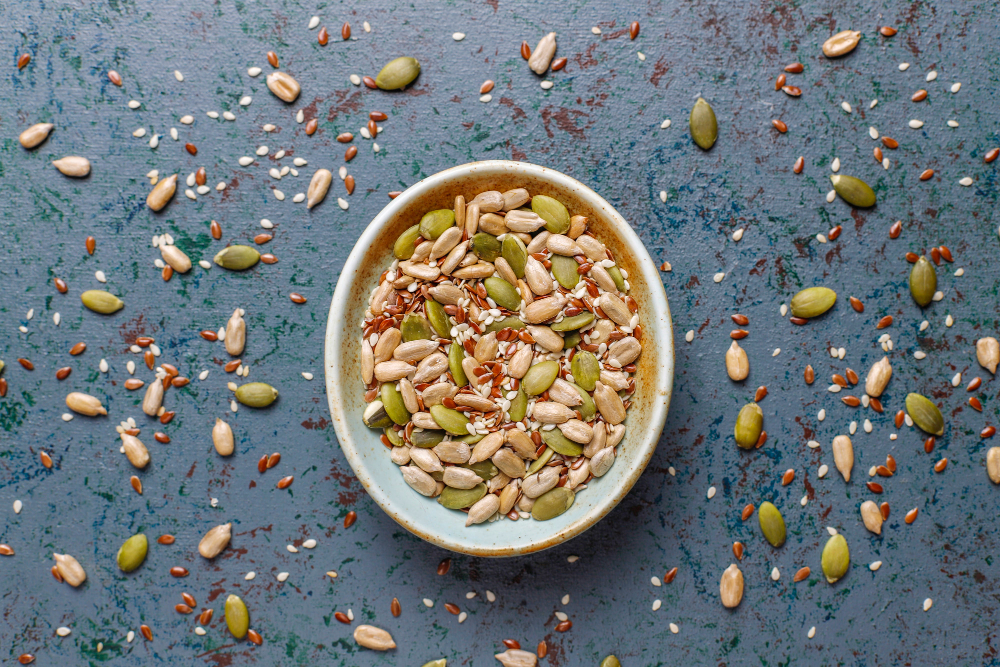
Seeds are a simple way to add many nutrients mentioned above to an everyday diet. Pumpkin, flax, chia, sunflower, sesame, and hemp seeds are rich in protein, good fats, minerals, and antioxidants.
Here are six types of seeds that are worth including in a varied and balanced diet. Let’s explore them!
1. Pumpkin Seeds
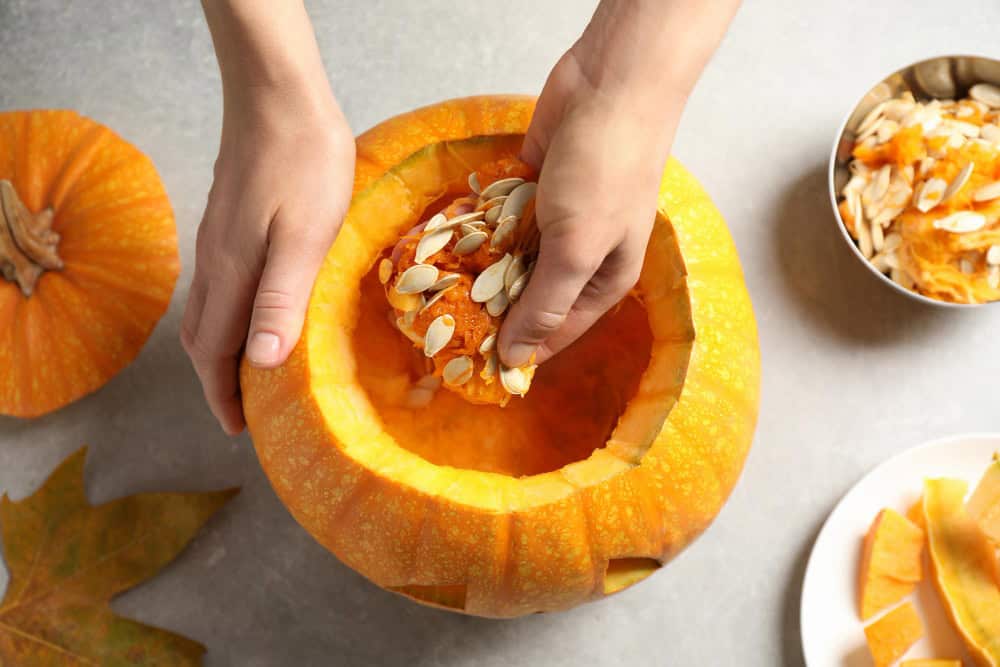
Pumpkin seeds are tiny but rich in nutrients and are known for their zinc, magnesium, protein, and good fats.
Zinc plays a role in processes including DNA and protein synthesis and cell division. Zinc deficiency has also been associated with some forms of hair loss [1,2].
Pumpkin seeds are also rich in plant protein and iron, though the levels vary based on how the seeds are consumed. Sprinkle roasted pumpkin seeds on salads, soups, yogurts, and oats.
Note: moderation is important. Too much consumption of specific minerals or overconsumption of supplements can be harmful; therefore, food is usually preferred unless otherwise prescribed.
2. Flaxseeds
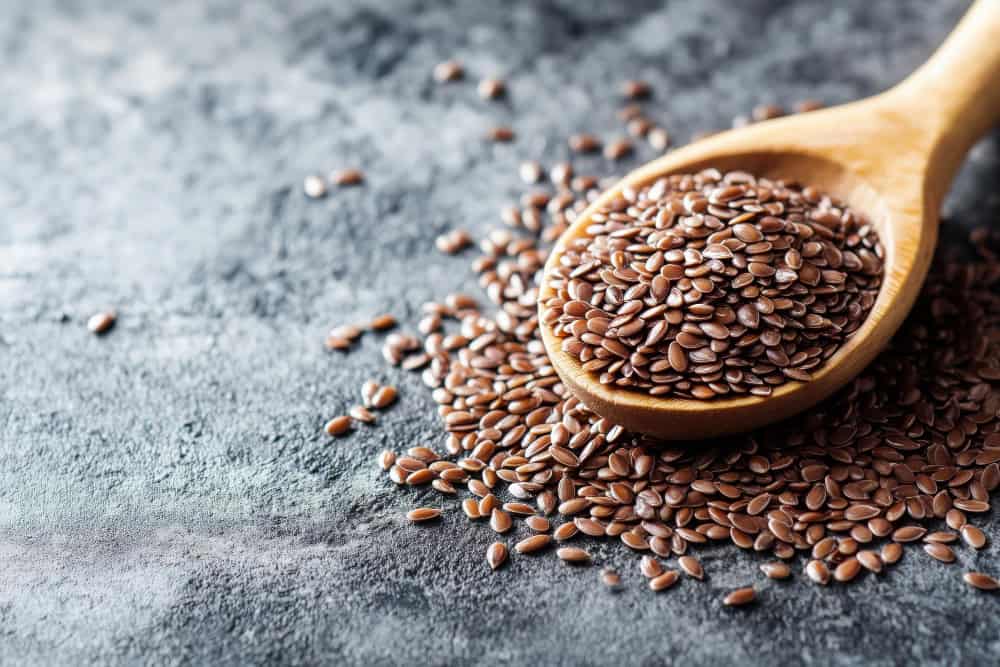
Flaxseeds are one of the more famous plant sources of alpha-linolenic acid (ALA), a plant-derived omega-3 fat. Flaxseed also contains fiber, protein, and many other substances called lignans [3]
Omega-3 fats are key components of cell membranes. They are involved in many physiological processes. Therefore, flaxseeds can be beneficial for an overall healthy diet.
Nonetheless, ALA should be distinguished from EPA (Eicosapentaenoic acid) and DHA (Docosahexaenoic acid), which are omega-3 fats found mainly in fish and seafood. ALA can be converted into EPA and DHA in the body, but the conversion rate is low.
How to use them: Ground flaxseeds can be added to oatmeal, smoothies, yogurt, or flour.
3. Chia Seeds
Chia seeds are another good source of plant-based omega-3 ALA, as well as fiber, protein, calcium, magnesium, and phosphorus [3]
Their high fiber content also makes them a good source of nutrition for breakfast dishes and snacks.
There is no research evidence to support that chia seeds help with hair growth. Nevertheless, they do supply nutritious components which can be beneficial for overall health when consumed as part of a healthy diet.
How to use them: You can put chia seeds in your yogurt, smoothies, overnight oat dishes, or self-made puddings, or soak them in water beforehand.
4. Sunflower Seeds
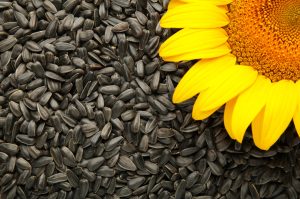
Sunflower seeds are a good dietary source of vitamin E. Vitamin E has antioxidant properties and protects cells from damage.
Sunflower seeds are also high in good unsaturated fat components, protein, magnesium, and other micronutrients. The effects of oxidative stress have already been researched in relation to various health conditions that may affect hair growth or the scalp, but that does not mean that simply eating foods rich in antioxidants will save you from hair loss problems. However, including sunflower seeds in your diet may help serve as a medium to consume better quantities of nutrients [1,2].
How to eat them: Use unsalted sunflower seeds as a topping for salads, breakfast bowls, or homemade energy mixes.
5. Sesame Seeds
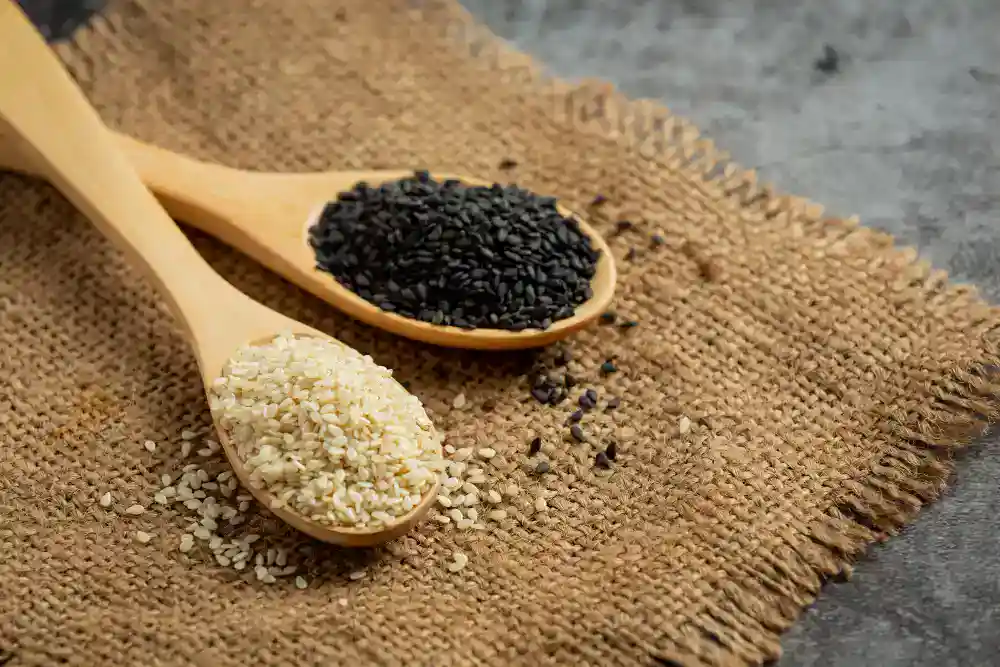
Sesame seeds are a great source of protein, good fats, calcium, magnesium, iron, and several other minerals, as well as bioactive substances such as lignans [2,3]
Iron has great significance when it comes to hair health because iron deficiency is known to be the reason behind hair loss in certain individuals. The latest studies have also shown that people suffering from telogen effluvium have lower ferritin levels than the controls [6].
However, it is not correct to say that sesame seeds can be used to cure iron deficiency. The level of iron absorption may vary when it comes to plant foods, and those whose iron deficiency has been confirmed should see a doctor for treatment.
How to use them: Sesame seeds can be added to chutneys, salads, stir-fries, or homemade bread.
6. Hemp Seeds
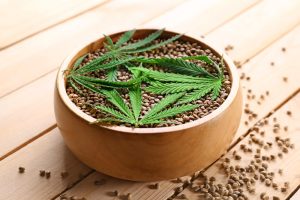
The seeds of the hemp plant are well known for their high content of proteins and fatty acids. Further, hemp seeds are also an excellent food source of minerals like magnesium, phosphorus, and iron. Being protein-rich is important as hair itself consists mostly of the structural protein keratin. Lack of protein intake may lead to abnormal hair growth and eventually result in hair loss [7].
Hemp seeds can thus be one of the components of a protein-rich diet for vegetarians and vegans.
How to use them: Hemp seeds can be sprinkled on salads, soups, yogurt, and porridge, and blended into smoothies.
How To Include Seeds In Your Daily Diet ?

You do not have to eat a lot of all of the six seeds regularly. You can mix and match them into different meals.
Here are some suggestions:
- Pumpkin seeds can be sprinkled on salads or soups.
- You can add ground flaxseed to oatmeal and smoothies.
- Chia seeds can be mixed into yogurt or overnight oats.
- Sunflower seeds can be used in homemade trail mixes.
- Sesame seeds can be added to chutneys or stir-fries.
- Hemp seeds can be sprinkled on breakfast bowls or salads.
When possible, be sure to use unsalted and lightly processed options.
Although they are full of nutrients, the calorie count is high, so still keep an eye on portions.
The Bottom Line

In conclusion, pumpkin seeds, flax seeds, chia seeds, sunflower seeds, sesame seeds, and hemp seeds can provide a great source of protein, healthful fatty acids, omega-3 ALA, as well as iron, zinc, vitamin E, and magnesium that are vital for the healthy functioning of hair follicles.
Nonetheless, one must keep in mind that maintaining healthy hair requires more than just one product. Additionally, one needs to ensure that he or she is getting enough vitamins and nutrients from the foods that one eats.
In case of any cases of hair loss that occurs quickly or in an unusual manner, it would be best to consult a dermatologist as well as find out what might be the reasons for that.
FAQs
Q. What is the best seed for hair growth?
Seeds like pumpkin, flax, chia, sunflower, sesame, and hemp have different nutrients that can play an important role in a balanced diet.
Q. Will pumpkin seeds help with hair loss?
Pumpkin seeds have zinc, protein, iron, and healthy fats in them. It should be noted that eating only pumpkin seeds cannot be counted as a known hair loss remedy. The research about pumpkin seeds as oil supplements shows more specific results and cannot be directly related to whole seeds.
Q. Are flaxseeds good for hair?
Flaxseeds have ALA omega-3 fatty acids, fiber, and protein in them. Even though they are a healthy and nourishing food, there is no sufficient evidence that proves a positive effect of flaxseeds on hair growth.
Q. Do chia seeds promote fast hair growth?
Chia seeds contain a good amount of protein, omega-3 fatty acids (ALA) and valuable minerals. Yes, they can form a great part of a healthy diet, but there’s no proof that chia seeds can make your hair grow faster.
Q. What is the daily amount of seeds to take for healthy hair?
The exact amount of seeds for hair growth is still unknown. A reasonable intake included in a healthy diet will be more useful than consuming large amounts of seeds hoping to achieve hair growth effects.
Q. Do seeds work as hair supplements?
Seeds can provide their nutrition via meals, but there are no guarantees they can replace medical supplements. Thus, when a lack of certain nutrients is confirmed by tests, one should follow the recommendations of the specialist.
Q. What seeds contain zinc?
One of the most important sources of zinc in food is pumpkin seeds. Other seeds provide zinc in lesser quantities. Zinc is an essential mineral for healthy cells and proteins, which are also important for hair cells.
Q. When should I see a doctor for hair loss?
If there is sudden hair loss that continues or is excessive, associated with changes in the scalp, or leads to bald patches or hair thinning. It is time to visit a specialist to check whether it is necessary to look for the reasons for the condition by carrying out laboratory tests.
(The article is written by Deepa Sarkar, Senior Medical Writer, and reviewed by Monalisa Deka, Deputy Manager, Clinical Health & Content, Medical Affairs)
References
1. Almohanna HM, Ahmed AA, Tsatalis JP, Tosti A. The role of vitamins and minerals in hair loss: A review. Dermatol Ther (Heidelb) [Internet]. 2019;9(1):51–70. Available from: http://dx.doi.org/10.1007/s13555-018-0278-6
2. Alasalvar C, Chang SK, Bolling B, Oh WY, Shahidi F. Specialty seeds: Nutrients, bioactives, bioavailability, and health benefits: A comprehensive review. Compr Rev Food Sci Food Saf [Internet]. 2021;20(3):2382–427. Available from: http://dx.doi.org/10.1111/1541-4337.12730
3. Raza N, Sadaf A, Mushtaq R, Mehmood MA, Amrao L, Islam F, et al. Nutritional and health potential of edible seeds: Micronutrient bioavailability and mechanistic insights. Food Sci Nutr [Internet]. 2026;14(2):e71480. Available from: http://dx.doi.org/10.1002/fsn3.71480
4. Ahmed A, Alali A, Alahmadi M, Alghamdi S, Khawaji Z, Humedi A, et al. Association between serum trace elements and telogen effluvium: A systematic review and meta-analysis. Skin Appendage Disord [Internet]. 2026;1–29. Available from: http://dx.doi.org/10.1159/000550921
5. Zhou L, Zhu W, Chen Y. Effects of dietary supplements on androgenetic alopecia: a systematic review and network meta-analysis. Front Nutr [Internet]. 2025;12(1719711):1719711. Available from: http://dx.doi.org/10.3389/fnut.2025.1719711
6.Thamotharan N, Harikumar MV, Sundaram M, Swaminathan A, Rangarajan S. Assessment of serum ferritin levels in female patients with telogen effluvium. Cureus [Internet]. 2025;17(12):e100249. Available from: http://dx.doi.org/10.7759/cureus.100249
7. Guo EL, Katta R. Diet and hair loss: effects of nutrient deficiency and supplement use. Dermatol Pract Concept [Internet]. 2017;7(1):1–10. Available from: http://dx.doi.org/10.5826/dpc.0701a01
Recommended Reads:
Eat to Ease Pain: 5 Anti–Inflammatory Foods to Reduce Joint Pain